Tarique Rahman’s Possible Delhi Visit Draws Attention
Mystery Surrounds Ajit Doval’s Dhaka Visit
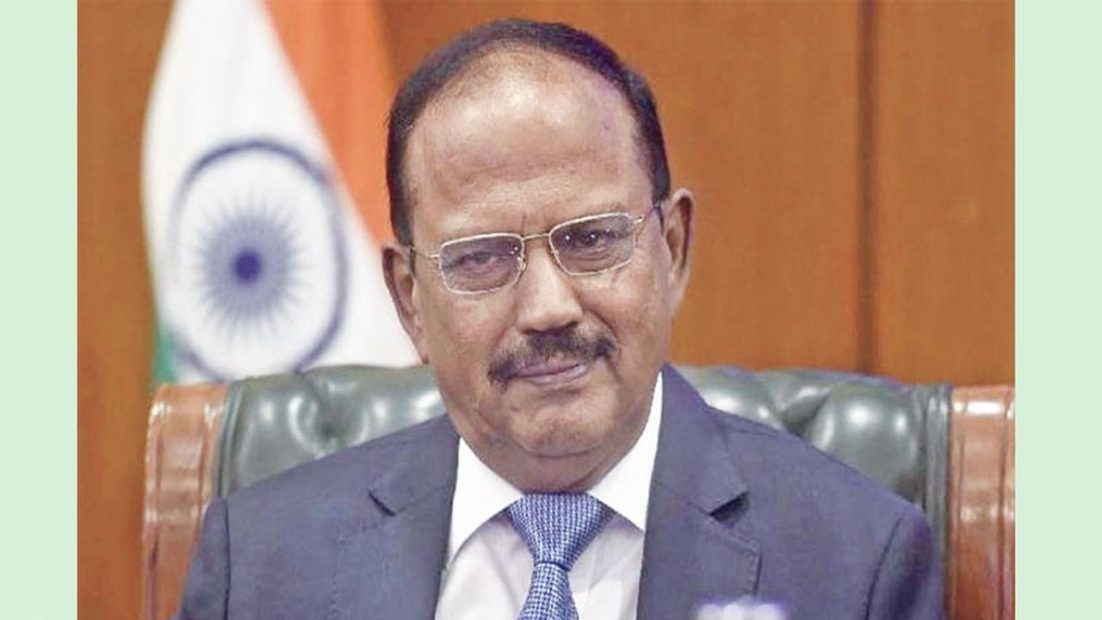
Recently, reports have circulated in various Bangladeshi media outlets and on social media that India’s National Security Adviser Ajit Doval secretly visited Dhaka and held a high-level meeting at the Ministry of Home Affairs. However, neither the Bangladesh government nor the Indian government has officially confirmed or denied the reported visit. Recent reports said Doval was allegedly in Dhaka on September 17.
Several senior officials of Bangladesh’s Foreign and Home ministries told Daily Inqilab that they were not aware of the matter and could not provide information without instructions from the policy-making level. Amid the uncertainty, questions have arisen over why India is seeking to bring Prime Minister Tarique Rahman to Delhi and what interests may be involved.
Analysts say India is seeking to reduce the distance that emerged in Dhaka-New Delhi relations following the political change in 2024. They believe New Delhi sees an opportunity to restore direct political communication with Bangladesh’s new government. Against this backdrop, diplomatic activity surrounding a possible visit by Tarique Rahman to India has increased.
In April, Bangladesh Foreign Minister Khalilur Rahman visited Delhi and held meetings with Indian External Affairs Minister S Jaishankar and Ajit Doval. In July, Prime Minister’s Defence Adviser Brigadier General (retd) AKM Shamsul Islam met Doval in Delhi. In August, Indian High Commissioner to Bangladesh Dinesh Trivedi met Tarique Rahman in Dhaka and travelled to Delhi the following day to meet Indian Prime Minister Narendra Modi.
Indian External Affairs Minister S Jaishankar has said that any bilateral relationship must stand the test of mutual interests. His remarks have been viewed in the context of the tensions and competing interests between Bangladesh and India.
Bangladesh’s geographical position is important for India’s connectivity with its northeastern states. Transit and transportation through Bangladesh can facilitate commercial and strategic links with the region. Border security, cross-border crime, smuggling and security cooperation are also important to New Delhi. Maintaining effective relations with Bangladesh’s new government is therefore linked to India’s broader regional interests.
However, the presence of former Prime Minister Sheikh Hasina in India remains a major complication in bilateral relations. Bangladesh has formally requested her extradition, while India has said the request is being examined under its existing procedures. Dhaka has repeatedly indicated that normalising relations fully would be difficult without progress on Hasina’s extradition and the issue of other fugitives staying in India.
This issue has also affected discussions over Tarique Rahman’s possible visit to India. In August, reports emerged that the visit could take place between August 20 and 25, but Bangladesh said no final decision had been made. Dhaka indicated that progress on several issues, including Hasina’s extradition, was important before the visit could proceed.
The situation became more complicated after Sheikh Hasina delivered a virtual address from Delhi on August 5. Dhaka viewed the remarks as interference in Bangladesh’s internal affairs and called on India to help create a conducive environment for bilateral relations.
Meanwhile, reports emerged in September about a possible visit by Ajit Doval to Dhaka. Neither side has officially confirmed or denied the reports. According to media reports, the reported visit may have been linked to preparations for Tarique Rahman’s proposed visit to New Delhi and high-level communication between the two countries. Issues such as the border, trade, water, energy and security were also reportedly expected to feature in discussions.
More recently, reports said Bangladesh and India were discussing possible dates for Tarique Rahman’s visit in the third week of November. The visit has not yet been officially finalised. For Dhaka, the extradition of Sheikh Hasina remains an important consideration.
The exchange of greetings between Tarique Rahman and Narendra Modi on Rahman’s birthday, followed by a prompt response from the Indian prime minister, has also been viewed as a sign that diplomatic communication between the two countries remains active.
Earlier in August, Research and Analysis Wing (RAW) chief Parag Jain also visited Dhaka on an official trip, according to reports. He reportedly led a four-member high-level delegation at the invitation of Bangladesh. His delegation included Ashwin Mukund Kotnis, Rahul Negi and Shaibal Roy Chowdhury. Neither Bangladesh nor India publicly disclosed details of the visit.
Overall, Tarique Rahman’s possible visit to Delhi involves more than a formal state engagement. It is linked to the future framework of Bangladesh-India relations, the extradition of Sheikh Hasina, border and security cooperation, trade and energy, water-sharing and the changing geopolitical dynamics of South Asia.
New Delhi appears keen to establish direct communication with Bangladesh’s new government, while Dhaka is seeking to keep its own interests and unresolved issues at the centre of discussions on normalising bilateral relations. The timing of Tarique Rahman’s visit, any understandings reached before it and India’s position on the extradition issue are therefore likely to remain important subjects in the evolving relationship between the two countries.