Nationwide Marks July Uprising Anniversary
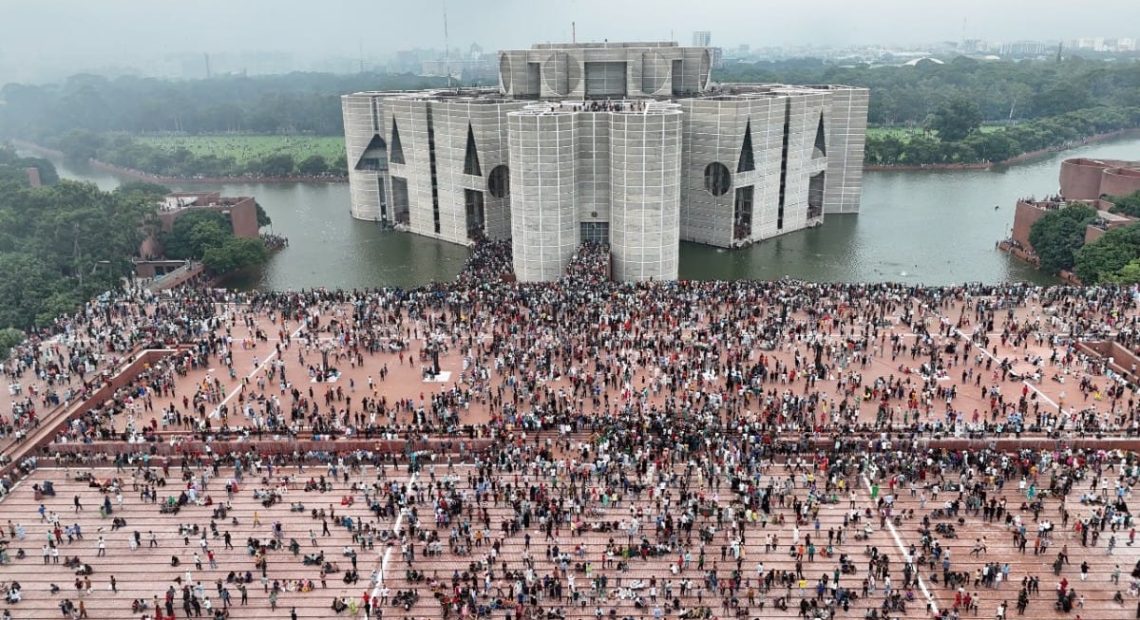
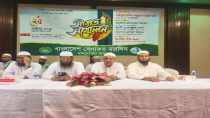
The historic July Mass Uprising Day was observed across the country on Wednesday with widespread participation, as government agencies, educational institutions, political parties, and social organisations commemorated the second anniversary of the 2024 student-led movement. District and upazila administrations organised day-long programmes, including wreath-laying ceremonies, discussions, prayer meetings, receptions for martyrs’ families, cultural events, rallies, processions, documentary screenings, and community activities. The observances honoured those who lost their lives during the uprising and reaffirmed calls to uphold the movement’s aspirations.
The day began with floral tributes at martyrs’ memorials across the country. Memorial plaques were presented to the families of the July martyrs and injured participants at programmes organised by government bodies and political organisations. Discussion meetings and prayer services were held throughout the day, where speakers said the sacrifices made by students and ordinary citizens should never be forgotten. They urged people to move beyond political divisions and work collectively to strengthen democracy, justice, human rights, and national unity while safeguarding the achievements of the uprising.
In Rajshahi, Land Minister Mijanur Rahman Minu said the government would continue supporting the families of the martyrs and the injured while preserving the spirit of the students’ and people’s movement. In Cox’s Bazar, despite heavy rain, district officials, police, and representatives of various organisations paid tribute at the martyrs’ memorial and offered prayers. Kushtia also observed the anniversary through an official discussion meeting attended by senior district officials and public representatives.
At a BNP victory rally in Haluaghat, Mymensingh, BNP Joint Secretary Syed Emran Saleh Prince alleged that repeated predictions about the government’s fall reflected a political conspiracy and urged all parties to maintain democratic values while working together for national development. Similar discussion meetings and commemorative programmes were held in Gafargaon, Gaibandha, Magura, Sherpur, Lakshmipur, Chuadanga, Faridpur, and Jhalakathi. In Magura, members of martyrs’ families expressed frustration over delays in securing justice and demanded speedy trials of those responsible. Speakers in different districts emphasised accountability, national unity, and the protection of democratic values.
The anniversary was also observed in Jhenaidah, Kishoreganj, Manikganj, Bhola, Noakhali, Pirojpur, Tangail, Gazipur, and Patuakhali through rallies, discussions, receptions, documentary screenings, communal meals, and special prayers. In Pirojpur, senior government officials attended commemorative programmes after paying tribute at the memorial. In Patuakhali, meals were distributed to hospital patients and residents of rehabilitation centres. In Tangail, an 11-party alliance organised a rally demanding implementation of the July Charter and protection of student political organisations. Across these districts, speakers reiterated the importance of preserving the spirit of the July uprising and ensuring justice for those who sacrificed their lives.
Educational institutions across the country also marked the occasion. At Noakhali Science and Technology University, Vice-Chancellor Professor Dr. Golam Rabbani said the administration would take action against attempts to destabilise the government and would not permit banned organisations to operate on campus. Independent University, Bangladesh held a procession, balloon release, discussion meeting, and competitions, while Bangladesh University of Engineering and Technology organised a drawing competition and discussion session attended by senior university officials and public representatives.
District and upazila administrations in Chouddogram, Chouhali, Ghior, Itna, Maheshkhali, Muktagachha, Nachole, Nalchiti, Shibpur, Baliakandi, Brahmanpara, Durgapur, Jakiganj, Kalapara, Lalpur, Monoharganj, Betagi, Mollahat, Pathernitala, Rajapur, and Raninagar organised receptions for martyrs’ families, prayer services, discussions, cultural programmes, art competitions, poetry recitations, and award ceremonies. Participants paid tribute to those killed during the uprising while encouraging younger generations to embrace patriotism, equality, justice, and democratic values. In several locations, local administrations also honoured injured protesters and recognised outstanding participants in competitions organised to mark the anniversary.
In Satkania, a discussion meeting organised by the administration was briefly disrupted when an NCP leader walked out in protest over the absence of injured July fighters. In Shyamnagar, the district BNP organised a large public rally where speakers called for unity in support of democracy and justice. Tungipara observed the anniversary with discussions, poetry recitations, and award distribution, while Bhairab hosted a reception and discussion where speakers demanded swift justice for the martyrs.
Political programmes were also held across Chouddogram, Fulbaria, Nangalkot, Pekua, Pabna, Sonaimuri, Bhurungamari, Kulaura, Narakanda, Rajnagar, Saidpur, Sitakunda, and Karnaphuli. Leaders at rallies organised by the BNP, Jamaat-e-Islami, and the 11-party alliance demanded implementation of the July Charter, enforcement of the referendum verdict, speedy trials for those responsible for the killings, and continued support for the families of martyrs and injured protesters. Some leaders announced scholarship programmes for July fighters and their children, while others called for controlling commodity prices, resolving the gas crisis, and protecting democratic rights and public mandates.
Although programmes varied in scale and format, the central message remained consistent throughout the country. Government representatives, political leaders, educators, students, and members of civil society paid tribute to the martyrs, honoured injured participants and their families, and reaffirmed commitments to democracy, justice, accountability, and national unity. The anniversary was marked not only through ceremonies and speeches but also through community outreach, cultural events, educational activities, and public rallies, reflecting broad participation in commemorating one of the country’s most significant political movements. Together, the nationwide observances underscored the enduring importance of the July Mass Uprising and renewed calls to preserve its ideals for future generations.