New LNG cargo docks at Maheshkhali, 8 more due
Rafiqul Islam Selim >
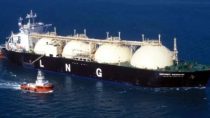
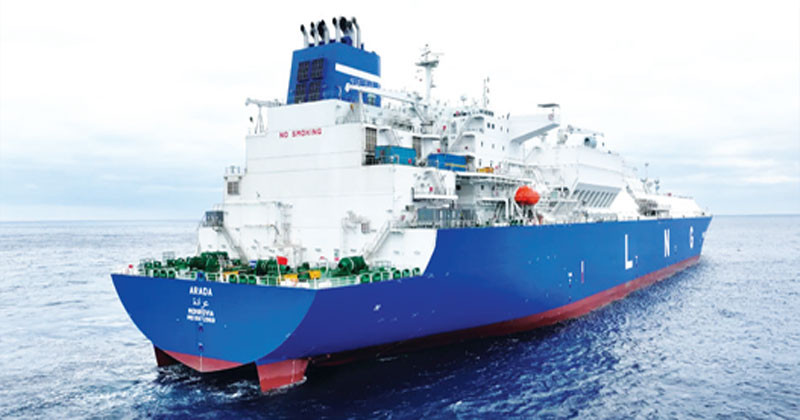
Uncertainty over liquefied natural gas (LNG) supply is easing, and the country’s gas crisis has begun to subside as a result. Yesterday, an LNG carrier with a capacity of 175,000 cubic feet docked at the floating terminal in Maheshkhali. LNG supply has begun from that cargo to the terminal of US-owned Excelerate Energy. The Liberian-flagged ship MT Arada docked there in the morning, according to an official of the Regasified Liquefied Natural Gas company responsible for LNG imports. He said supply to the Excelerate terminal has begun from that ship, which will increase gas supply from the terminal and help ease the country’s ongoing gas crisis.
This is the second LNG cargo to arrive this month. Earlier, on Wednesday, a cargo docked at the Summit Power terminal — the Saudi Aramco ship named Marea Energy, with a capacity of 174,000 million cubic feet. Yesterday, following the arrival of British Petroleum’s LNG carrier MT Arada, LNG supply began at the Excelerate terminal. A Regasified Liquefied Natural Gas company official said LNG from the earlier-arrived Saudi Aramco ship Marea Energy is being supplied to Summit, and with this new addition, Summit’s gas supply has exceeded 550 million cubic feet. Supply from the Excelerate Energy terminal had fallen to 180 million cubic feet, but has started rising again with the new cargo — as of the latest update yesterday, 200 million cubic feet from that terminal was being added to the national grid, and with the new cargo, this terminal will also be able to supply around 550 million cubic feet.
Officials expect that once the two terminals together add up to a maximum of 1,100 million cubic feet to the national grid very soon, the country’s gas crisis will be resolved, and power supply will also normalize as gas-starved power plants restart. A Petrobangla official said that if all ten scheduled LNG ships — including six more with announced schedules — arrive this month, the gas crisis will be fully resolved, restoring supply to pre-July 21 levels. That was the day a mysterious fire broke out at the US Excelerate terminal, triggering the country’s gas crisis, which was then prolonged by delayed arrival of imported LNG cargoes.
The war that began in the Middle East in March this year disrupted LNG supply to Bangladesh from Qatar and Oman. A Karnaphuli Gas official said 43 LNG cargoes have been cancelled since March. Around 9 to 10 LNG cargoes are needed each month to keep gas supply normal, yet only six arrived in August — pushing the energy crisis to its peak, with the impact felt most severely in Chattogram’s gas supply, since that region is entirely LNG-dependent.
However, gas supply has been rising since LNG ships resumed arriving on August 22, with combined supply from the two terminals holding between 700 and 750 million cubic feet since then. A Regasified Gas company official said two cargoes arrived over the past day, but the next scheduled cargo isn’t due until September 10; since that arrival wasn’t confirmed as of yesterday, supply from the two Maheshkhali terminals has been kept somewhat reduced, to be increased once it is confirmed.
Meanwhile, the government has moved to import LNG even at higher prices to resolve the energy crisis, and has already approved the import of ten LNG cargoes this month. If new cargoes keep arriving, supply from the LNG terminals will rise to 1,100 million cubic feet. Another Saudi Aramco cargo is due September 10, followed by POSCO on September 13, Gunvor on September 16, Aramco again on September 18, Total on September 23, and another Gunvor cargo on September 28. Schedules for two remaining ships have not yet been set. Beyond these, the government’s cabinet purchase committee has approved buying four more cargoes — one from BP Singapore Pte, two from Aramco Trading Singapore, and one from Vitol Asia. On Thursday, Petrobangla also invited tenders to purchase another LNG cargo from the spot market. Combining LNG and domestic gas field output, the country is currently receiving 2,334 million cubic feet against a demand of 3,800 million cubic feet — though under normal circumstances, supply of 2,600-2,700 million cubic feet is available. The two floating LNG terminals in Maheshkhali have a combined supply capacity of 1,050 to 1,100 million cubic feet.
Separately, a consultation session titled “Causes of the gas crisis, plans to address it, and paths to a long-term solution,” involving Chattogram-8 MP Mr. Ershad Ullah and officials of Karnaphuli Gas Distribution Company Limited (KGDCL), was held on Thursday. The session noted that negotiations are ongoing to build a third floating LNG terminal in Maheshkhali, which, once complete, will add 600 million cubic feet of gas to the national grid. To meet gas demand, there are plans to drill 150 wells nationwide; under the workover program, 30 wells have already been drilled, adding 140 million cubic feet to the national gas grid, with 7 more wells currently being drilled that will add a further 85 million cubic feet once complete.
Additionally, a work plan has been adopted for a 4,500 line-kilometer 2D seismic survey and nearly 4,200 square-kilometer 3D survey for gas exploration, and an international bidding round has been launched for gas exploration in the Bay of Bengal. The session also noted that uninterrupted gas supply to meet demand will become possible once the war situation in the Middle East normalizes.