
No more ‘Aynaghar’ will exist in independent Bangladesh: President
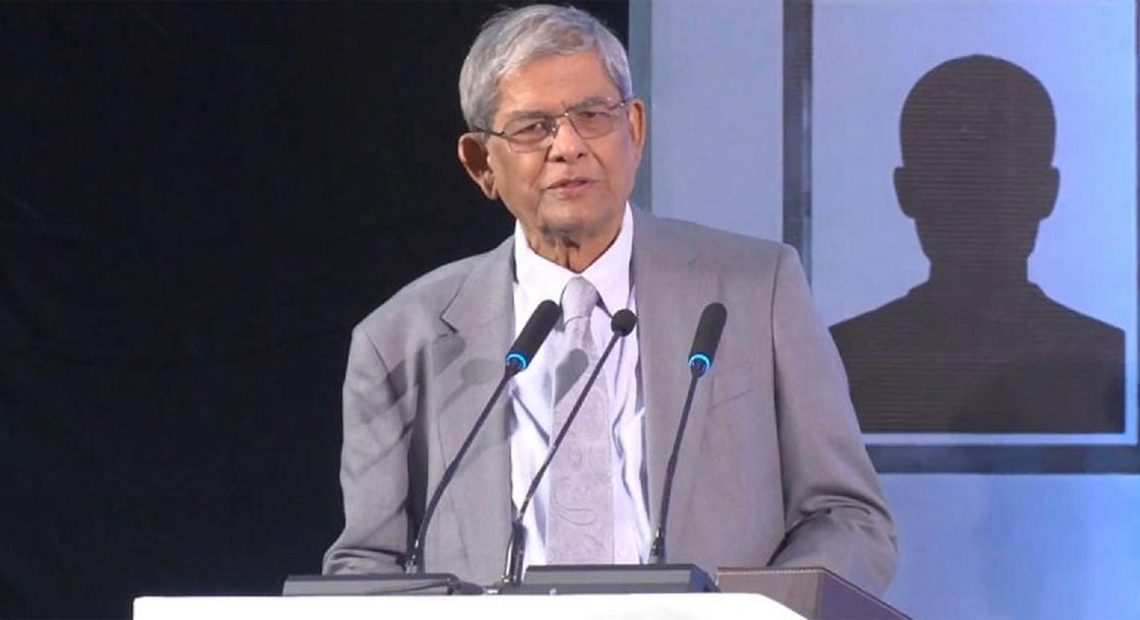
President Mirza Fakhrul Islam Alamgir has said that there will be no more ‘Aynaghar’ in independent Bangladesh. However, he said that those involved in enforced disappearances in the past, regardless of how powerful they may be, will be brought to justice and given the highest punishment under the law.
He made the remarks as the chief guest at a discussion meeting organised by the Ministry of Liberation War Affairs yesterday, Sunday, marking the International Day of the Victims of Enforced Disappearances.
Mirza Fakhrul Islam Alamgir said all avenues for the return of fascism in the country would be permanently closed. He said another sacred responsibility of the state was to stand sincerely beside the families of victims of enforced disappearances. “I believe the government will take appropriate measures in this regard. No mother should ever have to shed tears for her son, and no wife for her husband,” he said.
He said that during the past one and a half decades under the fascist government, enforced disappearances and the horrific grip of secret detention centres known as ‘Aynaghar’ had weighed heavily on Bangladesh. Whenever anyone protested against injustice, expressed a dissenting opinion or took part in movements to establish democratic rights, they were abducted, disappeared or killed to silence them. Yet, state institutions subservient to the fascist regime consistently denied these serious crimes.
The President said the fascist regime was forced to flee the country in the face of an uprising by unarmed students and the people. “Now, we must ensure redress, not revenge. The actual perpetrators must be brought under the law and punished,” he said.
He said enforced disappearance does not merely take away a person. It also takes away the smiles, peace, dreams and economic and social well-being of their loved ones. “It is a heinous violation of human rights,” he said. The Constitution guarantees every citizen the right to life, personal liberty, protection of the law and human dignity. Through enforced disappearances and killings, all these rights are effectively violated at once.
The President described the dreadful and fearful environment created by establishing a culture of enforced disappearances and killings as one of the most painful and humiliating chapters in the nation’s history.
At the event, he remembered numerous dissidents, officials, writers, journalists, social workers, as well as homemakers and ordinary citizens who became victims of enforced disappearance during the previous fascist regime, including Elias Ali, Chowdhury Alam, Sajeedul Islam, Home Minister Salahuddin Ahmed, Barrister Arman and retired Lieutenant General Azmi.
Recalling former Prime Minister Begum Khaleda Zia, the President said she had always been vocal against enforced disappearances and killings carried out by the fascist government. She believed that one day the perpetrators of disappearances, killings, torture and repression would be brought to justice on the soil of Bangladesh.
He also remembered the members of the BNP, Jamaat-e-Islami and all other political parties opposed to fascism, as well as social forces, the media, civil society and people from all walks of life, many of whom had themselves fallen victim to enforced disappearances and killings.
“I believe the state’s responsibility will not end merely by punishing the perpetrators,” he said. He called on the state to take responsibility for ensuring the dignity, social security, medical care, education, livelihoods and rehabilitation of families affected by enforced disappearances.
He also respectfully remembered Sanjida Islam Tuli, who had remained vocal against enforced disappearances during the fascist era.
“We want a Bangladesh where there will be political differences, but no political vengeance; freedom of expression, but no culture of fear; law and order, but no opportunity to violate human rights and justice in the name of law; and state power, but that power will remain subject to the Constitution and the law,” he said.
He further said that alongside economic growth, a country’s true development and success should be measured by how democratic and welfare-oriented it is, how just and humane it is, and whether its citizens can live safe and dignified lives. “We are committed to building such a new Bangladesh,” he said.
The event was held at the Bangladesh-China Friendship Conference Centre in the capital and chaired by Liberation War Affairs Minister Ahmed Azam Khan. Home Minister Salahuddin Ahmed, Law, Justice and Parliamentary Affairs Minister Md Asaduzzaman and State Minister for Liberation War Affairs Ishrak Hossain attended the programme as special guests.
Family members of people who had been subjected to enforced disappearance at different times also spoke at the event and demanded that proper justice be ensured for the disappearances.