
Oil Price Hike Triggers Ripple Effect, Driving Up Transport Fares and Commodity Prices
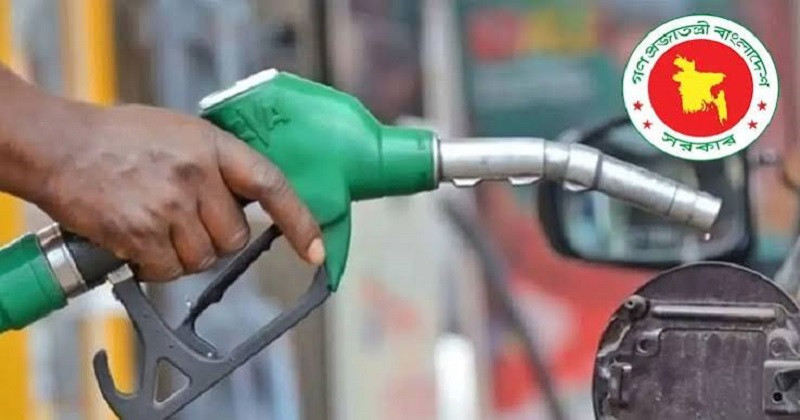
The shock from the recent fuel price hike has not stopped at transport costs. People’s travel expenses are now rising further as both long distance and city bus fares go up. Fares have increased per kilometer in the capital as well.
The situation on the ground is even more worrying than the official numbers suggest. Complaints have emerged from various parts of the country about extra charges being collected from passengers even before the new official fares took effect. In some areas, fares of 30 to 40 taka are being charged as 50 to 60 taka. On long distance buses, some passengers are being charged 50 to 100 taka more than the fixed rate.
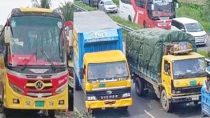
The cost increase is not limited to passenger transport. Goods transport costs have also risen sharply. Truck fares at various land ports and regional markets have increased by 3,000 to 5,000 taka. In some cases, a fare of 5,000 taka has become 7,000 taka. Fares of 18,000 to 20,000 taka have risen to 24,000 to 25,000 taka.
Business owners fear this extra transport cost will eventually be added to the price of goods. Reports are already coming in from various areas about rising prices of potatoes, onions, and other essential items.
In short, the fuel price increase is no longer limited to extra spending at the pump. Its effects are now spreading from bus fares to truck fares, from goods transport to retail prices. People with fixed incomes are feeling the greatest pressure.
New Fares Set, But Extra Charges Continue
After the fuel price hike, transport owners met with officials from the Road Transport Ministry on Tuesday, September 22. Following the meeting, a decision was made to revise long distance and city bus fares. On the same day, a new fare list for various routes was published on the BRTA website.
According to the new decision, bus and minibus fares in Dhaka and Chattogram increased from 2.53 taka to 2.70 taka per kilometer. This is an increase of 17 paisa per kilometer. Long distance bus fares increased from 2.23 taka to 2.40 taka per kilometer. The minimum fares for buses and minibuses remain at 8 and 10 taka depending on location.
However, the situation on paper differs from reality. Information from various districts shows that transport owners and workers in many routes began charging higher fares even before the new rates were officially set.
Passengers in Mymensingh have complained that local bus fares of 30 to 40 taka are being charged as 50 to 60 taka. On buses from Jamalpur to Dhaka, passengers report being charged 40 to 50 taka extra per person. In Baliakandi, Rajbari, fares to Dhaka have increased by 100 taka. Even on a short 20 kilometer route from an upazila center to the district town, passengers are paying 10 to 20 taka more.
The same pattern is seen on various routes in Barisal. On some routes, fares that were 30 taka overnight became 40 taka. Extra fares are being charged on routes from Cumilla to Dhaka and elsewhere. Non AC bus fares from Chuadanga to Dhaka rose from 750 to 800 taka, and fares to Chattogram rose from 1,100 to 1,200 taka.
According to transport businesses connected to the ports, truck fares to Dhaka previously ranged from 18,000 to 20,000 taka. After the fuel price increase, this rose to 24,000 to 25,000 taka, an extra cost of about 4,000 to 5,000 taka per truck. The situation is even more costly for Chattogram, where fares that were 28,000 to 29,000 taka now stand at 32,000 to 34,000 taka, an increase of about 3,000 to 5,000 taka per truck.
The cost of transporting potatoes from Khulna to Bagerhat rose from 5,000 to 7,000 taka. In Mymensingh, the cost of bringing 15 tons of potatoes from Rangpur increased by 500 to 1,000 taka.
How will business owners manage this extra cost? The usual pattern is that when transport costs rise, that cost gets added to the buying and selling price of goods. As a result, the effect of rising fuel prices eventually reaches the consumer market in stages.
The Cycle of Market Pressure
Fuel prices rise. Then bus and truck operating costs rise. When truck fares rise, the cost of transporting goods rises. This creates pressure to raise prices in wholesale markets. When wholesale prices rise, retailers adjust their prices too. In the end, the consumer bears the extra cost.
People with fixed incomes are in the weakest position in this cycle. Their income does not rise immediately, but bus fares, market costs, and commuting expenses all rise together.
A small business owner in Bagerhat used to travel daily between Khulna and Bagerhat by motorcycle. Since four liters of fuel now costs about 600 taka, he has switched to traveling by local bus instead.
A marketing representative for a private hospital in Feni said that although the price of octane rose from 125 to 165 taka, his daily travel allowance remains fixed at 300 taka. As a result, he has to cover the extra fuel cost from his own income.
For workers like him, the math is simple. A higher fuel price means a higher cost of getting to work. If income stays the same, some other expense must be cut to cover the difference.
A Second Shock to the Essential Goods Market
The first shock of the fuel price hike hits transport. The second shock hits the market. Trucks and goods vehicles are directly involved in moving potatoes, onions, chilies, rice, lentils, and other agricultural products from one part of the country to another.
Business owners say that when transport costs rise, it is not just the truck owner’s cost that increases. The cost of the entire supply chain rises. Transport is needed at every stage, from reaching the wholesale depot to the retail market.
A business owner in Bagerhat said that transporting potatoes by truck from Khulna used to cost 5,000 taka, but now costs 7,000 taka. This extra 2,000 taka must be adjusted somehow, and part of it risks being added to the final price of the goods.
In Magura, it has been learned locally that many business owners are not sending goods to Dhaka due to rising transport fares. If this situation continues, it could reduce supply on one hand and create pressure to raise prices on the other.
Costs Rising for Farmers Too
There is also a risk that the fuel price increase will directly affect farmers. Fuel is used at various stages of farming, including irrigation, machinery, land preparation, and crop transport.
A farmer in Gopalganj said the sudden fuel price increase will make farming more difficult. If production costs rise, farmers will either need to raise their prices or absorb part of the extra cost from their own profit. Either way, the effect could reach the market. If farmers demand higher prices, consumer costs will rise. If they cannot raise prices, their profits will shrink.
Both Passengers and Owners Under Pressure
The concerns of transport owners cannot be fully ignored either. When fuel prices rise, the daily cost of operating buses genuinely increases. Transport worker leaders in Gaibandha have also spoken about the difficulties faced by bus owners due to the fuel price hike.
But another question remains. It is the responsibility of the relevant authorities to decide how much of the extra fuel cost should be adjusted through fares and how much should fall on passengers. The purpose of setting new fares is to keep this adjustment within a defined structure. However, if extra charges beyond the set fares continue at the ground level, passenger harassment cannot be stopped simply by setting new fares.
Monitoring Is Now the Real Test
Bus fares have been revised following the fuel price increase. But whether discipline returns to the transport sector will depend on how well the new fares are implemented and monitored.
Key questions have emerged, particularly about routes outside Dhaka. These include how easily passengers can access the fare list, whether transport owners are following it, and whether swift action is taken when complaints are received.
Similarly, the rise in truck fares for goods transport also needs monitoring. If transport costs rise abnormally under the excuse of higher fuel prices, it will directly affect the prices of essential goods.
Overall, the shock from the fuel price increase is turning into a multi layered economic pressure. After paying more at the pump, the second shock comes in bus fares, the third in goods transport, and the final shock lands in the shopping bags of ordinary people.
Therefore, setting new fares alone is not enough. Authorities must monitor whether the fixed fares are being followed, whether transport owners are overcharging, whether the rise in goods transport costs is reasonable, and whether that excuse is being used to raise market prices.
Because how far the impact of the fuel price increase spreads is not just a matter for the energy sector. It is connected to people’s daily travel, farmers’ production, business owners’ transport costs, and ultimately, the household budgets of ordinary people.