Oil prices cross $110 amid tensions in the Middle East
International crude oil prices have risen amid escalating tensions in the Middle East and fears of disruptions to energy supplies. On Wednesday (October 21), the international benchmark Brent crude price crossed $110 per barrel. Security risks to shipping in the Red Sea and the Strait of Hormuz, along with fears of attacks on Saudi Arabia’s energy infrastructure, have heightened market concerns.
According to a report by The Times of India, Brent crude rose by $1.34, or 1.23 per cent, to $110.10 per barrel on Wednesday (October 21). At the same time, US West Texas Intermediate (WTI) crude increased by $1.18, or 1.21 per cent, to $99 per barrel. Prices had declined slightly in the previous trading session.
Reports of a fire aboard a supertanker south of the Strait of Hormuz have triggered fresh concerns. The naval force of Iran’s Islamic Revolutionary Guard Corps claimed that the vessel caught fire after striking a sea mine. Iranian state media reported that the ship had been violating Iran’s regulations. However, the Iranian account of the incident has not been independently verified.
According to data from ship-tracking firm Kpler, at least 18 vessels have reportedly come under attack over the past two weeks. Analysts say concerns are growing over the safety of shipping and oil transportation in the Gulf of Oman, beyond the Strait of Hormuz. Any disruption along these maritime routes could further tighten global energy supplies.
Meanwhile, Yemen’s Houthi group has claimed attacks on Saudi Aramco facilities, the Shaybah oilfield, and the airports in Riyadh and Abha. Not all these claims have been independently verified. Nevertheless, concerns over the security of Saudi Arabia’s energy infrastructure and regional shipping routes are affecting oil markets.
Earlier, markets had gained some relief following discussions on mediation efforts during a meeting between Iranian President Masoud Pezeshkian and Pakistan’s army chief, Asim Munir. However, the prospects for resolving the crisis between the United States and Iran remain uncertain. As a result, traders’ concerns over the security of supplies have persisted.
The US Department of Energy is also working with refineries worldwide to increase fuel production. Efforts are particularly focused on boosting output to address diesel shortages and contain rising prices. Meanwhile, concerns over a possible decline in US crude oil inventories are adding further upward pressure on prices.
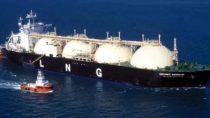
The Strait of Hormuz is one of the world’s most important energy transit routes, carrying substantial volumes of crude oil and liquefied natural gas. An escalation of conflict in the region could disrupt shipping, constrain supplies and increase transportation costs. These developments could affect international oil prices and the economies of countries heavily dependent on energy imports.
Sources: The Times of India and Reuters