
Oilseed Cultivation in Northern Bangladesh Could Reduce Import Dependence
Bangladesh is still dependent on imports to meet its demand for edible oil. According to a recent report by the US Department of Agriculture (USDA), the country needs around 3.4 million tonnes of edible oil annually. Locally produced oil from oilseeds meets around 15 percent of the total demand. The rest comes from imported crude oil or oilseeds.
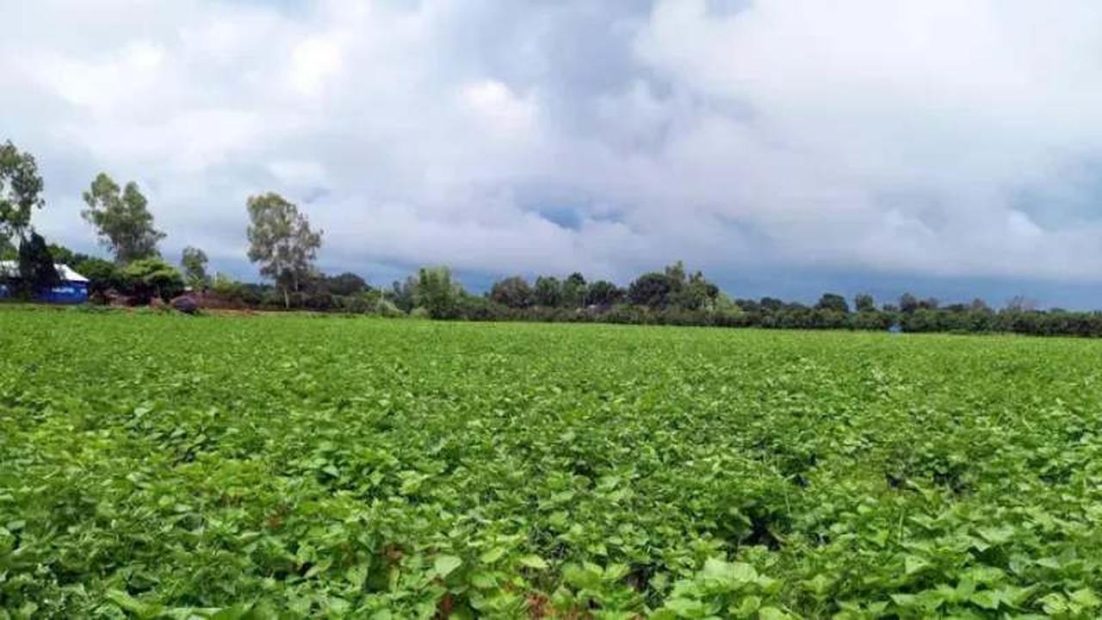
Against this backdrop, there is scope to expand the cultivation of mustard, sesame, linseed, groundnut, sunflower and other oilseeds on agricultural and fallow land and riverine chars in the 16 districts of Rajshahi and Rangpur divisions. In particular, expanding short-duration oilseed cultivation between the Aman and Boro seasons could increase crop production on the same land.
According to the Bangladesh Bureau of Statistics (BBS) Agricultural Census 2019, 325,022 acres, or around 131,544 hectares, of land in Rajshahi Division were used for oilseed cultivation. In Rangpur Division, the figure was 125,479 acres, or around 50,799 hectares. Together, the two divisions had around 182,343 hectares under oilseed cultivation.
Rajshahi leads the two divisions in oilseed cultivation. In 2022-23, Bangladesh produced around 768,000 tonnes of oilseeds. Rajshahi Division alone produced around 302,000 tonnes, the highest among the country’s divisions. Rangpur Division produced around 69,000 tonnes that year.
At the district level, Sirajganj had the largest area under oilseed cultivation, with 128,169 acres, according to the agricultural census. It was followed by Naogaon with 51,001 acres, Panchagarh with 48,194 acres and Pabna with 47,131 acres.
Mustard cultivation, however, has expanded most rapidly in recent years. For the 2025-26 Rabi season, the target was to cultivate mustard on around 389,000 hectares in the eight districts of Rajshahi Division, with a production target of 646,000 tonnes. Of this, 182,000 hectares were in the four districts under the Rajshahi agricultural region and 207,000 hectares in the four districts under the Bogura agricultural region.
Mustard cultivation is also increasing rapidly in Rangpur Division. For the 2025-26 season, the target was set at 148,748 hectares across the division’s eight districts. However, in the five districts under the Rangpur agricultural region, mustard was ultimately cultivated on 78,045 hectares, producing 120,275 tonnes.
Sunflower is another promising crop in northern Bangladesh. In 2024, it was cultivated on 221 hectares in the Rangpur region, including 108 hectares in Kurigram, 69 hectares in Gaibandha, 43 hectares in Rangpur and one hectare in Nilphamari.
Riverine chars are also important. Around 82,000 hectares of chars and riverbeds in five districts of the Rangpur agricultural region are used to grow various crops every year. Farmers cultivate mustard, sesame, linseed, groundnut, sunflower and other crops on the chars of the Teesta, Dharla, Brahmaputra, Jamuna and other rivers.
Mustard cultivation has also expanded significantly on the chars of the Padma and Jamuna. According to the Department of Agricultural Extension, landless and marginal farmers in the sandy chars of the Padma basin in the Rajshahi region have also taken up mustard cultivation.
Soybean, however, has not yet emerged as a major commercial crop in the northern chars. A large portion of domestically produced soybean is used in the animal-feed industry rather than for oil production. The country remains dependent on imported soybeans and crude oil for edible soybean oil. Therefore, experimental cultivation is needed to assess the potential of soybean in the chars of the Padma, Jamuna, Teesta and Dharla, considering suitable varieties, sowing times, salinity and waterlogging, markets and oil-extraction facilities.
There have also been changes in edible-oil consumption in Bangladesh. According to the USDA, palm oil accounts for around 50 percent of total demand, soybean oil 28 percent, mustard oil 19 percent and other oils 3 percent. A 2021 study, however, found palm oil accounted for 51 percent, soybean oil 43 percent and mustard oil 5 percent. This means the figures vary somewhat depending on the source and year.
Based on the national annual edible-oil demand of 3.4 million tonnes and the estimated 21-22 percent share of the country’s population living in Rajshahi and Rangpur divisions, the region’s potential annual demand could be around 700,000-750,000 tonnes. This is an estimate based on national demand, not an official regional demand figure.
Experts believe that planned cultivation of oilseeds on fallow land in northern Bangladesh, land left vacant after the Aman harvest and the chars of the Padma, Jamuna, Teesta and Dharla could increase the production of mustard and sunflower oil. Alongside this, local oil-extraction facilities, collection and storage systems and fair prices for farmers could help reduce import dependence and create new sources of income for farmers in the region.