People in Bangladesh Enjoy ‘Unprecedented Freedom of Expression’: Mahdi Amin
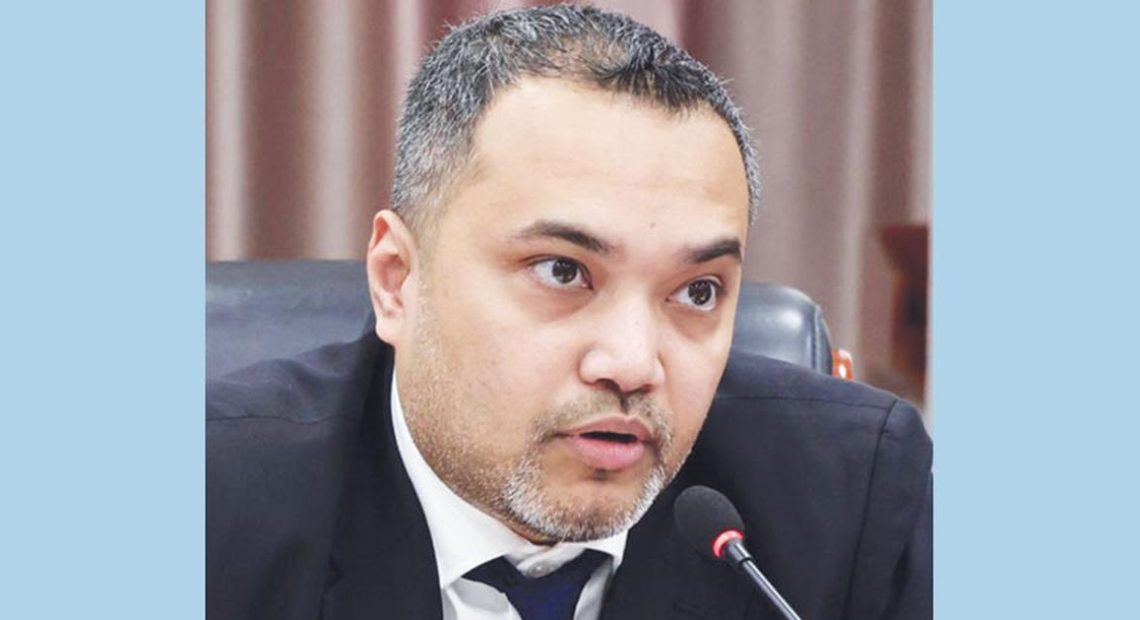
Prime Minister’s Adviser Mahdi Amin has claimed that the BNP government has ensured unprecedented freedom of expression and human rights over the past seven months. He said there had not been a single incident of human rights violation during this period. However, responding to his remarks, TIB Executive Director Dr. Iftekharuzzaman said the information available to him told a different story. He presented data on harassment and arrests in connection with exercising freedom of expression, deaths at the hands of law enforcement agencies and enforced disappearances. They made the remarks at a discussion titled “Democracy, Human Rights and an Accountable System of Government” organised by Transparency International Bangladesh (TIB) at the Midas Centre in Dhanmondi, Dhaka, on Tuesday.
Speaking as the chief guest, Mahdi Amin said the BNP government had ensured unprecedented freedom of expression and human rights over the past seven months. However, he acknowledged that there were some limitations. “It is difficult to completely uproot the debris of 17 years of fascism all at once,” he said.
He said there had not been a single incident of human rights violation in the running of the state during this period. “There have been no enforced disappearances, murders, extrajudicial killings or deaths in custody with state patronage. The views, political positions or differing ideologies of opposition parties have not been suppressed with state patronage either,” he said.
Saying that the government wanted to ensure an inclusive state system and development by correcting any shortcomings in state governance, Mahdi Amin said the BNP wanted to build a Bangladesh, in line with its electoral pledges, where human rights, freedom of expression, the rule of law, equality, human dignity and social justice would prevail.
“People do not have to belong to any particular political party to succeed. Everyone will have the right to receive the government’s support based on their own merit,” he said.
Mentioning the conversion of nearly 100 ordinances into laws during the first session of Parliament as a major achievement, the Prime Minister’s Adviser said, “This has never happened before.”
He said efforts had been made to convey the necessary message to those directly involved in lawmaking. The drafts had also been published much earlier.
He further said lawmaking was an ongoing process and that there was scope to amend a law even after a law is enacted. Discussions were being held with relevant stakeholders on how to bring the laws up to international standards. Those directly involved in lawmaking were trying to include people with different views in the process.
Referring to the repeated plundering of democracy in Bangladesh, Mahdi Amin said, “Baksal, autocracy and fascism were established in this country. After Baksal, multiparty democracy came through Ziaur Rahman, and after autocracy, parliamentary democracy came through Khaleda Zia.”
He said that following fascism, Bangladesh had returned to the democratic track under the leadership of the current Prime Minister, Tarique Rahman.
Dr. Iftekharuzzaman said the information available to him told a different story. Citing examples, he said at least 52 incidents of different forms of harassment had taken place in connection with exercising freedom of expression. A total of 58 people had been arrested in these incidents, most of them under the Anti-Terrorism Act.
“Such arrests under this law were not expected in post-uprising Bangladesh because of the practice of freedom of expression,” he said.
He further said more than 1,730 incidents of violence against women and girls had occurred. Of them, 503 were victims of rape, while at least 50 deaths had been reported. There had been 51 incidents of people being detained and tortured.
“Seven people have died directly at the hands of law enforcement agencies. There has been at least one incident of enforced disappearance involving a law enforcement agency. These issues are concerning,” he said.
Iftekharuzzaman further said that if the process of enacting laws necessary to protect human rights, ensure justice and make the state structure accountable was not participatory, such laws would be imposed.
“As a result, those who are committing crimes and violating human rights, and those responsible, are being entrusted with the responsibility of prosecuting human rights violations. This cannot be a democratic practice,” he said.
Among others, Barrister Naushad Zamir, Chairman of the Parliamentary Standing Committee on the Ministry of Law, Justice and Parliamentary Affairs; physician and young politician Tasnim Zara; and Dr. Manisha Chakraborty, coordinator of the Barishal district unit of the Socialist Party of Bangladesh (Basad), spoke at the discussion.