PM’s Bold Statement Calls for Responsible Conduct from the Opposition
A M M Bahauddin >
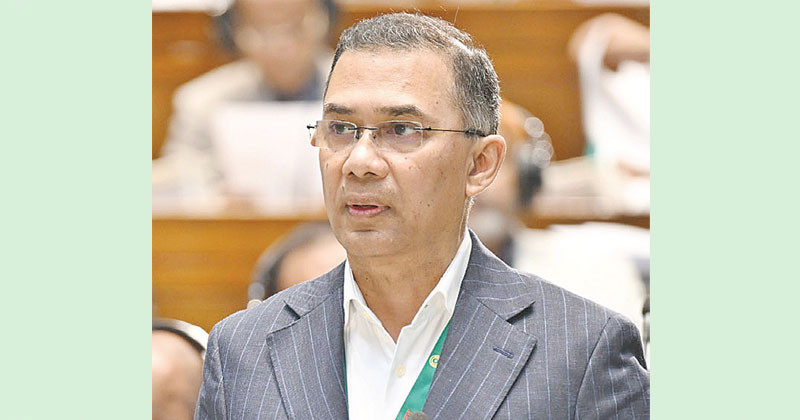
Writing is not something I am in the habit of doing. Still, I feel compelled to write. This piece may not be well organized, but I am simply putting forward a thought. Prime Minister Mr. Tarique Rahman’s closing address at the third session of parliament is being praised across all quarters. His remarks on the gas-power supply crisis are being repeated by people everywhere, with likes, comments, and shares flooding social media. Mr. Tarique Rahman said, “If it were possible to solve the gas or power supply problem through a long march, the government itself would have organized that long march before anyone else.” The Prime Minister spoke rightly. For nearly a decade and a half, the fascist Awami League held state power in a stranglehold.
A tsunami of persecution swept over BNP and Jamaat leaders and activists. Several ministers and MPs in parliament today still carry the harrowing memories of the “Aynaghar” (secret detention centers). Sheikh Hasina, ousted in the July uprising, has fled and now sits in Delhi conspiring against the country and issuing threats. With Hasina — the dancing puppet of Hindutva-leaning India — having fled, this is no time for political parties to practice “opposition for opposition’s sake.” Leaders of both the ruling party and the opposition should, from their respective positions, play a responsible role in reviving an economy that has fallen to the brink. Hasina and her Awami League cohorts fled with enormous sums of money, leaving behind a per-capita debt burden of nearly 130,000 taka.
There is no investment in the country, unemployment is rising rapidly, and amid the wave of the global energy crisis, one factory after another is shutting down due to the power supply and energy crisis at home. People are in dire straits from load-shedding. Even so, the government has shown no shortage of sincerity in trying to resolve the energy and power supply crisis.
At a time when unity is essential to thwart Delhi’s South Block and Sheikh Hasina’s anti-Bangladesh conspiracies, and to create “political stability” in order to increase foreign investment, what message is the Jamaat-led 11-party alliance sending by creating political instability and organizing long marches in the name of pressing demands? This was not what one expected from Jamaat’s talented and responsible leaders. Jamaat Ameer Dr. Shafiqur Rahman has said, “This long-march program of ours is not a movement to topple the government.” Yet in his speech during the long march, he said, “The BNP government is deceiving and defrauding ordinary people in various ways.”
In a long-march speech, Jamaat alliance partner and LDP President Dr. Colonel (retd.) Oli Ahmed Bir Bikram said, “Wherever I go, people say the same thing — they no longer want to see the current BNP government in power.” What message is the Jamaat alliance trying to send at home and abroad through statements like these? Fascist Hasina is spending enormous sums to exploit social media and the press, and has deployed her “bot army,” precisely to create such an environment. By creating political instability in the name of pressing demands, are we not walking into Hasina’s trap? How much longer will this practice of “opposition for opposition’s sake” continue? People expect far more responsible and constructive statements from Jamaat leaders.
Mr. Tarique Rahman had to spend nearly a decade and a half outside the country. The people of this country know why. Upon returning, he took charge of the party. Within a week of his return, his mother, Begum Khaleda Zia, the Desh Netri, passed away. The people of the country know the contributions of Mr. Tarique Rahman’s father, martyred President Ziaur Rahman, the proclaimer of independence, and his mother, Begum Khaleda Zia, to this nation — the contributions of the Zia family are ones the nation always remembers. Grieving his mother’s death, Mr. Tarique Rahman won the election by a large margin and formed the government. Having returned from abroad, it is likely he had not, in the early days, fully grasped the changed political climate at home or the character of the administrative bureaucracy.
Having maintained strict discipline while working in London, much about the country may initially have been beyond his immediate awareness. But he is learning continuously and taking one responsible decision after another. As a result, comparing the Mr. Tarique Rahman of a month ago to the Mr. Tarique Rahman of a month later, one sees considerably more maturity and responsibility in his decision-making. Fuel prices have risen worldwide amid the global energy crisis, yet he has not raised fuel prices at home — instead purchasing fuel abroad at higher prices and selling power supply to domestic consumers at lower rates. This is happening because, like his parents, he holds the people of this country close to his heart. Vast natural resources lie scattered across the country, yet for a long time no arrangements were made to extract them, with the country instead remaining dependent on foreign sources. He mentioned this in his parliamentary address.
The government acknowledges the gas-power supply crisis in the country; Mr. Tarique Rahman has not denied it. Responsibility for it lies partly with global factors and partly with domestic ones — namely, the shortsightedness, incompetence, and mismanagement of those responsible. During the interim government’s tenure, the Bangladesh Power Development Board made the senseless decision to cancel and suspend contracts and preliminary approvals for 31 solar and renewable energy projects, including one in Trishal.
Similarly, without considering any alternative, the cancellation of the agreement with Summit Group to build a second floating LNG terminal is a decision the nation is now paying the price for. The new government, taking office through the February 12 election, fell straight into a gas-and-power supply crisis. To resolve the power crisis, just as Sheikh Hasina turned the power sector into a haven for looting by party-affiliated businessmen in the name of building rental and quick-rental power plants back in 2009, she then passed the “Power supply and Energy Supply (Special Provisions) Act” in parliament in 2010 to grant indemnity and block any lawsuits over that looting and corruption. The current Prime Minister, Mr. Tarique Rahman, has not gone down that path. Instead, he is pursuing short-term, medium-term, and long-term plans to resolve the power crisis, with a particular tilt toward environmentally friendly solar power. He has set a target of generating 10,000 megawatts of power supply nationwide through solar panels. Solar panels are to be installed on every office building. Initiatives have even been taken to install solar panels for farmers so that, after using power for irrigation, they can sell the surplus power supply. This requires vast sums of money, careful planning, and political unity. Is the opposition in the National Parliament doing its part for this?
The Jamaat-led 11-party alliance has launched a series of long marches over six demands. After the Dhaka-to-Chattogram long march, several more are planned in divisional cities. Among the six demands over which Jamaat is running this program is the resolution of the “power supply-gas-oil” crisis — yet the long march itself wasted thousands of liters of fuel across hundreds of vehicles. That is not all: an NCP leader named Nasiruddin Patwary reportedly took part in the long march riding in an open-hood Prado belonging to an Awami League leader from Madaripur district, sparking intense controversy. Several student leaders who led the July uprising have brought this information before the nation.
The Prime Minister’s Political Secretary, Rashed Khan, has said, “Field-level leaders and activists of the fallen Awami League took part in the 11-party alliance’s long-march program.” Why was a long march carried out, wasting a huge amount of fuel, when the very aim is to resolve the fuel crisis? Asked this question by a journalist, another key NCP leader, Sarjis Alam, argued in response, “The vehicles used in the long march would have used fuel anyway even if they had not gone on the long march but traveled elsewhere instead.” Is this a reasonable answer? If fascist Sheikh Hasina were to now claim, “In the 2014 election without candidates or voters, in the 2018 night-time vote, and in the 2024 ‘me-and-my-puppet’ election, if Awami League-Jubo League-Chhatra League men had not stamped the ballots, the voters would have stamped them the same way anyway” — how would that sound?
To overcome the gas-power supply crisis, Prime Minister Mr. Tarique Rahman held a meeting on August 1 with the country’s top businesspeople and private-sector entrepreneurs. At the meeting, business leaders presented several important requests and demands to the Prime Minister to help overcome the country’s economic stagnation and restore momentum to the industrial sector. Alongside promising them all forms of support, the Prime Minister also sought their advice, speaking of initiatives to remove investment obstacles and reduce red tape (administrative complications) to create a business-friendly environment that would attract new domestic and foreign investment. At a time when the Prime Minister is committed to resolving the crisis, the opposition’s long-march program effectively amounts to creating political instability in the country. As a result, the country’s businesspeople and industrialists fear the long-march program will have a negative effect on efforts to resolve the gas-power supply crisis. Earlier, Prime Minister Mr. Tarique Rahman had sought advice from the opposition on resolving the gas-power supply crisis. The opposition has claimed they gave such advice, but they themselves have not informed the public what advice was actually given.
In his closing parliamentary address, Prime Minister Mr. Tarique Rahman spoke of several immediate measures being taken to address the country’s existing gas and power supply crisis, reassuring the nation of a swift recovery from the situation. He said the government is working tirelessly to resolve the crisis and that a permanent solution to the gas and power supply problem will come over time.
Speaking of a long-term plan to reduce import dependence and turn Bangladesh into a solar-power-producing nation, the Prime Minister said, “Until now, we have been consumers of power supply produced from import-dependent sources. If the current government’s planned solar power generation program is implemented properly, we will no longer remain mere consumers — we will become producers of solar power.” At the same time, he called on the opposition Jamaat to present the actual situation to the public rather than engaging in provocative conduct over the current crisis. Referring to the Opposition Leader’s remarks on the gas-power supply crisis, he said, “This problem did not arise suddenly. For more than a decade under fascist rule, no effective initiative was taken to extract gas from domestic sources. At some invisible signal, no attempt was made to extract gas from the Bay of Bengal within the country’s boundaries. Drilling in the Bay of Bengal was halted specifically to benefit a certain country (India) and protect its interests. The previous government pushed the country entirely toward an import-dependent energy system.”
At the third session of the 13th National Parliament, several decisions were made, including renaming RAB, but discussion on resolving the gas-power supply crisis was needed even more. The opposition does not appear to be pressuring the government as much to resolve the power supply crisis as it is over the long march and implementation of the referendum’s verdict. People are suffering due to the power supply and energy crisis. The government has shown no shortage of sincerity in resolving this crisis; in particular, Prime Minister Mr. Tarique Rahman has spoken of a range of plans to solve it. Under these circumstances, the opposition should offer constructive advice to the government on resolving the fuel and power supply crisis and work shoulder to shoulder to solve it. Abandoning political programs that amount to nothing more than opposition for opposition’s sake, and that create fear among foreign investors, is the need of the hour. A long march may frighten foreign investors, but it cannot remove the government from power. The Jamaat Ameer has said, “The long-march program is not aimed at removing the BNP government from power.” Then whom is Jamaat trying to please by attempting to create fresh political instability in the country through this long-march program? People do not expect this from the talented, responsible leaders of a disciplined party like Jamaat. Fascist Hasina has announced she will return to the country in December. She is effectively trying to stir up chaos within the country. Under these circumstances, both the government and the opposition should remain vigilant. It must be remembered that the moment fascist Hasina fled, the politics of “opposition for opposition’s sake” was buried.