Pre-Jummah Khutbah Address: Only Those Who Obey Allah and His Messenger (PBUH) Will Attain Success
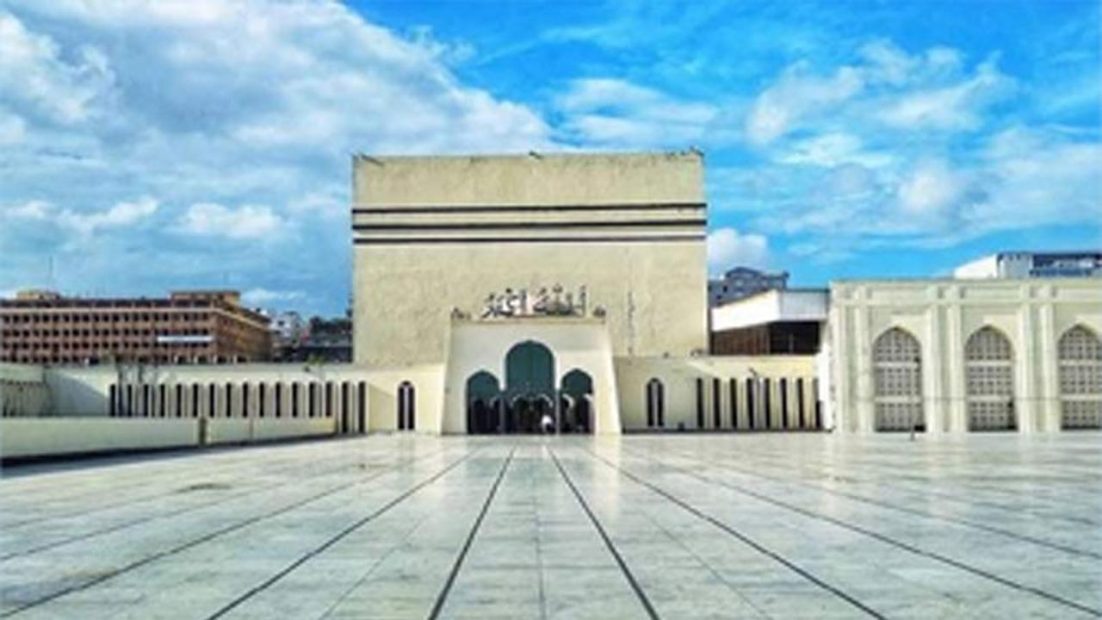
Mufti Abdul Malek, Khatib of Baitul Mukarram National Mosque, said in his pre-sermon address before Friday prayers yesterday that those who obey Allah (SWT) and His Messenger (PBUH) will achieve success. Obeying the Prophet (PBUH) is obligatory for every Muslim. A believer must have faith and confidence in the guidance found in the life and teachings of the Prophet (PBUH). Those who reject this ideal are misguided.
He said Muslims must follow the life and teachings of the Prophet (PBUH) and firmly believe in his Sunnah. They must wholeheartedly accept his Shariah and apply its teachings in their daily lives. Allah (SWT) has declared that the Messenger (PBUH) is the best example for those who believe in the Hereafter.
Mufti Rahmatullah Taqi bin Abdul Ghani, Khatib of Rasulbagh Jame Mosque in Bank Colony, Mugda, Dhaka, said in his Friday sermon that a muezzin is a great person who proclaims the oneness of Allah (SWT) through the call to prayer (Azan) and Iqamah every day.
A muezzin presents Allah’s greatness and glory before the world, bears witness to the prophethood of Muhammad (PBUH) and calls people towards prayer and righteousness. The call to prayer declares that all power and authority belong to Almighty Allah alone.
He said the Azan is not merely a means of announcing prayer times; it is also a powerful declaration of the oneness of Allah (SWT) and the prophethood of His Messenger.
The Holy Quran praises those who call people towards Allah (SWT). Allah (SWT) says: “And who is better in speech than one who invites to Allah (SWT) , does righteous deeds, and says, ‘Indeed, I am of the Muslims’.” (Surah Fussilat, 41:33)
According to Islamic scholars, this verse is directly associated with the honour and status of muezzins. Those who raise their voices every day to call people towards their Creator hold a special position in Islam.
On the other hand, Allah (SWT) has warned those who mock the call to prayer: “And when you call to prayer, they take it in ridicule and amusement.” (Surah Al-Ma’idah, 5:58) Mufti Rahmatullah Taqi also quoted a hadith in which Prophet Muhammad (PBUH) prayed for imams and muezzins, saying: “The imam is responsible, and the muezzin is entrusted with a trust. O Allah (SWT), guide the imams and forgive the muezzins.” (Abu Dawud, Hadith 517)
He also cited a hadith stating that a person who gives the Azan for six years will be granted protection from Hell. (Tirmidhi, Hadith 208) Meanwhile, Mufti Faizullah Jibanpuri, Khatib of Baitun Nur Jame Mosque in North Manda, Mugda, Dhaka, said in his pre-sermon address that prayer can protect people from immoral and evil deeds.
He said, “If a person’s prayer is correct, everything else in their life will be right. If there is dishonesty in one’s prayer, it will also be reflected in other activities. When prayer is properly established, it brings peace to personal, family and social life, as well as every sector of national life.”
He quoted Prophet Muhammad (PBUH) as saying: “Do not associate anything with Allah (SWT), even if you are killed or burned. Do not disobey your parents, even if they order you to abandon your family and wealth. Never deliberately abandon an obligatory prayer, because whoever deliberately abandons an obligatory prayer loses Allah’s protection. Do not drink alcohol, for it is the key to all immoral acts. Stay away from sinful deeds, because sins bring down the wrath of Almighty Allah.”
Mufti Faizullah said prayer cannot prevent people from immoral and evil acts unless they sincerely repent of serious sins such as usury, bribery, looting, robbery and backbiting before offering prayers and resolve not to return to such activities afterwards.
He also cited several hadiths highlighting the importance of prostration (Sajdah) and regular prayers. Mad’an ibn Talha al-Yamari (RA) narrated that he met Thawban (RA), a freed slave of the Prophet (PBUH), and asked him about an act that would lead him to Paradise. After being asked three times, Thawban quoted the Prophet (PBUH) as saying:
“You should perform as many prostrations as possible for Allah (SWT). For every prostration you perform for Allah (SWT), He will raise your status by one degree and erase one of your sins.” (Sahih Muslim, Hadith 488)
Another hadith, narrated by Rabi’ah ibn Ka’b al-Aslami (RA), states that he once spent the night with the Prophet (PBUH) and served him by bringing water for ablution and other necessities. The Prophet (PBUH) then asked him to make a request. Rabi’ah replied that he wished to be with the Prophet in Paradise. When the Prophet asked whether he had any other request, Rabi’ah said that this was his only wish.
The Prophet (PBUH) told him: “Then help me achieve this for you by performing many prostrations.” (Sahih Muslim, Hadith 489) Abu Hurairah (RA) narrated that the Messenger of Allah (PBUH) said: “Whoever goes to the mosque in the morning or evening, Allah (SWT) prepares a welcome and hospitality for him in Paradise each time he goes.” (Sahih Bukhari, Hadith 662)
The khatib concluded by praying that Allah (SWT) grants everyone the ability to remain steadfast in prayer throughout their lives and leave this world as practising Muslims. Ameen.