Protests Erupt in 25 European Countries Amid Rising Public Discontent
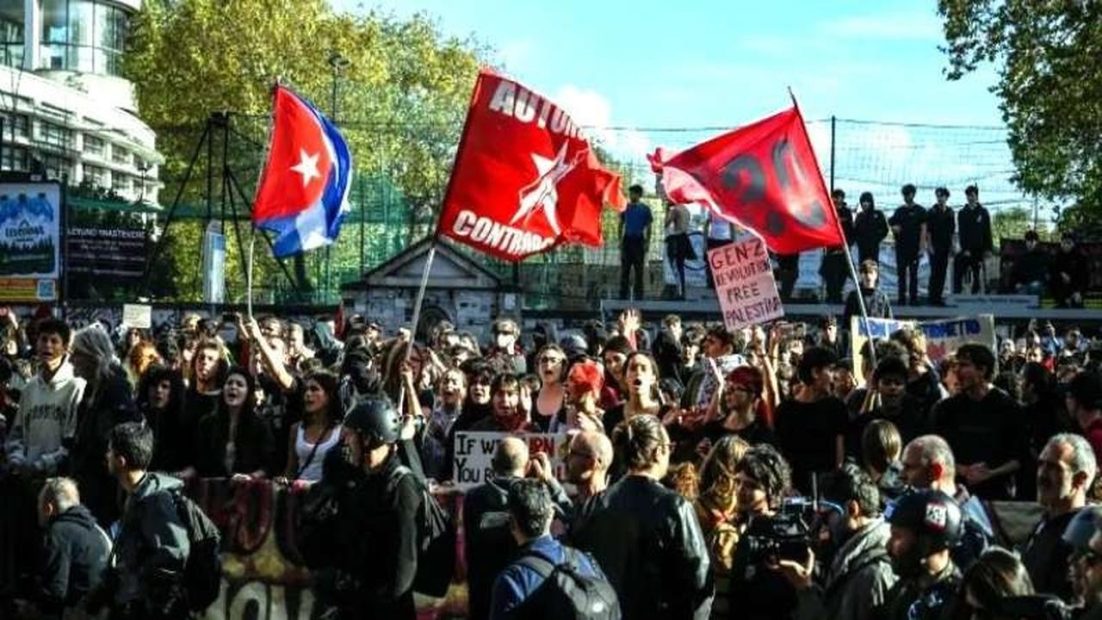
Protests have erupted in 25 European countries amid growing public anger over the rising cost of living, stagnant wages, inadequate public services, military spending and the climate crisis. Thousands of people have taken part in demonstrations since Friday in countries including the United Kingdom, Austria, Germany, Spain, Italy, Sweden and Croatia, demanding better living conditions and increased investment in public services.
Inspired by protests in France, the movement shows no signs of slowing down. According to the European Union’s statistics agency Eurostat, the cost of food, energy, transport and household expenses in France, Italy, Spain and Portugal rose by 59% to 78% between 2000 and 2025.
Data from the Organisation for Economic Co-operation and Development (OECD), adjusted for inflation, show that real wages in Italy have fallen by around 5%. In contrast, real wages have increased by 7% in Spain, 11% in France and 20% in Portugal.
Massive Demonstrations in Italy
In Italy, millions of people took to the streets in more than 100 cities as part of a nationwide general strike organised by the country’s largest trade union, the Italian General Confederation of Labour (CGIL). They demanded higher wages and increased investment in education and healthcare.
In Rome, protesters threw objects at the Education Ministry, while clashes broke out between demonstrators and police in Bologna. In Milan, protesters set fire to a cardboard oil tanker and effigies of Israeli Prime Minister Benjamin Netanyahu and US President Donald Trump.
Speaking in Rome, CGIL leader Maurizio Landini said, “The demand for change is growing stronger across Europe and among ordinary people.” Meanwhile, Democratic Party leader Elly Schlein criticised Prime Minister Giorgia Meloni’s proposed 2027 budget law, saying it offered no vision for the country’s future. She said funding for public healthcare and education was being reduced without providing adequate support to the industrial sector.
Demonstrations in Germany, Austria and Croatia
In Germany, the protest group ‘Gen Z Regelt’ organised demonstrations in 73 cities and towns. Around 4,000 people gathered at Alexanderplatz in Berlin. Thousands also assembled in Cologne to demand increased investment in education and oppose the possible reintroduction of compulsory military service.
In Austria, several hundred people protested outside the University of Vienna, demanding higher education spending and reduced military expenditure. After reports of disorder, police used pepper spray to disperse the demonstrators and arrested several people.
In Croatia, students boycotted classes and staged protests in around a dozen cities. They demanded greater investment in education, housing and public services instead of military spending. Demonstrations were also reported in the United Kingdom, Spain and Sweden, although details of the cities and specific local demands were not provided.
Protests Continue Following French Demonstrations
The latest demonstrations follow major protests that began in France in September. According to the French Interior Ministry, around 146,000 people took part in demonstrations across the country, including 28,000 in Paris. However, the country’s General Confederation of Labour (CGT) put the number of protesters at more than 500,000.