
Rangpur char farmers set to transform the agricultural economy
Halim Ansari, from Rangpur
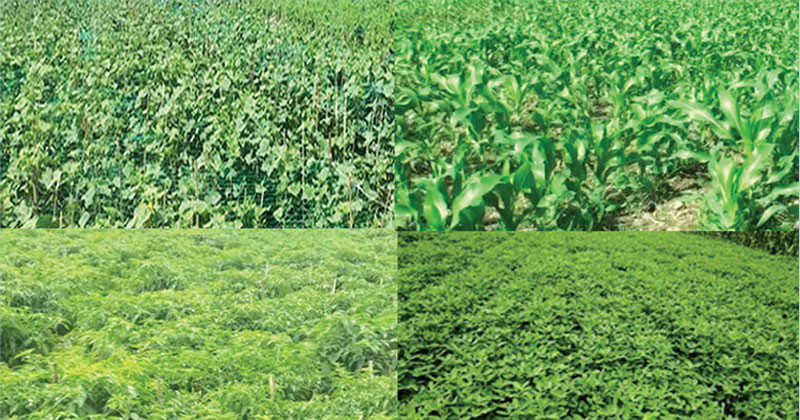
Green fields now cover the once barren sandbars of the mighty Teesta river. Green stretches as far as the eye can see across these silvery char lands. Farmers grow maize, groundnut, onion, chili, sweet pumpkin, sesame, and millet across these areas. Farmers across the greater Rangpur region have changed their fortunes through these winter crops. Proper support, cooperation, and guidance could help these farmers transform the region’s entire agricultural economy.
A field visit covered char areas along the Teesta, Dharla, and Dudhkumar rivers. These areas span Rangpur’s Gangachara, Kaunia, and Pirgachha upazilas, Lalmonirhat’s Patgram, Aditmari, and Hatibandha upazilas, Nilphamari’s Domar, Dimla, and Jaldhaka upazilas, and parts of Kurigram. Numerous silvery sandbars have emerged from the mighty river’s changing course. Shifts in the river’s direction and flow have also made older chars and riverside land suitable for farming. Sand mixed with silt has made this land fertile and well suited for winter crops. Farmers in these riverside areas have taken up various winter crops on this silt rich land.
Farmers said river erosion has repeatedly stripped them of everything they own. Recurring floods each year then destroy whatever crops remain on their small remaining plots. This has forced farmers and middle class families in the region into a very hard life. Local farmers have turned to winter crop farming on the Teesta char lands to recover from past losses. Maize, millet, sweet pumpkin, chili, okra, and eggplant have drawn particular interest due to their good yields. Favorable weather has boosted yields across nearly every winter crop this season.
Farmers said maize and millet bring double the profit compared to rice or wheat farming. Maize yields 40 to 45 maunds per bigha. This output sells for 40 to 45 thousand taka. Growing costs run 12 to 15 thousand taka per bigha. Farmers expect strong profits if the weather stays favorable through harvest.
These char lands once lay fallow because other crops did not yield well there. Farmers now grow various winter crops on this land instead. These crops now bring good yields and good prices. Proper training, guidance, and access to fertilizer and seeds could help farmers in these poverty stricken areas become self reliant and boost the region’s farm economy significantly.
The same scene appeared across riverside char areas in neighboring Kurigram, Lalmonirhat, and Nilphamari districts. No fallow land remains anywhere in these char areas. Farmers grow some winter crop on every available plot, turning these char lands green.
In Kurigram, winter crop fields stretch across the horizon at Indur Mara Char, Ramaniyashar Char, Gorai Piyar Char, Paniyaler Char, Joan Setrar Char, Hakdangar Char, and Dari Kishorpur Char along the Teesta basin. Green fields extend in every direction.
Farmers said maize yields well on char land and fetches good market prices. Maize now serves multiple uses beyond the grain itself. Maize cobs, green maize stalks, and dried maize stalks find strong demand as cattle feed and fuel. Farmers favor maize because early planting lets them grow rice on the same land afterward. Farmers have planted maize and other winter crops across more than a thousand hectares of char land in this area.
Char areas along the Teesta in Gaibandha district’s Sundarganj, Sadullapur, and Saghata upazilas have also seen extensive winter crop farming this year. Farmers have rushed to prepare land for winter crops ahead of the coming winter season. Favorable conditions point toward a bumper harvest across every char area in these upazilas. Thousands of people once left destitute by the river now see new hope through winter crop farming.
The upazila agriculture office said the fierce Teesta has left thousands of people homeless and landless over the years. These destitute families have left behind generations old trades. Many now pull rickshaws or vans, or travel elsewhere in the country to sell their labor. The shrinking navigability of the Teesta has caused new chars, both large and small, to emerge, offering these families new hope. Many now grow winter crops on these chars and have found a new path to earn a living. Authorities provide free fertilizer and seeds to support these farmers. Officials also encourage farmers to grow early variety winter crops on fallow char land, and farmers have responded by preparing their land accordingly.
The agriculture department also said the silt rich soil on these emerging Teesta chars yields good harvests of maize, millet, sweet pumpkin, groundnut, okra, chili, ridge gourd, eggplant, and sweet potato. Farmers have grown more interested in these crops as a result. Farmers favor maize most because it costs less to grow and yields more, making it highly profitable. Farmers then plant jute on the same land after harvesting maize.
The upazila agriculture officer said 70 to 75 percent of the region’s winter crops now grow on char land. Timely access to farm inputs and advice has driven steady growth in profitable maize farming.
The Lalmonirhat Department of Agricultural Extension said nearly 50 thousand farmers in the district now profit from maize farming. Char land farmers in particular profit from growing maize, millet, groundnut, sweet pumpkin, okra, chili, and eggplant. These winter crops require little investment. Char land farmers have turned to these crops because they cost little to grow yet yield generously.
The same scene appeared across char areas in Nilphamari’s Dimla upazila and Rangpur’s Gangachara, Kaunia, and Pirgachha upazilas. A field visit found various winter crops growing across thousands of hectares of land that emerged from the Teesta riverbed. No land lies fallow anywhere. Each monsoon season, hill floods carry pebbles, coarse sand, and silt down from upstream, quickly filling the riverbed and creating numerous new chars. Layers of silt over this sand have made these chars fit for farming. Farmers now grow maize, millet, sweet pumpkin, onion, garlic, chili, yard long beans, sweet potato, groundnut, bitter gourd, eggplant, Malabar spinach, and bottle gourd on this silt rich land. Char land farmers have thrown themselves into winter crop farming to recover from past losses. Providing these farmers with proper guidance, training, and better seed varieties could help them change their fortunes and transform the region’s agricultural economy.