Reconciliation? There Is Still a Long Way to Go Before It Can Happen
Mobayedur Rahman
Before I chose the headline you are reading, I remembered a famous poem by the American poet Robert Frost. The poem is called ‘Stopping by Woods on a Snowy Evening’. The last four lines of this poem of 16 lines are:
The woods are lovely, dark and deep,
But I have promises to keep,
And miles to go before I sleep,
And miles to go before I sleep.
The meaning is this: the woods are lovely, dark and thick, but I must keep my promises. I have many miles to go before I sleep, and I have many miles to go before I sleep. The poem has only 16 lines, but it holds a deep sense of life. Mr. Frost stayed awake all night and wrote a poem named ‘New Hampshire’.
Early in the morning, he rode a horse carriage through heavy snow and cold and stopped beside a thick, deep forest. There he felt that he had a duty toward life. He must keep travelling toward his goal to fulfil that duty.
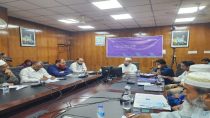
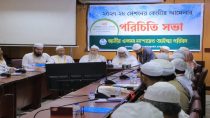
In Bangladesh these days, a familiar group is slowly trying to raise a voice through seminars, symposiums and discussion meetings. The voice is reconciliation. Here reconciliation means compromise or peaceful living side by side. They do not say it directly and speak in hints.
It is like lifting rice or polao from a plate and taking the hand around to reach the mouth instead of putting it straight in. Let me say it clearly without this pretence. They want a space for the Awami League too. They have found that the Awami League has at least 35 percent support.
In the dialogue they held on the Bay of Bengal (they call it conversation), some even said the Awami League has 40 percent supporters. They say that if we keep these 35 or 40 percent of people out of politics, the division in society will become permanent. They say that if society stays divided forever, peace will never come to the country. If someone wants to swing a club at empty air, no one has anything to say.
I feel sorry for them, because they are blind even with eyes. Did they not see the daily events of the July Revolution on television or YouTube? Did they not see 4 August, or more exactly 5 August? In the poet’s words, it was a stormy sea of waves of people.
Whether you say Dhaka or the small towns, all the roads were packed with people. In Dhaka, it seems about one crore people entered the city from different points. That stormy wave of people crashed on and moved toward Ganabhaban. I saw the mass uprising of 1969 and the mass uprising of 1990 too.
Those were crowds like forests of people. But I have never seen so many people in my life as in the July Revolution, especially from 3 to 5 August. The roads were full. There was not even space to ride a bicycle.
Grandfathers, fathers, mothers, grandsons and granddaughters all joined the march. That is why Ms. Sheikh Hasina could not stay in power even after her side killed 1,400 people and wounded about 26,000 people with bullets. She had to take shelter in India to save her life. If even 20 percent of the people in that 35 percent had come to the streets, Ms. Sheikh Hasina would not have had to leave her seat.
The army would not have said on 3 August that it would no longer fire on the chests of its unarmed brothers. People get angry. We say they burn with rage. People showed anger during the Liberation War too. But with time, that anger cools down.
The same thing happened with the July Revolution. During the Liberation War, freedom fighters killed many people, and those who could hide began to come out about a year later. The same thing is happening now. In the first one or two years after Bangladesh became independent, no one spoke of reconciliation.
Mr. Sheikh Mujibur Rahman himself promised the trial of 10 thousand Pakistan army soldiers. Instead, in the cold air of the hill town Shimla, Indian Prime Minister Ms. Indira Gandhi and Pakistan President Mr. Zulfikar Ali Bhutto signed an agreement and kept Mr. Sheikh Mujib outside. Through it they arranged to send 93 thousand Pakistani prisoners of war back home. Mr. Sheikh Mujib kept saying without a break that the war criminals, meaning the Pakistani soldiers, would face trial on the soil of Bengal.
Then they cut the number of accused among the Pakistani prisoners down to 195. Ms. Indira Gandhi sent even those 195 people to Pakistan without telling Mr. Sheikh Mujib. In the Liberation War, the Pakistan army killed East Pakistanis. But in the July Revolution of 2024, Bangladeshis killed Bangladeshis, meaning the force of Mr. Sheikh Mujib and the law enforcement forces. We must keep this point in mind for the discussion ahead.
Two
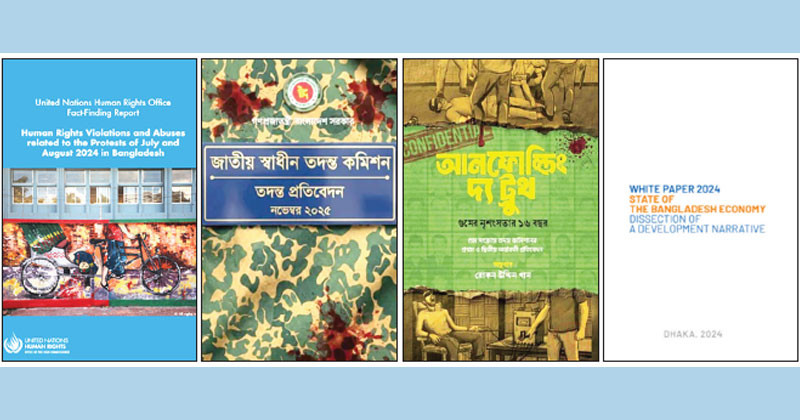
As I write this, I have four documents on my table, which are the investigation reports of four commissions. The first is White Paper 2024, State of the Bangladesh Economy, Dissection of A Development Narrative. The book has 387 pages, and each page is bigger than A4 size. This book shows with documents how 234 billion US dollars, or Tk 28,91,370 crore in Bangladeshi money, was looted and smuggled out of the country.
The second document is ‘Unfolding the Truth, 16 years of the brutality of enforced disappearance, first and second interim reports of the Commission of Inquiry on enforced disappearance’. It has 345 pages. The third is ‘Human rights violations and abuses in the July and August movement in Bangladesh in 2024’. The UN Human Rights Commission made this report after an investigation, and it has 272 pages.
The fourth is the ‘National Independent Investigation Commission, Investigation Report, November 2025’ on the BDR massacre, and it has 211 pages. I have another document, the ‘Report of the Constitution Reform Commission’. One more is the ‘July National Charter 2025, Path map of the future’. I read all these documents patiently and took enough time.
Those who read the UN report, the enforced disappearance commission report and the BDR killing report will shudder. Every hair on their body will stand up. I also have two books written separately by Lt. Gen. (Retd.) Mr. Aman Azmi and Barrister Mr. Arman MP about their eight years in the Aynaghar. I do not link them with today’s writing.
You cannot know how terrible genocide, brutality and cruelty can be without reading these reports. Ms. Sheikh Hasina and her Awami League government played this Holi of blood for 15 years. The International Crimes Tribunal (ICT) has so far given death sentences to 23 people, including Ms. Sheikh Hasina, Mr. Obaidul Quader and Mr. Asaduzzaman Khan Kamal. But no one has carried out even one sentence, because all of them are on the run and outside the country.
Three
In the Nuremberg trial in Germany, besides death sentences, the court banned the Nazi Party. The Nazi Party has been banned in Germany for 81 years now. In Bangladesh too, people from all walks of life demand a ban on the Awami League as a party. During the government of Mr. Yunus, officials said they would file a case to ban the party.
The BNP made the same promise. Home Minister Mr. Salahuddin Ahmed said even more clearly the other day that they will never allow the Awami League to do politics in Bangladesh in their lifetime. An executive order keeps the activities of the Awami League banned. An executive order keeps the Chhatra League banned too.
One executive order can be taken back by another executive order. But when a court bans a party, nobody except the court can lift that ban. That is why the Nazi Party stays banned in Germany even after 81 years. In Bangladesh, the home minister and the law minister have said many times that they will file a case in court to ban the Awami League.
But it stops there. The government has not told the public anything about the preparation or progress of the case. Not only that, the report of the BDR massacre commission points a finger clearly at the Awami League and India for this horrible bloodshed. Even then, we do not know whether anyone has prepared a case for the BDR killings.
Killers murdered many Islamic scholars in cold blood in the dark of night at Shapla. The government has formed no commission to investigate this Shapla massacre of scholars. People have filed several cases here and there at a personal level. To keep a record in history, the government must immediately form an investigation commission, like the BDR massacre commission, on the Awami League’s killing of scholars.
That commission must also fix responsibility clearly, as the BDR report did. Until these trials end, until the trial to ban the Awami League as a party ends, and until the ICT murder cases end, no question of reconciliation can arise. Many people talk about asking for forgiveness. Does only asking for forgiveness pardon seven murders?
Before the 1996 election, Ms. Sheikh Hasina tied a band around her head, printed pictures of herself praying, and melted people’s hearts to win power. She ruled for 20 years in total, four times: once in 1996, and three times from 2009. We need not say again what ruin she brought on the state and the people while in power. Such a cursed leadership and party have no right to come to power.
So we should tell those who speak of reconciliation clearly that there is no room for reconciliation until these trials end and the Awami League is banned as a party. When the trials end, we can raise the question of reconciliation with those Awami League members who prove they took no part in genocide and other crimes. That will happen at the right time. Until then, they must wait.
They have committed many sins, and they must pay the price. They have committed many sins, and they must atone for them.