Restoring Trust and Festive Spirit in UP Elections
Union Parishads (UPs) are the oldest and most accessible tier of local government in Bangladesh. They play a vital role in providing services, including birth registration, citizenship certificates, rural infrastructure development, social safety-net benefits and resolution of minor local disputes.
However, the grassroots governance system has long suffered from a representation crisis and administrative stagnation. Following the July uprising of 2024, many elected representatives became absent from local government bodies. Numerous UP chairmen and members went into hiding, while administrators or panel chairmen took charge of other institutions. Consequently, ordinary people have faced difficulties accessing public services.
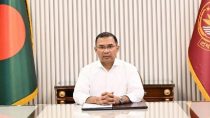
The Election Commission, led by Chief Election Commissioner AMM Nasir Uddin, has announced a roadmap for elections to around 4,300 Union Parishads. Voting will take place in five phases between January 21 and May 27, 2027.
The process leading to the final schedule was far from smooth. After the uprising, political parties disagreed over whether local government or parliamentary elections should be held first. Jamaat-e-Islami and the National Citizen Party (NCP) demanded local elections before the national polls, while the BNP opposed the idea. The interim government eventually held the 13th parliamentary election and a referendum on the July Charter in February before transferring power to an elected government. Responsibility for local government elections thus fell to the current BNP-led government.
Uncertainty over the schedule continued after the new government took office. In early June, Election Commissioner Abdur Rahmanel Masud suggested that the schedule could be announced in August, with voting beginning in October. On September 14, Election Commissioner Brigadier General (retd) Abul Fazal Md. Sanaullah announced a preliminary plan to hold the elections in seven phases from November 12.
The following day, State Minister for Local Government, Rural Development and Cooperatives Mr. Mir Shahe Alam said the commission had not consulted the government before setting the dates. At a subsequent meeting on September 17, officials cited annual examinations, the Bishwa Ijtema, the two Eid festivals and police training schedules as obstacles to holding elections in November and December. The commission abandoned its initial plan, and talks with political parties scheduled for September 23–25 were postponed.
On October 12, the commission finalised a five-phase schedule. Voting is scheduled for January 21, February 4, April 29, May 13 and May 27, 2027. The first phase will cover around 800 Union Parishads across 80 upazilas. District election officers will announce schedules locally, 38 to 45 days before voting. Elections will initially be held in Union Parishads near district headquarters, followed by those around upazila headquarters to facilitate the deployment of law enforcement personnel. The commission has also decided against using electronic voting machines (EVMs).
With the schedule finalised, the main challenge is ensuring credible and peaceful elections.
Union Parishad elections once brought a festive atmosphere to rural Bangladesh, with gatherings at tea stalls, posters, campaign loudspeakers and lively neighbourhood discussions. During the past 15 years of authoritarian rule, however, local elections became marked by violence and irregularities.
The introduction of party symbols deepened political divisions in rural communities. Polling centre capture, ballot stuffing, obstruction of opposition candidates from submitting nomination papers and uncontested elections became major concerns. Election-related deaths and attacks on homes further undermined public confidence in the electoral system.
Restoring that confidence is now the greatest test for the government and the Election Commission.
One encouraging development is that the upcoming elections will not use party symbols, potentially giving popular and acceptable grassroots candidates a better opportunity to compete. The commission has also pledged to ensure free, fair and impartial polls.
Election Commissioner Mr. Abdur Rahmanel Masud has said the commission wants to follow the standards set by the February parliamentary election. Amendments to the Union Parishad Election Rules have introduced stricter penalties for electoral offences.
Under Rule 80(a), threatening or obstructing election officials, hindering journalists and observers, or damaging their equipment are punishable offences. Preventing voters from entering polling centres or forcing candidates to submit or withdraw nomination papers may carry up to two years in prison, a fine of Tk 10,000, or both.
The commission also plans to deploy judicial and executive magistrates and establish monitoring committees. It may cancel a candidate’s nomination following an investigation into violations committed by the candidate, an agent or someone acting with the candidate’s consent. Where vote-rigging or force compromises polling, the commission may suspend results and order a fresh vote.
These measures are encouraging, but strict laws alone cannot guarantee fair elections. Genuine political commitment and administrative neutrality are essential.
Unlike the previous parliamentary election, which was held under a non-partisan interim government, the upcoming UP elections will take place under an elected party-based government. The appointment of political figures as local government administrators has already drawn criticism. Jamaat-e-Islami and the NCP have also raised concerns about the lack of coordination between the government and the commission, describing the polls as an acid test for both institutions.
The BNP, meanwhile, has pledged to strengthen local government under its 31-point reform agenda and is pursuing a strategy of fielding single candidates at the grassroots level. State Minister Mr. Mir Shahe Alam has said the government has allocated nearly Tk 6,000 crore for the process and does not want the elections to be marred by controversy.
Ensuring credible and inclusive elections is a shared responsibility. The Election Commission needs government support in technical, financial and administrative matters, while the government must ensure that the administration remains impartial.
The ruling party must restrain its activists and avoid using administrative influence. Opposition parties should also participate actively and constructively. The commission must enforce electoral rules firmly and impartially rather than merely amend them.
Ultimately, voters must be free to choose their representatives without intimidation or interference. Rural Bangladesh deserves peaceful, festive elections, free from bloodshed, violence and polling centre capture.
The writer is a journalist and columnist.
Website: rintuanowar.com