Rising Islamophobia in Catalonia Shifts Political Equations in Spain
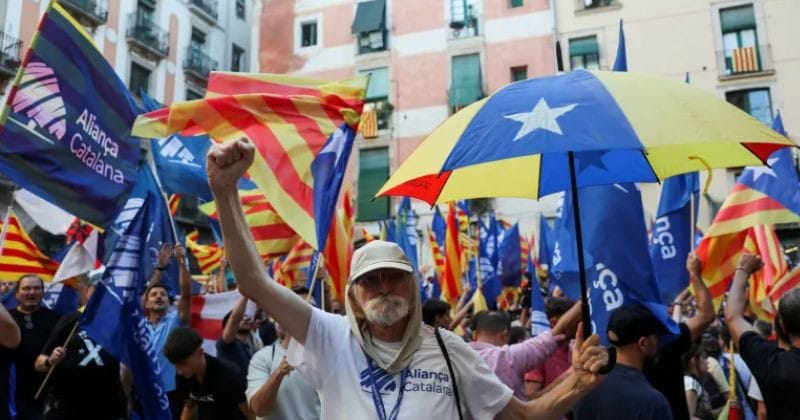
Once driven by a failed independence movement nearly a decade ago, Catalonia’s political landscape is now increasingly shaped by anti-immigration and anti-Islamic rhetoric. As home to Spain’s largest Muslim population, the affluent region has seen the rapid rise of Aliança Catalana, a new far-right party capitalising on these shifting voter priorities.
Alongside demands for strict immigration limits, the party has labelled Islam a major threat to Catalan society. Recent opinion polls suggest that Aliança Catalana could emerge as the second-largest political force in the upcoming regional elections, following the Socialist Party. The movement mirrors a broader political trend across Europe, riding the anti-immigrant sentiment that has fueled far-right gains in Germany, Italy, and France.
However, the party’s rise has sparked deep anxiety among Catalonia’s immigrant and Muslim communities. Soukaina El Abdi, president of the organisation Young Moroccans in Ripoll, described the political surge as the product of unfounded hatred and disinformation. She noted that most people arrive seeking work and a better life, while certain factions systematically spread falsehoods about the Muslim community.
Analysts observe that the far-right is exploiting public frustrations over housing shortages, unemployment, and general insecurity to stoke Islamophobia. Despite these narratives, immigrants remain integral to Spain’s economy and mainstream society. Experts warn that such extremist political trends pose a growing threat to democratic and multicultural frameworks not only within Catalonia, but across Europe.
Source: Al Jazeera