Shahjalal Airport’s 3rd Terminal Must Open Without Further Delay
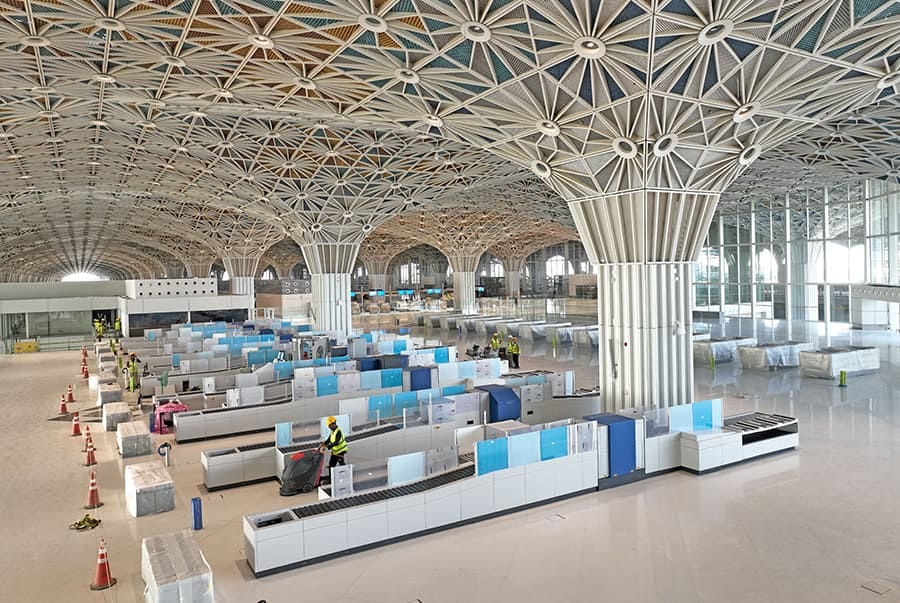
The formal construction of the 3rd terminal at Hazrat Shahjalal International Airport in Dhaka began on December 28, 2019. Although it was expected to open about a year and a half ago, various complications have delayed its launch. The current government is working to open the terminal on December 16 this year, but aviation experts remain doubtful that the deadline can be met. The appointment of an operator and the management agreement have yet to be finalised, raising questions about whether the terminal can operate at full capacity by the end of 2027 or before 2028.
Experts warn that unless commercial operations begin soon, the facility could become a financial burden rather than transform the country’s aviation sector. A report published in Daily Jugantor yesterday said construction, costing nearly Tk22,000 crore, is almost complete, yet commercial operations have not begun. Meanwhile, repayment of the loan from the Japan International Cooperation Agency (JICA) is due. SM Lablu Rahman, member (administration) of the Civil Aviation Authority of Bangladesh (CAAB), told Daily Jugantor that Tk1,200 crore of the nearly Tk16,500 crore Japanese loan must be repaid this month (June), followed by another Tk1,000 crore in December. The payments are almost equal to CAAB’s annual surplus income. Experts warn that without prompt commercial operations and revenue generation, the mega project could become a major financial burden on the state.
Air Travel
The 3rd terminal cost Tk21,399 crore, of which the Bangladesh government provided Tk5,258 crore, and JICA provided Tk16,141 crore as a loan. Under the agreement, the first instalment was due in June this year and the second in December, with repayments continuing until 2056. Although repayment was supposed to begin about a year and a half ago, CAAB secured an extension from JICA because the terminal had not opened. However, the authorities have still not completed the full handover and takeover process.
Officials involved in the project attributed the delay to the interim government’s failure to reach an effective understanding with Japan on operating and launching the terminal and to take a firm position on extending the loan repayment deadline. They said the project should have advanced with the understanding that every delay would increase repayment pressure. If the operating agreement is not signed soon, full operations will be difficult to begin within the proposed timeframe. Even after signing, the operator will need additional time for preparation, recruitment, training and mobilisation, further increasing the financial burden. Bangladesh is bearing the cost of these delays.
Experts say the project can become economically viable only by increasing both passenger and cargo traffic. Yet despite construction being nearly complete, an agreement with the Japanese consortium on operational arrangements and revenue sharing has not been reached. The lack of an operational framework has therefore become one of the biggest obstacles to putting the terminal into commercial service.
Travel Guides & Travelogues
Bureaucratic complications and institutional weaknesses have contributed to the failure to open the project on schedule. Experts say an undertaking of this scale required greater expertise, planning and practical experience. Instead, the terminal remains unopened while loan repayments are due. Had it opened on schedule, it could already have become a major source of revenue.
The authorities must explain why the project has been delayed and why the state must begin repaying the loan before the terminal generates income. Since the Hasina government’s tenure, authorities have repeatedly promised that the terminal would open soon, but it remains unopened and further complications have emerged. At a time when the economy is under severe pressure, servicing debt without generating revenue will add to the burden. The government and relevant authorities cannot evade responsibility for the resulting financial losses.
The immediate priority must be to resolve the outstanding issues, finalise the operating agreement and open the terminal without further delay. At the same time, making the facility financially viable will require a broader commercial strategy. Authorities should attract more international airlines, increase transit passenger numbers, expand cargo operations and ensure efficient management of commercial space.
The 3rd terminal represents one of the country’s largest investments in aviation infrastructure. Delaying its commercial operation while loan repayments accumulate risks turning a potentially revenue-generating asset into a costly liability. The authorities must therefore move beyond repeated assurances and take decisive action to bring the terminal into operation.