Significant Opportunities for Skilled Bangladeshi Workers in Malaysia’s Job Market
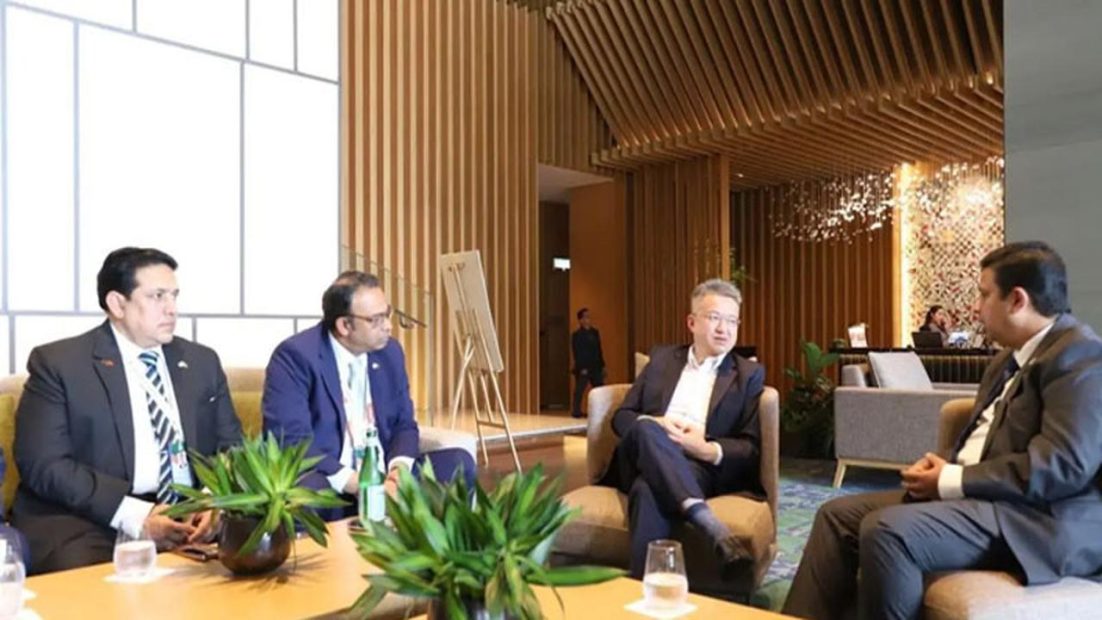
Malaysia’s Deputy Finance Minister Liew Chin Tong stated that there is a demand for skilled manpower in Malaysia’s Information and Communication Technology (ICT) sector. By developing Bangladesh’s youth through necessary technical and vocational training, significant employment opportunities could be created for Bangladeshi workers in the country’s job market.
He made these remarks yesterday during a courtesy meeting with Taskeen Ahmed, President of the Dhaka Chamber of Commerce and Industry (DCCI), in Kuala Lumpur. DCCI Senior Vice President Rajib H. Chowdhury and Vice President Salim Solaiman were also present at the meeting, according to a press release issued by the Dhaka Chamber.
Liew Chin Tong noted that to attract foreign investment to Bangladesh and expand bilateral trade, further modernization of the international transaction system is essential. In this regard, Malaysia’s experience could benefit Bangladesh in expanding Islamic financing, developing innovative financial products, and building an effective financial infrastructure.
During the meeting, Taskeen Ahmed stated that total bilateral trade between Bangladesh and Malaysia reached approximately $2.57 billion in the 2024–25 fiscal year. Out of this, Bangladesh imported goods worth nearly $2.293 billion from Malaysia and exported items valued at around $282 million.
The DCCI President highlighted that to boost bilateral trade between the two Muslim-majority friendly nations, both governments have scope to work more closely together while exploring new areas of economic cooperation. Creating new business opportunities is achievable through mutual trust, shared experience, and technology transfer.
Taskeen Ahmed added that the Government of Bangladesh has taken initiatives to offer long-term incentives and investment-friendly facilities in the renewable energy sector, including power supply and solar power generation. Malaysian entrepreneurs can invest in this sector to leverage Bangladesh’s growing energy demand and renewable energy potential. This could establish a long-term, mutually beneficial partnership. Cooperation in the energy sector can be made more effective and sustainable through technology transfer, skill development, and joint investments.
The DCCI President also raised the topic of Bangladesh’s Mobile Financial Services (MFS) sector during the meeting. He stated that an effective and popular MFS model has developed in Bangladesh, which is utilized across various regions including the Middle East. Bangladesh’s expertise in this field could serve as a valuable reference model for Malaysia as well.