Solar Power Potential in Transport Sector
Eklas Haque
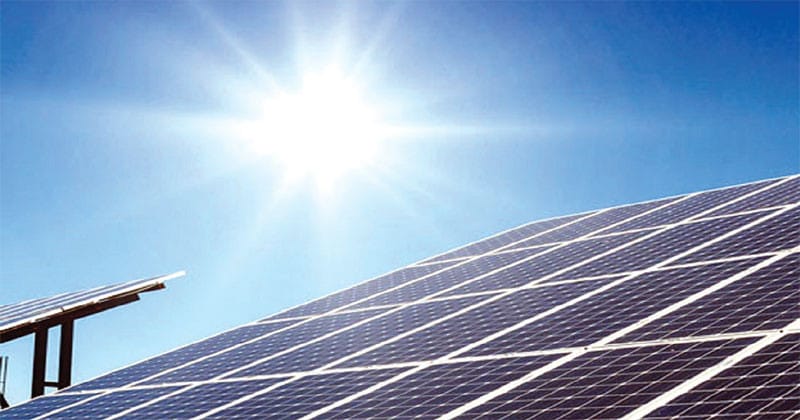
Experts and policymakers are calling for the quick integration of solar energy into Bangladesh’s transport sector to alleviate the country’s current energy crisis, reduce fuel imports, and establish a sustainable transportation network. The development of solar-assisted electric vehicle (EV) charging stations with battery storage along key roads, ports, and rest areas, as well as the installation of rooftop solar panels on public transportation and the powering of railroad signalling, are important proposals. In keeping with this goal, the government has already ordered five significant government buildings- including Bangabhaban and the Prime Minister’s Office- to get the majority of their electricity from solar power, and it intends to expand this requirement to all public offices.
At the same time, experts in urban planning are demanding that Dhaka’s more than two million unregulated, battery-powered autorickshaws be phased out immediately in order to create room for contemporary transportation management. These cars, which operate mostly on illegal grid connections, severely disrupt capital traffic, interfere with contemporary AI-camera surveillance systems, and use hazardous lead-acid batteries that pose serious risks to public health and the environment, including arsenic exposure.
The Center for Policy Dialogue (CPD) has suggested significant budgetary changes to reduce project costs and draw in resources to hasten the implementation of green transit. The policy think tank suggested reducing import tariffs on lithium-ion batteries from 25% to 5%, doing away with the 20% supplemental duty on energy storage systems, waiving the 7.5% advance tax on solar equipment, which currently raises overall import duties to 31%, and lowering overall import taxes on electric vehicles.
Dr. Hadiuzzaman, a professor of civil engineering at BUET, emphasised the necessity for a comprehensive approach, saying that separate projects won’t provide long-lasting effects and a thorough feasibility assessment, including rail, road, and waterway transportation. Concerning vehicle-mounted installations, he stated, ‘While solar panels on bus roofs may not run the main engine, the generated power can run lights, fans, GPS, and auxiliary systems, effectively reducing pressure on primary fuel consumption’.