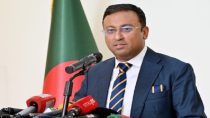
Teesta Master Plan, Padma Barrage Project Advanced to Strengthen Agriculture, Climate Resilience: PM
- The Rohingya Crisis Originated in Myanmar. Its Resolution Must Also Be in Myanmar
Prime Minister Mr. Tarique Rahman said water security is equally important. He said the Padma Barrage project is moving ahead to save and manage water, and a Teesta Master Plan is being made. He said these steps will help the farm sector and build strength against climate change. The government plans to dig 20,000 kilometres of canals and waterways in the next five years. It will also plant 25 crore trees in the next five years.
He said Bangladesh is taking a lead in using more solar power, recycling waste and setting up green factories. He said the new government took charge with a huge mandate and is moving ahead with a clear action plan to keep its promises to the people in the next five years. He said 53 of the top 100 LEED certified factories in the world are now in Bangladesh. He said clean and green cities can cut waste, build climate strength and make the economy more active.
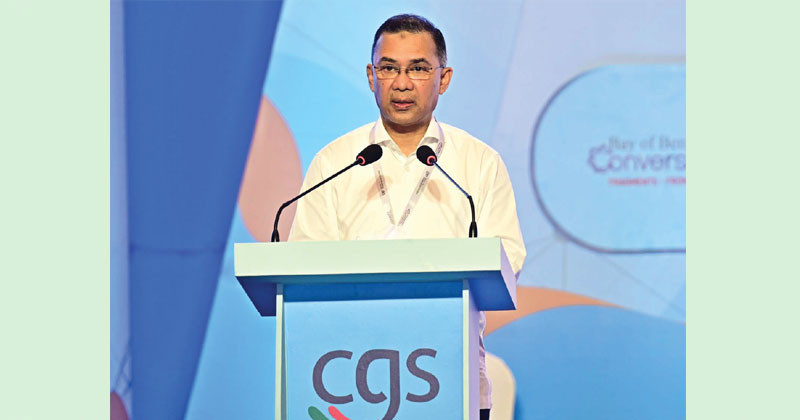
He said the government’s priorities are to protect national interest, keep policies steady, ensure economic stability and reform institutions. He said, “We are now moving from promises straight to action.” He spoke at the opening session of the three day international conference “Bay of Bengal Conversation (BOC) 2026”, held yesterday at Pan Pacific Sonargaon Hotel in Dhaka. The Centre for Governance Studies (CGS) organised the conference.
The theme this year is “Fragments, Frontiers and Futures: Navigating Power, Technology and Trust in a World Rewritten”. The conference runs from yesterday to tomorrow. About 200 speakers from over 100 countries, more than 300 delegates and over 1,000 participants are joining. Former Serbian President Mr. Boris Tadic, former Maldives President Mr. Mohamed Nasheed and former Mali Prime Minister Mr. Moussa Mara are taking part. Other former and present state officials, diplomats, policymakers, researchers, businessmen, technologists and experts from many countries are also joining.
The Prime Minister said steps have been taken to make Bangladesh an attractive place to invest and a strong centre of production and investment. He said the government wants to create many jobs in all sectors, including production, services and exports. He stressed policy certainty for investors. He said steady long term policy will give investors the certainty they need.
He said the government’s social safety programmes are designed so that the most disadvantaged people come first. He said through the Family Card, financial help will reach the mother of every family. It will start with the poorest and most left out people. He said the Farmer Card will link farmers to government incentives, farm services and the market system. He said the Health Card will ensure health care for all. He said finally, through the Universal Card, citizens will get joined government services under one umbrella.
On the promise to bring health care to people’s doorsteps, he said the government is working to hire one lakh health workers, and about 80 percent of them will be women. He said they will give basic health care, health advice and needed referral service at the grassroots level. He said the government also gives special weight to the health of mothers and children.
Mr. Tarique Rahman said education should not only be for earning certificates. He said it must also prepare students for real life. He said the government is working to give a joyful learning setting. He said culture, sports, values and morals will play an important part in the lessons to build the character of children. He said students will get the chance to learn a third language, and technical and vocational education will grow alongside general education.
Stressing better education, he said the government has taken steps to give free uniforms, school bags, midday meals and scholarships from class one. He said free education for girls is also being widened up to the degree level. He called the country’s huge young population a main driving force of national progress. He said to use this population gain, it is urgent to ensure skills, development and fitting jobs.
He said the government gives weight to better language skills, creating job chances, technology change and more use of artificial intelligence. He said innovation, entrepreneur growth and startups are getting support. He said, “We want our young people to compete on the world stage and turn brain drain into brain circulation.”
Calling farming the base of the economy, he said technology, irrigation, farm finance and market links for farm goods are being made easier to reach. He said that along with support for fisheries, livestock and rural entrepreneurs, farm processing and farm goods export industries must be pushed ahead to support food security. He said, “A strong rural economy can build a strong Bangladesh.”
Stressing institutional reform, he said strong state institutions are a must for growth. He said the government is strengthening openness and accountability in institutions. He said human rights, democratic values and freedom of speech must be protected. He stressed that the rule of law must apply equally to every citizen. He said, “We will build an institutional culture where state institutions truly serve the people of Bangladesh.”
The Prime Minister said Bangladesh still shelters about 12 lakh Rohingya refugees. He said the main goal is to ensure their quick, willing, safe, dignified and lasting return to Myanmar. He said this needs steady political support and money from the international community. He said the root causes of the crisis must also be solved. He said the crisis began in Myanmar, and it must end in Myanmar.
Calling the Bay of Bengal one of the bases of Bangladesh’s future economic chances, he said, “For generation after generation, the Bay of Bengal has played a part in deciding the fate of Bangladesh.” He said Bangladesh’s location and strategic position give it a chance to link more deeply with the world through sea ports, waterways and the coastal economy. He said there are great chances in shipping, fisheries, tourism, energy and regional supply chains.
He said, “To turn a shared regional location into shared prosperity, deeper bilateral and multilateral ties are needed.” He said cooperation can grow in trade, energy, education, technology, climate and the sea sector. He said new markets can open and more chances can be made for young people. He said, “We can build stronger cooperation based on equality, fairness and justice.”
He said Bangladesh believes in dialogue, partnership and mutual respect. He said that while protecting its national interest and sovereignty, Bangladesh will keep working positively with all its regional and global partners. He said this is because peace and harmony are the base of shared prosperity and growth. He called for making the Bay of Bengal region a place where every state grows together and gains equally. He said citizens there should reach out in meaningful cooperation. He said Bangladesh is fully ready to play its due part.
CGS organised this year’s Bay of Bengal Conversation around five main topics. They are geopolitics, security and strategic rivalry; artificial intelligence, cyberspace and information power; trade, connectivity and strategic growth; and climate, resilience and human security. Mr. Zillur Rahman, president of CGS, chaired the event. Executive Director Mr. Parvez Karim Abbasi gave the welcome speech.