The Politics Surrounding Phulbari’s Coal
Mahfuzul Haque Anar/Md. Abu Shaheed
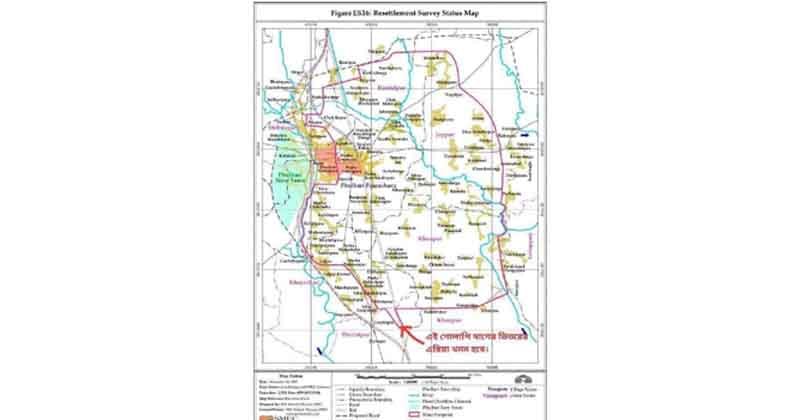
As Bangladesh struggles with an ongoing energy crisis, Phulbari’s huge coal deposits have once again come to the center of public conversation, prompting a renewed discussion about open-pit mining techniques. Following the release of a detailed piece in the Daily Inqilab and a recent policy announcement by Finance Minister Mr. Amir Khasru Mahmud Chowdhury, the conversation gained significant momentum. Opposing groups who are still strongly opposed to open-pit mining have been reenergized by this, although critics claim they are trying to influence public opinion by utilizing outdated data and strategies from 2006 without taking into account current circumstances.
Prime Minister Tarique Rahman’s fundamental position on the Phulbari coal mine last week seems to have been misunderstood or misinterpreted by the initiative’s opponents. The PM has strongly prioritized local national interests in contrast to the 2006 framework, when almost all mined coal was scheduled for export at the choice of the foreign business Asia Energy. To meet the nation’s growing domestic electricity demand, PM Tarique Rahman made it clear that coal taken from Phulbari and other local deposits will be used directly to fuel coal-based power plants.
PM Tarique Rahman addressed social and environmental issues by acknowledging that open-pit mining naturally affects homesteads and agricultural land, making local inhabitants’ welfare and protection a top priority. He emphasized that before any final implementation, thorough conversations with individuals from all walks of life will take place. A significant portion of civil society and the general public have shown a favorable and open attitude toward using the country’s mineral resources for the benefit of the state as a whole as a result of this practical approach.
Political conflicts are nevertheless evident on the ground despite this positive change in public opinion, since officials of the ruling party and activists have mainly kept silent on the PM’s plan. On the other hand, on September 5, the National Committee to Protect Oil, Gas, Mineral Resources, Power, and Ports’ Phulbari chapter held a news conference to warn of larger movements. They charge authorities with restarting GCM Resources’ previous initiatives under the cover of an energy crisis, and they contend that any open-pit extraction effort violates the historic six-point agreement obtained in 2006 following the tragic loss of three lives.
However, local viewpoints on the ground present a very complex image that is far different from general opposition, with many common people expressing cautious confidence. Speaking with a variety of experts, farmers, and landowners, Daily Inqilab officials observed that they have no concerns as long as planned urbanization, equitable remuneration, job possibilities, and contemporary housing are ensured. Several locals pointed out that certain local leaders take advantage of the coal problem just to maintain their own authority, pointing out that those with little land holdings frequently use the movement as a weapon for political advancement.
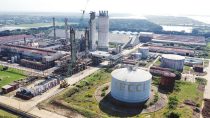
Industry insiders draw attention to the path of the nearby Barapukuria coal mine, which presently provides fuel to the national grid through its thermal power plant, by making connections to nearby activities. Open-pit methods may harvest more than 80% of the deposits in Barapukuria, whereas underground methods only collect around 20%. In addition, Barapukuria landowners who were fairly paid for their holdings have moved on with ease, and local grocery shop owners and locals have even experienced financial success rather than poverty.
The huge financial cost of the country’s reliance on imports highlights the need for domestic extraction. Bangladesh’s coal-fired power plants, both in operation and under development, have a total production capacity of 11,329 megawatts and need an incredible 33.6 million tons of coal each year. Due to Barapukuria’s low annual production of 1 million tons, the country must import almost all of its supply, costing almost six billion dollars and creating a danger to energy security.
Opposition groups and environmental activists continue to caution that open-pit mining degrades the environment over time, destroys fertile topsoil, and interferes with sensitive subsurface water management systems. Nonetheless, concerned locals and people contend that throughout the last 20 years, public opinion in the area has changed dramatically to support national growth. Local leaders such as Mr. Anarul Huq Sarkar, Mr. Humayun Sarkar, businessman Mr. Abul Hasan, and Mr. Zaman stress that they support resource abuse as long as equitable land prices, merit-based local employment, and institutional services are guaranteed.
Residents of Phulbari town expressed dissatisfaction with the town’s existing condition as well, characterizing it as an unplanned place lacking adequate drainage, garbage disposal locations, and dependable roadways that flood after light rains. They think that the neglected urban core area will ultimately be revived by combining organized municipal development with coal exploitation. The initiative’s ultimate success, according to civil society activists, will depend on how well the government carries out its commitment to put local wellbeing first.
Finally, aware circles and regular individuals alike demand that choices be made via open debate and constructive engagement, rather than blind resistance for its own sake. The government is looking for a balanced solution because there are endless coal deposits hidden beneath the earth that may solve up to 90% of the country’s coal issue and reduce pressure on natural gas. Bangladesh hopes to firmly lead its economy toward sustainable energy self-reliance by completely involving local stakeholders and protecting community interests.