Unregulated Battery-Run Rickshaws Threaten Traffic Management
AI Based Traffic Signals Bring Order to Dhaka Roads
Daily Inqilab | Eklas Haque
AI-powered traffic signals have been introduced at several major intersections in Dhaka, improving traffic discipline and offering new hope for easing congestion. At intersections equipped with AI-based traffic management, vehicles are moving more smoothly, reducing delays and inconvenience for commuters. Traffic conditions have improved noticeably at these locations.
Drivers who previously ignored red lights or crossed stop lines are now largely complying with traffic signals and stopping behind designated lines. Zebra crossings are also being kept comparatively clear. Officials attribute the improvement to AI-powered surveillance cameras, the automated e-challan system, and stronger enforcement. Experts, however, say infrastructure development remains equally important for long-term success.
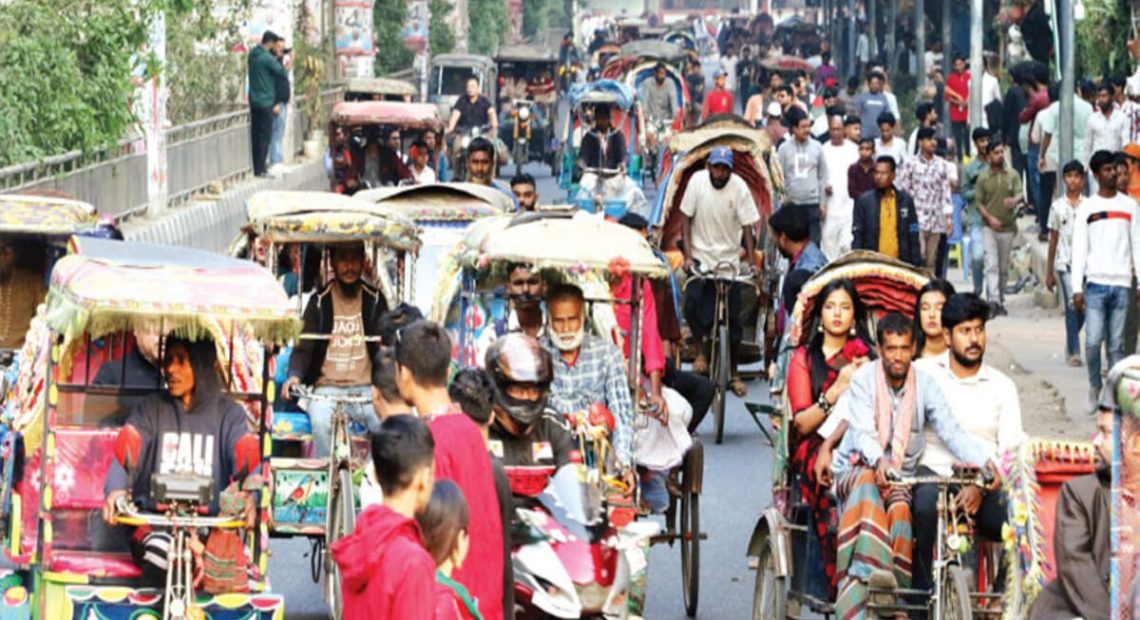
Despite these gains, unregulated battery-run auto-rickshaws continue to undermine traffic management in many parts of the city. These vehicles frequently operate without fixed routes, pick up and drop off passengers indiscriminately, drive against traffic, violate lane discipline, ignore traffic signals, obstruct footpaths, and, in many cases, rely on illegal electricity connections for charging.
Hundreds of thousands of battery-run auto-rickshaws are reportedly operating across Dhaka without registration or effective regulation. Since they do not fall under the jurisdiction of the city’s two corporations, no official data exists on their actual number. Although law enforcement agencies have announced enforcement drives, no lasting solution has yet been achieved, and the number of such vehicles continues to grow.
Road Transport and Bridges Minister Sheikh Rabiul Alam said the government has taken several coordinated steps to establish an integrated multimodal transport system in Dhaka. As part of the initiative, authorities are reviewing how battery-run rickshaws can be effectively regulated. He said a comprehensive national policy governing the operation of battery-powered vehicles will be introduced after the review.
According to the Dhaka Metropolitan Police (DMP), AI-powered traffic cameras and semi-automated traffic signals installed at key intersections have increased compliance with traffic laws. The system automatically detects offences, including running red lights, crossing stop lines, driving on the wrong side, illegal parking, improper lane changes, blocking zebra crossings, and riding motorcycles without helmets. Digital traffic fines are issued based on the recorded violations.
Abul Kalam, a driver with 20 years of experience in Dhaka, said traffic at many intersections has improved since the AI system was introduced. He noted that drivers are now more cautious because they know violations are being monitored and believes congestion could be reduced significantly if the system were expanded citywide.
Professor Dr. Hadiuzzaman of the Department of Civil Engineering at Bangladesh University of Engineering and Technology (BUET) said technology-based traffic management is essential for achieving lasting improvements. However, he stressed that battery-run auto-rickshaws must also be brought under a regulatory framework and traffic laws enforced consistently. Otherwise, he warned, the full benefits of the government’s investment in modern traffic management will not be realised.