Wars, Wildfires, Migrants Crisis Straining Europe’s Control
Dana Ishrat Mahmud
Europe is enduring a difficult summer marked by two wars, extreme heat, inflation and growing anxiety over food, energy and security. The overlapping crises have increased calls for joint action, but the continent continues to struggle with divisions and limited influence over global affairs. The Iran war, opposed by several European countries, has disrupted energy markets, raising gas, grocery and travel costs. European leaders have pledged to secure oil shipments through the Strait of Hormuz, but their ability to shape events remains limited as major decisions are often made beyond Europe.
Europe has also failed to resolve the war in Ukraine after four years of conflict. Its climate initiatives have been overshadowed by the United States and China, while the artificial intelligence race is largely being shaped elsewhere. At the same time, right-wing populist movements have expanded across the continent. Richard Haass, who served for two decades as president of the Council on Foreign Relations, described the situation as “a difficult, unsettling time for Europe.” He said Europe had not only underinvested in defence but had also failed to organize effectively for its own security.
After Donald Trump returned to the White House in 2025 and adopted a warmer stance toward Russian President Vladimir V. Putin, Britain, France, Germany and other European countries formed the “Coalition of the Willing” to support Ukraine. However, Trump later sidelined European allies in negotiations involving Russia and Ukraine. Lesia Ogryzko, director of the Sahaidachnyi Security Center in Kyiv, wrote for the Atlantic Council that Europe’s long-promised goal of “strategic autonomy” would face its clearest test in the coming months.
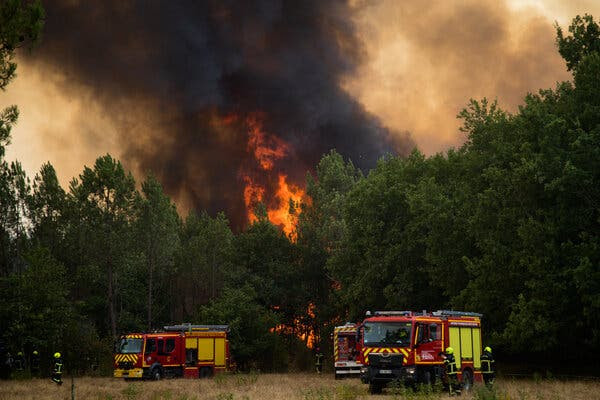
Europe has also struggled to influence the U.S.-Israeli war against Iran. Its opposition to Trump’s decision to launch military action has further strained trans-Atlantic relations. Climate disasters have added to Europe’s challenges. Heat waves are becoming more frequent, and wildfires have spread across southern Europe. Britain experienced its driest July in nearly two centuries, while fires displaced more than 300,000 people in France and Spain. Several firefighters have died in Greece while battling the blazes.
Migration has intensified political tensions. The arrival of tens of thousands of migrants in Ceuta, a Spanish territory on the North African coast, exposed deep divisions among European Union members. Far-right parties, including Germany’s Alternative for Germany and France’s National Rally, have used migration concerns to strengthen their political influence. Nearly two dozen EU countries criticized Spain’s migration policies, prompting Prime Minister Pedro Sánchez to accuse them of acting “selfishly.” Analysts said the dispute reflected Europe’s broader difficulty in demonstrating unity and projecting authority.
Source: The New York Times.