Why Is Begging So Visible Across the Capital?
Dr. Ajoy Kanti Mondol
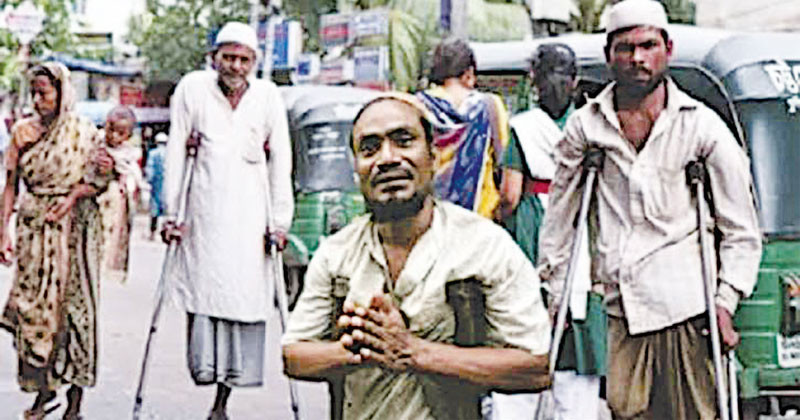
Every day at the office, I go out at least once for tea. In a short break of about 15 minutes, five or six beggars come and hold out their hands. It feels a bit annoying. But this scene is a daily part of life for people in Dhaka. We meet beggars on the road, on public transport, at railway stations and even in parks. Some are bent with age, some point to a disability, and some carry a baby or have several children with them. Sometimes a few of them surround one person.
Busy roads, crossings, bus stands, railway stations, markets and parks in Dhaka now show this scene all the time. People feel annoyed and uneasy, and that is natural. But the questions are why there are so many beggars, and where they come from. Why do the capital and big cities attract them so much? Is the rise only a matter of personal poverty, or is there a larger social and economic reason behind it?
We cannot deny that begging is very visible in our city life. Dhaka’s economic pull may be one reason. Lakhs of people move around the city every day, so the chance of getting money is higher. If one in four or five people gives help, a beggar earns well each day. A person can earn enough for a modest living without any physical labor. So we now see healthy, strong, middle aged men and women dressed as beggars. Some of them play tricks and pretend to be sick or disabled.
Poverty is still a big reason for begging, among several. But we cannot put all beggars in one group. Some cannot work because of their body. Some are old. Some have a long illness. Some have lost their families. Some lost their homes to river erosion or natural disasters. Some found no work in the village and came to the city. Some cannot enter the job market because of no education, no skills or social neglect.
The Department of Social Services lists extreme poverty, natural disasters, no home or land, inflation, disease and lack of education as causes of begging. A person who loses income or work may not beg at once. First the savings end. Then come loans, then the sale of assets. When no option is left, begging can become a way to live.
The recent economic situation also asks us to think again. The World Bank’s 2026 Bangladesh Development Update says the national poverty rate rose to about 21.4 percent in 2025. It was 18.7 percent in 2022. The same report notes high inflation, and says living costs rose faster than the wages of low income workers. So when the economy grows without enough steady and dignified jobs, the gains do not reach everyone. Relatively poor people slide into deeper poverty.
The World Bank’s 2025 Poverty and Equity Assessment says poverty has fallen more slowly since 2016. It also says a large number of people risk falling back into poverty. So if we see a beggar only as one person, we miss a big part of the problem. Behind that person may be a jobless family, a broken home, a river erosion story, an illness, a disability or a failed job.
Are all beggars truly helpless? Truly helpless people do beg. But begging can also create an informal money system. There have been claims of children being used to beg, of groups holding fixed areas, of playing on people’s feelings and of using disability to earn. So the first step should be to sort beggars into groups. A helpless 70 year old, a disabled person, a jobless young man who can work, a woman displaced by river erosion and a child cannot fit under one policy.
Child begging is a bigger worry. One of the most upsetting sights on the road is a child used to beg. When a child collects money on the street at school age, the child loses both the present and the future. The child may drop out of school and face poor food, health risks, accidents, abuse and use by criminal gangs. So this is not only a poverty problem. It is a problem of child safety and human resource growth. It is not enough to put the child in a shelter. We must bring the child back to school, help the family and remove the money pressure that pushes the child back to begging.
If begging keeps rising, it is worrying, because it can cause several problems. First, it wastes human resources. If people who can work depend on begging for a long time, part of the labor force sits idle. The risk of child labor and school dropout also grows. Begging on the road is a danger to road safety too. Asking for money in front of moving cars, or children walking among cars in a traffic jam, raises the chance of accidents.
It also puts pressure on city management. If footpaths, railway stations, bus stands and parks become uncontrolled begging spots for a long time, people cannot move or use them freely. If gangs exploit begging, the risks of human trafficking, child abuse and other crimes need serious attention.
We need proper steps to stop begging, but it is not easy. Moving a beggar off the road does not solve the problem. Removing a person from the road and lifting that person out of poverty are two different things. If the person has no food, home, care or income, the person will return in a few days. So before we make a city free of beggars, we must make people who do not need to beg.
Government effort here is not new. The Ministry of Social Welfare and the Department of Social Services run programs to rehabilitate beggars and give them other work. Government data says funds and rehabilitation steps have been taken since the 2010 11 fiscal year. For 2025 26, about 4 thousand beneficiaries are named. But I do not know if any visible change has come.
The government should first build a national database of beggars. It needs to know how many there are, their age, where they came from, their physical ability, whether they have a family and why they beg. Without this, planning is hard. A digital registration system for beggars and homeless people can be made. But it must be for giving help, not for harassing or shaming anyone.
Beggars can be sorted into groups, such as the old and unable to work, the physically or mentally disabled, the sick who need care, the able but jobless, and children and teens. Each group needs its own program. People who can work need jobs. Cash alone will not solve their problem for good. They can get short training, small business capital, a rickshaw or van, a shop, a small food business, handicrafts, cleaning work, farm work and local services.
The government can bring local government, NGOs and the private sector into the program. A poor person can get cash help for the first few months, then training, and then a job or self employment. Follow up must be a must in rehabilitation. If someone gets 10 thousand taka and starts a shop, the officials must check after six months. They must see if the shop still runs and if the person went back to begging. A project should count how many people left begging for good, not how many got money.
Special steps against child begging are very urgent. Rescuing the child is not enough. Officials must find the family and learn why it sends the child to beg. If needed, they must bring the family under social protection. They must also send the child back to school. Rehabilitation must link with hospitals and mental health care. Many helpless people cannot return to normal work because of a long illness, a disability or a mental problem. They need treatment, disability allowance, rehabilitation, counseling and suitable work.
The flow of beggars from villages to Dhaka must fall. Cleaning Dhaka’s roads alone will not cut begging. The country must raise jobs, social protection, help after disasters and support for families hit by river erosion in villages and small towns. If people can earn a living in their own area, they will not need to come to the capital and stand on the footpath.
We must also rethink the culture of giving, and ordinary people have a duty here. Giving money to a beggar on the road may feel kind. But if we give the same way every day, we keep begging alive, and the problem does not shrink in the long run. It may work better to give through the government or a trusted body for food, care, rehabilitation and education. This does not mean we should lose kindness when we see a helpless person. We should keep kindness, but make it organized and lasting.
A beggar on Dhaka’s road may look to us like an annoying sight, just like a traffic jam. But to that person, it may be the last way to survive. An old man’s outstretched hand may carry a life of poverty. A bowl in a child’s hand may show a family’s economic helplessness. In some cases, behind that bowl may sit the business of an organized gang.
If the government truly wants to cut begging, it needs correct data, group based rehabilitation, jobs, social safety, child protection, medical care and strict but humane enforcement. Our goal should be a society where a helpless person does not have to stand on the road and beg. That person should live with dignity through state help, social safety and work.
The writer is a researcher and columnist.