Why Is Saudi Arabia’s East-West Oil Pipeline Important to the Global Oil Market
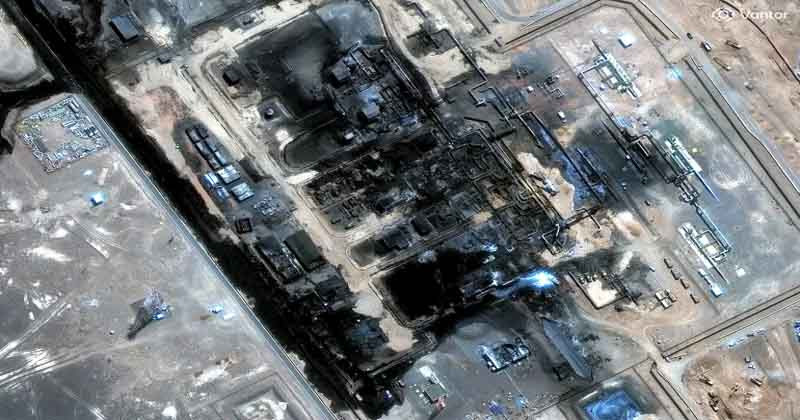
The latest major shock to the global oil market came last Thursday when Saudi Arabia’s East-West oil pipeline was targeted in a drone attack, forcing the country to temporarily suspend its operations.
The 1,200-kilometre (746-mile) pipeline transports around 4 to 5 million barrels of oil per day. It connects the country’s major oil fields in the east with the Red Sea port of Yanbu. This allows Saudi Arabia to transport oil while bypassing the Strait of Hormuz, which has been effectively closed since the conflict between the United States and Israel against Iran began in February.
Saudi Arabia’s Energy Ministry said the pipeline was shut down as a “precautionary” measure after attacks in the Riyadh and Medina regions caused damage and injuries. The pipeline was shut down at a time when oil shipments through the Strait of Hormuz had already fallen sharply because of the US-Israel conflict with Iran. At the same time, Yemen’s Houthi forces have intensified attacks in the Red Sea and Bab al-Mandab area.
As oil shipments through the Strait of Hormuz have faced severe disruption, Saudi Arabia has become increasingly dependent on the East-West pipeline. Against this backdrop, what impact will the shutdown have on the already strained global oil supply?
How Much Damage Has Been Caused?
The exact extent of the damage is still unclear. There are also different estimates about how quickly the pipeline can return to normal operations. Sources familiar with the incident told Reuters that repairs could take five to six weeks. However, another source said operations could resume sooner.
Saudi officials said drones struck the pipeline at two locations near Riyadh and Medina. The Foreign Ministry said the attacks damaged infrastructure and injured several people. According to Saudi authorities, the drones were launched from Iraq’s southeastern Maysan province. The area is located near the Iranian border and has long been home to Iran-backed armed groups.
Earlier in March, an attack occurred near Saudi Aramco and ExxonMobil refineries in Yanbu. The incident temporarily disrupted the loading and transportation of crude oil from the Red Sea port. It did not have a long-term impact on operations, and oil transportation returned to normal within a few days. However, the incident showed that Saudi Arabia’s western oil infrastructure is also vulnerable to attacks.
What Is the East-West Pipeline?
Known as Petroline, the East-West Pipeline is a 1,200-kilometre (745-mile) crude oil pipeline.
Built in 1981, the pipeline transports crude oil from Saudi Arabia’s eastern Abqaiq oil field across the Arabian Peninsula to Yanbu, a port on the Red Sea, while bypassing the Strait of Hormuz. It has a maximum capacity of 7 million barrels per day, although actual flows have been lower in recent months.
According to Kpler data, the flow was around 2 million barrels per day in August, the lowest monthly level since January, as Houthi attacks made the Red Sea route increasingly difficult to use. During the first five months of the conflict, Saudi Arabia increased the volume of crude oil sent westward, raising the flow to around 4 to 5 million barrels per day.
This is equivalent to around 4 to 5 percent of total global oil supply. It allowed the world’s second-largest oil exporter to bypass the Strait of Hormuz when shipping conditions deteriorated.
Why Is It Important?
The pipeline shutdown comes at an extremely critical moment for the global oil market.
Before the war, more than one-fifth of the world’s total oil supply, or around 20 million barrels per day, passed through the Strait of Hormuz. According to Reuters, industry estimates show that current flows through the strait have fallen to around 6 to 9 million barrels per day, representing a massive decline.
In response, Saudi Arabia has taken steps to send more crude oil towards the Red Sea. However, the flow and export of that oil depend on the safe operation of pipelines, storage facilities and tankers. All of these have faced increased risks since the war with Iran began in February. According to sources familiar with the matter who spoke to Reuters, Saudi Arabia could continue exports from its stocks at Yanbu for around five to seven days if the pipeline remains shut.
In addition, Saudi oil stored at facilities in Egypt’s Ain Sokhna and Sidi Kerir could provide several more days of supply. Although this gives Saudi Arabia some additional time or a “buffer,” the situation has emerged at a time when global oil inventories are already declining.
The International Energy Agency (IEA) said disruptions in the Strait of Hormuz and the Red Sea caused Saudi oil supply to fall to its lowest level in more than three decades in August. According to the agency, global oil supply is expected to decline by around 5.7 million barrels per day this year, equivalent to 6 percent of total global supply.
So far, the release of oil from inventories and strategic reserves has prevented a major impact on oil prices. In recent months, Brent crude has traded between $70 and $90 per barrel. However, the longer regional instability continues, the more those reserves will decline, and the higher oil prices are likely to rise.
In June, the IEA warned that continued use of oil from reserves could push them to worrying levels. Experts say that if inventories fall to extremely low levels, the price of Brent crude could reach $150 per barrel. If the damage to the pipeline is extensive and threats of attacks on shipping routes around Yanbu and beyond continue, Saudi Arabia may find that its ability to make up for the supply shortfall caused by reduced exports from the Gulf region is also becoming limited.
Gavekal Research noted that if the Yanbu facility, which processes more than 1 million barrels of oil per day, is forced to shut down because of the threat of Houthi drone attacks, “it would create a catastrophic situation for the world at a time when global oil refining capacity is already extremely limited.”
Source: Al Jazeera