Zhu Rongji: A Great Chinese Leader and a True Friend of Bangladesh
Lt. Col. (Retd.) Md. Shahadat Hossain
Former Chinese Premier Zhu Rongji’s death has deprived China of a great leader and the world of one of its influential statesmen. Bangladesh, too, has lost a great Chinese friend who made important personal contributions to deepening Bangladesh-China relations at a crucial stage of their development.
Zhu Rongji died in Beijing on August 12, 2026. He served as Premier of China’s State Council from 1998 to 2003 and was a key figure in China’s reform and opening-up process.
I wish to remember him somewhat differently-not through statistics or official statements, but through moments from my own experience as a Chinese-Bengali-English interpreter for Bangladeshi leaders. I had the privilege of interpreting for Premier Zhu on several occasions in both Bangladesh and China.
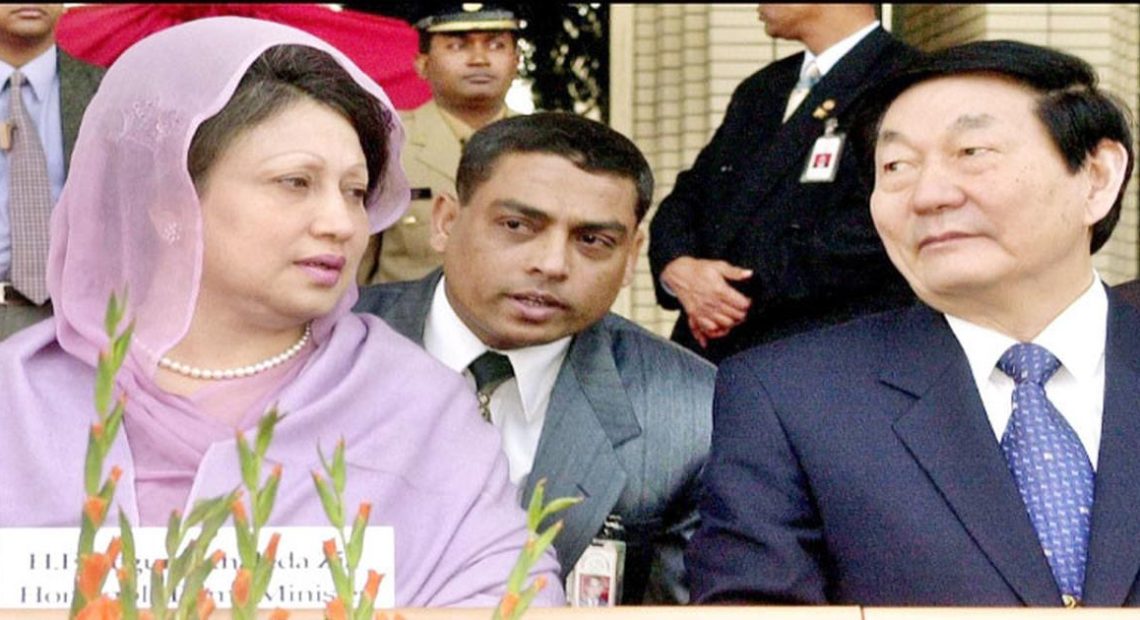
His visit to Bangladesh in January 2002 remains vivid in my memory. He visited Dhaka from January 11 to 13, meeting Prime Minister Khaleda Zia, President A.Q.M. Badrudozza Chowdhury, Speaker Jamiruddin Sircar, Foreign Minister M. Morshed Khan and other senior leaders. He also met then opposition leader and Awami League president Sheikh Hasina.
At a state banquet, Khaleda Zia discussed with Zhu how Bangladesh could reduce its trade deficit with China. Zhu explained several possibilities, but one observation particularly stayed with me. He said Bangladesh should produce goods suited to the tastes and needs of Chinese consumers. If Bangladesh could make products ordinary Chinese people wanted to buy, China would naturally import more from Bangladesh.
Another memory is especially dear to me. At a banquet at Bangabhaban, President Badrudozza Chowdhury, a physician by profession, discussed Chinese medicine with Zhu. I was impressed by the breadth and confidence of Zhu’s knowledge. He spoke about medicine and traditional Chinese medicine with the President in an informed and relaxed manner. I knew Zhu had studied electrical engineering at Tsinghua University. That evening, however, I saw his extraordinary ability to understand and discuss subjects beyond his formal education.
As his interpreter on different occasions, I noticed that Zhu often spoke from memory rather than relying heavily on prepared statements. Yet his remarks were comprehensive, organised and relevant. To me, this reflected a leader who took his responsibilities seriously. He was firm in his conduct but remarkably gentle and humble in personal interactions.
One of my most unforgettable memories is connected with the Bangladesh-China Friendship Conference Centre. During his 2002 visit, Zhu and Khaleda Zia attended the handover ceremony of the Chinese-built centre, which became a visible symbol of friendship between the two countries. I remember standing beside Zhu and his wife, Lao An, on the small red-carpeted stage. He said softly in Chinese, in essence, that it was not merely a conference centre but also a bridge of friendship between China and Bangladesh.
When Zhu was leaving Bangladesh, I was the last Bangladeshi to speak directly with him. Conveying Khaleda Zia’s wishes for his good health and safe return, I heard him say softly in Chinese, “You are a bridge between China and Bangladesh.” Those words have remained with me ever since.
Zhu’s relationship with Bangladesh did not end with his Dhaka visit. In December 2002, Khaleda Zia visited China officially and met Zhu in Beijing. As her official interpreter, I was fortunate to be part of that five-day state visit. The reciprocal visits of the two leaders that year marked an important period of high-level engagement between Bangladesh and China.
Zhu’s engagement also extended beyond the government of the time. His meeting with Sheikh Hasina demonstrated his contact with different political viewpoints and leadership in Bangladesh.
Prime Minister Tarique Rahman, son of the late Prime Minister Khaleda Zia, visited China from June 22 to 26, 2026. On June 26, he met Chinese President Xi Jinping at the Great Hall of the People in Beijing. The two leaders jointly announced a decision to build a Bangladesh-China community with a shared future in the new era. During the visit, Tarique also met Chinese Premier Li Qiang and Zhao Leji, Chairman of the Standing Committee of the National People’s Congress. To me, this progress reflects the continuity of the relationship.
Leaders like Zhu Rongji deepened ties through political trust, economic cooperation, trade discussions, cultural exchanges and practical projects. Later generations have continued to advance that relationship. Zhu was therefore not merely a former Chinese premier who visited Bangladesh; he was a leader who became directly involved with Bangladesh during a formative period in bilateral relations and helped give practical expression to friendship between the peoples of the two countries.
I will remember Zhu Rongji as a great Chinese premier who played an important role in advancing China during a historic period of reform and opening-up. I will also remember him as a warm-hearted man whose few words made a Bangladeshi interpreter feel that even a small professional responsibility could contribute to something much greater.
May his memory remain a source of goodwill for the peoples of China and Bangladesh. May his contributions to strengthening friendship and cooperation between our two countries be remembered with respect. And may the bridge he helped strengthen continue to lead the peoples of China and Bangladesh towards a more peaceful, prosperous and shared future.
Writer: Adjunct Professor, graduate in Chinese language from Beijing Language and Culture University (BLCU), China-Bangladesh relations researcher and author, and Chinese-language textbook writer.