100,000 health workers are being recruited, 80 percent of them women: Zubaida Rahman

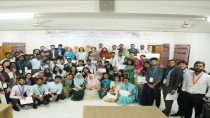
The country is recruiting 100,000 health workers to take preventive health care to people’s doorsteps. Physician Ms. Zubaida Rahman, Vice President of the Ziaur Rahman Foundation, said 80 percent of them are women. She shared this at an event on Saturday (14 November) at a hotel in Gulshan, Dhaka. The Institute for Developing Science and Health Initiatives (IDSHI), a research organisation, arranged the event to mark 12 years of its journey.
Ms. Zubaida Rahman said, “Millions of women in more than 90,000 villages of Bangladesh suffer from diseases that people can prevent. But years of neglect in the health sector meant the country did not properly encourage the steps needed to prevent them.” She said the new health workers will help take health knowledge and preventive measures to people across the country. She also stressed research, testing and winning public trust to build a healthy Bangladesh.
She spoke about the role of research organisations in improving public health. She praised IDSHI for its efforts over the last 12 years to bring scientific knowledge and health solutions to people. Renowned scientist Professor Firdausi Qadri founded IDSHI. It began with the aim of closing the gap between scientific research and the real health service needs of people. The institute started as a small laboratory funded by personal awards and prize money. It is now an international standard research organisation with more than 100 colleagues, a network of former students and researchers, and papers published in international journals.
At the event, Professor Firdausi Qadri said IDSHI works on many public health challenges. These include research on thalassemia, cancer detection and genetic diseases, especially inborn errors of metabolism. She said the institute works not only in laboratories but also in the field in different parts of the country, including among the Rohingya community in Cox’s Bazar.
One notable initiative of the institute is its research on identifying thalassemia carriers. IDSHI wanted to learn how common thalassemia carriers are in Bangladesh. So besides laboratory tests, it ran awareness campaigns and large scale testing with help from universities, nonprofit organisations and community groups.
Professor Qadri said IDSHI quickly raised its testing capacity during the coronavirus pandemic. It also built the ability to track changes in the virus. She said that experience made clear how important trained laboratory staff and institutional partnerships built in advance are for handling public health emergencies. IDSHI works with government agencies, universities, hospitals and pharmaceutical companies. It also works with international organisations such as the World Health Organization and UNICEF.
Professor Qadri named the priorities of future research. They are preparing for pandemics, antimicrobial resistance, clinical trials and developing new medical products in Bangladesh. The institute also plans to use artificial intelligence (AI) and machine learning to speed up the development of medicines and vaccines.
Physician Mr. S M Ziauddin Haider, Special Assistant to the Prime Minister on health, also spoke at the event. He said research, science, technology and innovation must stay at the center of the country’s health sector reform program. He named five priority areas. They are disease prevention, stronger primary health care, innovation in the pharmaceutical industry, digital health services, and a lasting environment for research and development.
Professor Prabhat Chandra Biswas, Director General of the Directorate General of Health Services, called IDSHI a strategic partner in developing the country’s health sector. He praised the institute’s work on molecular diagnosis, thalassemia carrier detection, infectious diseases, vaccine research and awareness of cervical cancer. He also praised IDSHI’s efforts to train young scientists and researchers.
The all day event included panel discussions on thalassemia screening, women’s health, the future of biological products in Bangladesh, infectious diseases, and the use of vaccines to improve public health. Mr. Ashfaq Qadri, Chairman of IDSHI, gave the welcome speech at the opening session. Mr. Abdul Muktadir, Chairman and Managing Director of Inceptra Pharmaceuticals Limited, also spoke.