
14 Rivers in Lalmonirhat Face Existential Threat
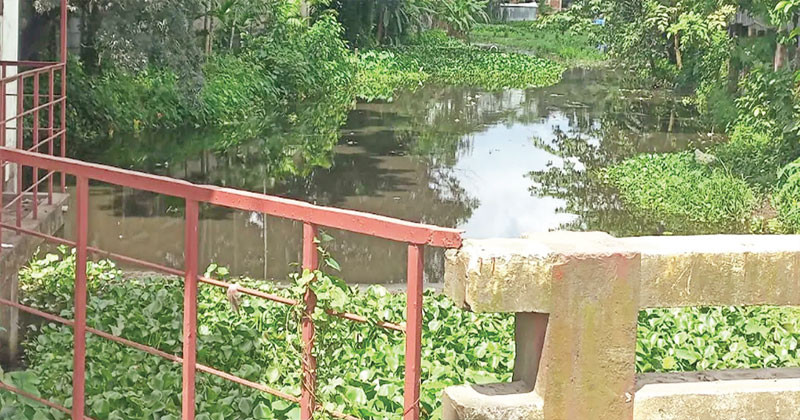
An acute river crisis has gripped Lalmonirhat, where a 2025 report by the Bangladesh Ministry of Water Resources reveals that only the Teesta and Dharla rivers remain visibly recognizable out of 16 listed district streams. The remaining 14 rivers, including the Gidari, Chenakata, Tengramari, Morasati, Ratnai, Swarnamati, Sati, Saniyojaan, and Singimari, face an existential threat. Among these, eight are transboundary rivers shared with neighboring India: the Teesta, Dharla, Saniyojaan, Gidari, Tengramari, Sanguli, Khengti, and Maldah.
On-ground observations highlight that years of accumulated waste, garbage, and thick water hyacinths have choked the natural flow of these water bodies. Unchecked illegal sand extraction from riverbeds has altered natural courses, while aggressive encroachment has reduced vibrant rivers into narrow, stagnant canals. Siltation, combined with a severe lack of upstream water flow, has pushed these ecosystems to the brink of extinction. Extensive permanent housing structures continue to be constructed directly on river lands, further accelerating their degradation.
The prominent Teesta River remains in a highly precarious state due to unilateral upstream water withdrawal by India. Decades of heavy siltation have raised the riverbed, triggering frequent flooding whenever water levels surge during the monsoon season. Conversely, rapid recession of floodwaters results in devastating riverbank erosion that destroys local livelihoods along both banks. Consequently, residents are pinning their hopes on the swift implementation of a comprehensive master plan for riverbank protection and flood control to save the Teesta.
Local rivers like the Sati and Morasati illustrate this tragic decline. The Sati River, an offshoot that originates from and rejoins the Teesta, historically maintained an average width of nearly 500 feet, but heavy encroachment upstream of Lalmonirhat town has shrunk it to a mere 5 to 7 feet. Similarly, the Morasati and Singimari rivers near the Patgram bus stand are choked by illegal waste dumping and widespread encroachment. Meanwhile, the Dharla River, the district’s second largest, faces severe erosion that threatens historical landmarks like the Mogalhat Railway Station.
Addressing the crisis, Professor Tuhin Wadud, faculty member at Begum Rokeya University and Director of Riverine People, stated that private ownership of river land is entirely illegal regardless of recordkeeping methods. ‘The first step must be the cancellation of private land ownership titles and the immediate suspension of land tax registrations for these properties,’ Mr. Wadud emphasized, urging the River Protection Committee to actively recover occupied land. His call reflects growing public demand for rigorous administrative intervention across the district’s waterways.
In response, Muhammad Rashedul Haq Pradhan, Chairman of the District River Protection Committee and Deputy Commissioner of Lalmonirhat, assured that decisive steps to free the rivers from illegal occupation will be initiated shortly. He confirmed that the government has structured plans for cleaning, re-excavating, and restoring the endangered rivers, which will be implemented in sequential phases to revitalize Lalmonirhat’s riverine network.










