572 Skeletons Exhumed: What Brutal Truth Lies Behind Sri Lanka’s Largest Mass Grave?
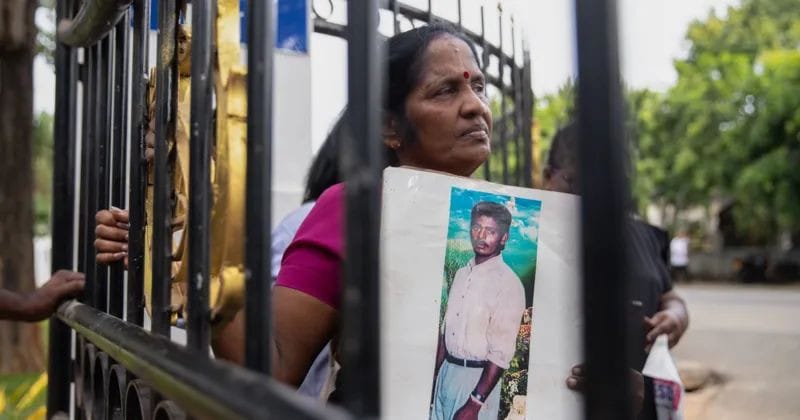
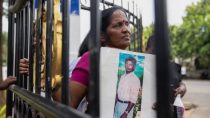
The largest mass grave in Sri Lanka’s history has been uncovered in the Chemmani area of the northern Jaffna Peninsula. Accidentally exposed during excavation work to expand a crematorium, the site has yielded the skeletons and human remains of at least 572 individuals, including children and teenagers. For families searching for loved ones missing for years, this discovery has triggered intense grief and outrage.
During the civil war (1983–2009), tens of thousands of Tamil civilians vanished in Sri Lanka. In the 1990s, the Chemmani area in Jaffna served as a high-security zone and military camp for the Sri Lankan army. Local Tamil communities allege that this is not a conventional burial ground, but rather a mass grave where civilians were dumped following extrajudicial killings during the conflict. Personal belongings, such as bangles, school bags, and milk bottles, were recovered alongside the remains. Furthermore, most of the bodies were stripped of clothing and crammed into shallow pits just one to two meters deep.
Preliminary findings by the Human Rights Commission of Sri Lanka also point to evidence of illegal killings and a mass grave. However, the country’s military has denied these allegations, calling for proof in court. While President Ms. Anura Kumara Dissanayake’s administration has promised an internal investigation and DNA testing, it has rejected demands for an international probe.
Although more than 20 mass graves have been discovered in Sri Lanka in the past, none have led to proper justice or the punishment of perpetrators. As a result, victimized families who have waited for over two decades are now demanding justice through the International Criminal Court (ICC).