

Positive Views of China Rise in the U.S. as Trump Welcomes Xi
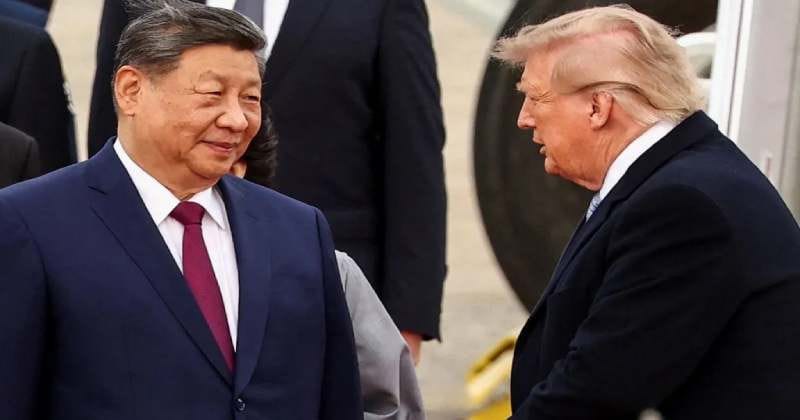
U.S. President Donald Trump’s increasingly friendly stance toward China reflects a significant shift in American public opinion, with skepticism easing across all political affiliations. Recent national polling indicates a widespread improvement in how Americans view Beijing, reversing years of deeply entrenched hostility and signaling a notable transformation in the domestic political landscape.
A recent Pew Research Center survey reveals that 54 percent of U.S. citizens currently hold a negative view of China, down significantly from 68 percent in 2021. Furthermore, data from the Chicago Council on Global Affairs demonstrates that 57 percent of Americans now favor friendly cooperation and engagement, including 68 percent of Democrats and 43 percent of Republicans.
Analyzing these shifting numbers, Ms. Dina Smeltz, a former U.S. State Department official overseeing public opinion polling for the Council, noted, ‘People’s attitudes toward China have shifted in a truly surprising way.’ She further emphasized, ‘A change in public attitude has taken place, where the majority previously supported limiting China’s rise and influence, the majority of Americans now want to build a cooperative relationship with China.’
Reflecting this public sentiment, President Trump reversed earlier plans to impose tariffs as high as 145 percent and hosted Chinese President Xi Jinping in Washington following a subdued visit to Beijing. However, despite these high-level diplomatic gestures, Beijing has yet to make major concessions on long-standing American trade and security demands.
Generational differences heavily influence this changing perception, as younger Americans view China primarily through its technological innovation and cultural reach rather than historical conflict. Commenting on this generational divide, Pew Associate Director Ms. Laura Silver remarked, ‘Young people have known China primarily as a superpower,’ whereas older demographics still associate the nation with its developing status, communism, and historical crackdowns.
Underlying these domestic attitudes is a broader anxiety regarding international standing, as 62 percent of citizens believe the U.S. commands less respect globally than a decade ago. Contextualizing this trend, Mr. Nick Zeller, a researcher at the Carter Center, observed, ‘The perception of China actually reflects anxiety about America’s current state. This positive attitude toward China is influenced more by internal political instability within the United States than by China itself.’