Dengue outbreak reaches alarming level
Hasan Sohel / Eklas Haque
The dengue situation in the country has become worrying. Cases are not just rising, they are racing ahead. People die every day. Hospitals have no room, so many patients get treatment on floors, verandas and corridors.
The Directorate General of Health Services has no combined data on how many beds the government hospitals have. It also does not know how many beds hospitals can use in an epidemic like dengue. So while hospitals struggle with the flood of patients, people question the central ability to handle the crisis. Dengue patients are growing in number in Dhaka and in many districts and towns, and this is scaring ordinary people.
The pressure on hospitals is rising, and so is the risk of death. Even careful doctors are not safe from it. The steps the government has taken to control dengue are not giving good results. Ministers and MPs are busy with needless hospital visits and drives. But there is no proper management or coordination.
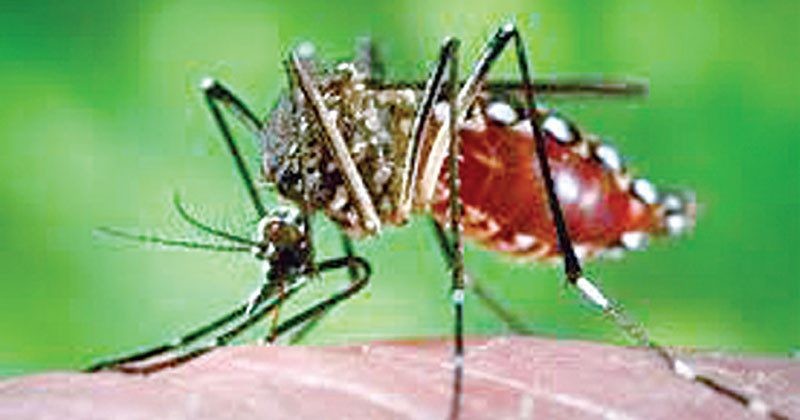
The country needs a clear plan. Before the rainy season, officials should find and destroy likely breeding places. During the rains, they should watch the situation regularly. When cases rise, they should act fast in risky areas. Spraying insecticide on mosquitoes alone will not solve the problem. If the sources of larvae stay, new mosquitoes can be born within a short time. So those concerned stress that destroying the sources must come first.
Experts say the national dengue control plan should track the number of Aedes mosquitoes all year. Officials must run regular drives in risky areas. Dengue control needs a long term policy, not only quick steps. The government should build a working national policy in Dhaka. It must also make sure there are enough staff, money and technical skills to carry it out on the ground. Each district and town can get its own risk check.
When cases rise anywhere, the government needs a fast response system. It should send experts to the place, test the mosquito count, find the breeding spots and take the needed steps. The experts also want more focus on research to prevent dengue. Prime Minister Mr. Tarique Rahman has ordered cleaning drives to kill the Aedes mosquito, which carries dengue. But officials have taken no clear steps to carry out this order.
Expert doctors say that beds alone are not enough for dengue patients. Hospitals also need enough doctors, nurses, monitoring tools, tests, saline, medicine and intensive care for serious patients. When the patient load goes far above what a hospital can handle, it becomes hard to keep the quality of care. Professor Dr. Be Nazir Ahmed, a former Director of Disease Control at the Directorate General of Health Services, says dengue has now reached epidemic level.
He says the disease has spread from village to village, and the country cannot control it in the next 10 years. He says the government once ran a program to control dengue and malaria, but that program no longer exists. Because of this, experts cannot study how the disease spreads, and controlling the situation has become impossible. He urged the government to start a special program quickly.
The Health Emergency Operation Centre and Control Room of the Directorate General of Health Services issued its dengue bulletin yesterday. It says six more people died of dengue across the country in the last 24 hours. In the same time, 2,089 new patients were found. The Directorate collected this data from 8 am the day before yesterday to 8 am yesterday.
With these deaths, the total number of dengue deaths this year has reached 262. The total number of patients has reached 86,458. The day before yesterday, six people also died of dengue across the country. On that day, 1,608 people fell sick.
According to the Directorate, more than one thousand people die of dengue every year. More than one lakh people fall sick. People say the Health Minister makes needless visits to hospitals. They say nothing useful is happening, and he cannot manage or coordinate the work of hospitals across the country.
The dengue situation is worrying not only in Dhaka but across the country. It is even harder in Khulna and Barishal. Reports say hospitals cannot find space for dengue patients, so they treat them in corridors, on veradas and in other empty places. Many patients went from one hospital to another and still did not get a bed.
Hospitals do not show the real picture of the patient load. At Mugda Hospital in the capital, more than 150 patients are reported to be in a dengue ward that has only 38 beds. As the pressure grows, government hospitals in the capital must treat patients in general wards, on floors and on veradas, outside the set dengue wards.
A senior official of the hospital branch of the Directorate General of Health Services did not want to give his name. We asked him how many dedicated beds for dengue patients the government hospitals in Dhaka have now. He said the Directorate has no such data. But he said every hospital has set up a special corner for dengue patients, and they get treatment there.
The two city corporations of Dhaka have always had a problem with poor coordination in their mosquito control work. People do not see any work at ward level. Residents are worried about the mosquito trouble, but the city corporations do not take it seriously. People doubt that the larvicide and fogging of the two cities work. Residents also do not trust the Aedes larvae survey of Dhaka South City Corporation. Dhaka North City Corporation has found its hotspots, but it does not use enough medicine there.
In 2025, a total of 102,861 people got dengue and 413 died. Barishal Division had the most patients, with 17,370. Dhaka Division had 11,668, Dhaka South City Corporation had 10,309 and Chattogram had 10,190. Khulna then set a record of 72 patients admitted in a single day.
This year so far, Dhaka Division has the most patients, with more than 14,000 outside the city corporations. Khulna Division has 13,468 patients, Chattogram Division has 12,818 and Barishal Division has 11,155. By age, young people are falling sick the most.
Ordinary citizens say dengue is growing, but they see visits, meetings, seminars and many kinds of programs, not joined up and visible work on the ground. The Health Ministry and related offices publish dengue cases and deaths regularly. But they lack long term and joined up work to stop the spread of the disease.
Regular dengue updates matter for public health. With data on cases, hospital admissions, deaths, age and spread by area, the government can judge the situation, and doctors and the public can stay alert. But sharing data alone cannot control dengue. The main thing is to act fast on that data when the disease keeps spreading. Officials share daily numbers of cases and deaths. But they must also show clearly how fast and how well they act on that data. People say the government should use data to make decisions, not only as numbers.
Experts say the government must make policy in the capital and carry it out at district, upazila, municipality and union levels. It must order local administrations to take a strong role in preventing dengue. The Health Ministry, the Local Government Division, city corporations, municipalities, district administrations, the Directorate General of Health Services, hospital authorities and local people must also work together.
Residents of the capital also question the role of the two city corporations. The corporations say they run many programs, awareness work and mosquito drives. But residents say the mosquito trouble has not gone down in many parts of the city. In many areas, standing water, buildings under construction, empty plots, drains and water bodies become breeding places for Aedes mosquitoes. Residents ask whether officials find and destroy these places regularly.
Mofizul Islam, a resident of Jatrabari in the capital, told Inqilab that dengue is no longer a disease of one area or one season. He says it has spread across the whole country. He says officials take no action when water stays on roads, in drains, in empty buildings and in homes under construction. He says many areas have places where Aedes mosquitoes can breed, but nobody cleans them regularly. He says the medicine that officials spray now and then gives no good result, and people also doubt that the city corporations’ mosquito medicine works.
Experts say the spread of dengue and its seasonal pattern have changed. In the past, dengue cases stayed within a set time of the year. Now the disease stays for a long part of the year. If the government cannot control Aedes breeding, it cannot control dengue just by giving more treatment in hospitals. To fight dengue, the government must do many things together. It must destroy mosquito sources, control larvae regularly, control mosquitoes, manage the environment, find cases, manage treatment and raise public awareness.
But if these steps run apart from one another, good results are hard to get. If one area runs a mosquito drive, but a nearby area keeps its Aedes breeding places, the spread will not stop. Dengue control must come under one joined up structure. People also criticise the visits that field officers make for dengue control. After these visits, the mosquito count and the number of patients do not fall.
Professor Dr. Kabirul Bashar, an entomologist at Jahangirnagar University, says dengue is rising because we have not been able to control it. He says when an infection starts and we cannot control it, it will surely grow. He says the main goal of dengue control should be to stop mosquito production and breeding, not to kill mosquitoes. When people kill adult mosquitoes, the mosquito count falls for a while. But if the breeding places stay, new mosquitoes are born there again.
So he says it is not a lasting answer to rely only on killing adult mosquitoes without finding and controlling the places where they breed most. He warned that the number of patients may rise further in the next two months. He says the country must leave old thinking behind. It must adopt joined up mosquito management based on breeding sites, strong insect watching and stronger disease watching.