
A treasure trove buried beneath concrete for 60 years
Pirganj’s Velamari Pathar Emerges as a Land of Vast Potential
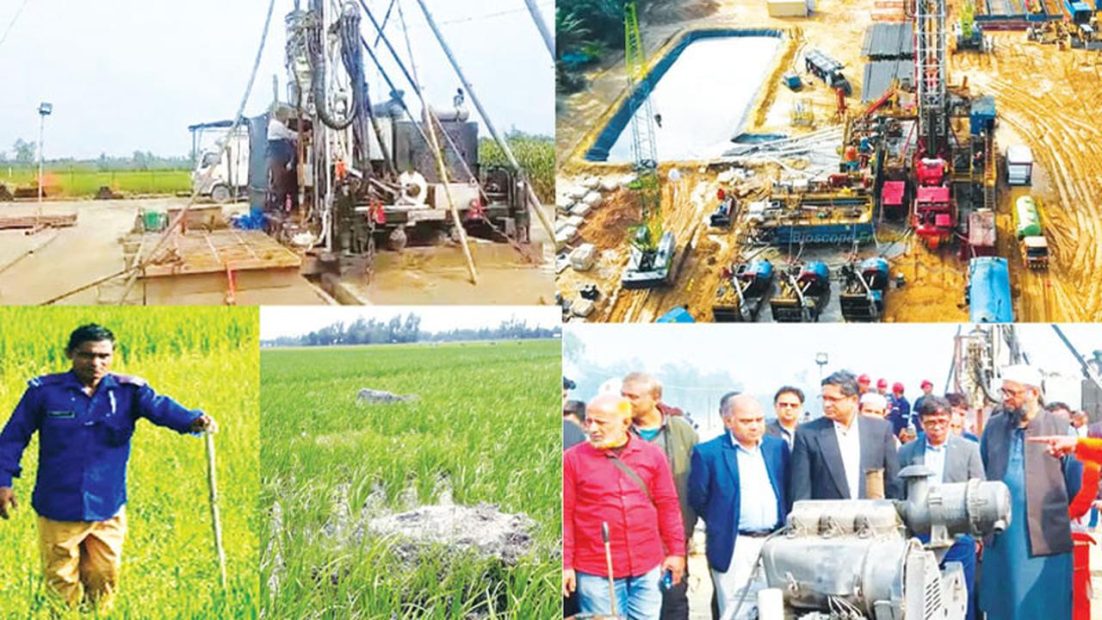
Velamari Pathar in Pirganj upazila of Rangpur has long been drawing attention for its potential mineral resources, including iron, copper, nickel, manganese and gold.
The area has remained sealed beneath concrete for nearly 60 years. Locals now hope that renewed exploration will lead to the extraction of these resources and bring economic opportunities to the region. Experts say proper planning and government initiative are essential to turn the potential into reality.
Pirganj is located on the outskirts of Rangpur division and is surrounded by Gaibandha, Dinajpur and Bogura. Velamari Pathar is situated in the remote Choto Paharpur village under Shanerhat Union.
According to the Geological Survey of Bangladesh (GSB) and Petrobangla, a potential world-class iron deposit was identified between Shanerhat and Mithipur unions.
After the 1965 Pakistan-India war, scientists from Pakistan’s Mineral Resources Department conducted satellite and aerial magnetic surveys in the area. On September 6, 1965, officials arrived at the site covering about six square kilometres. They identified a possible iron source, marked the site with concrete and conducted a preliminary survey.
Around 1967, the then Pakistan government launched large-scale exploration and began preparations for extraction. The process was later halted.
After Bangladesh’s independence, several surveys and drilling operations were conducted in the area. These reportedly confirmed the presence of iron and other valuable metallic elements.
Exploration found high-grade iron layers at depths ranging from 900 feet to 22,000 feet. Iron, copper, nickel and manganese were reportedly found across an area of about 10 square kilometres.
Controlled explosions through pipes during the exploration also reportedly damaged several earthen wells in the area. After more than a year of work, four main boreholes were sealed with concrete and the exploration camp was withdrawn.
At the time, scientists reportedly said the iron deposit was not yet mature enough for extraction and that it could take 20 to 25 years to become viable. Geological survey sources now say the deposit has reached a stage where extraction could be considered.
Further drilling and surveys conducted in 1999-2000 reportedly identified valuable minerals in the area and its surroundings. Sources said iron, copper, nickel, manganese and gold were among the minerals found or indicated.
In late 2023, drilling was conducted at Kashimpur village, about four kilometres from the main source. However, the GSB did not disclose the findings.
On January 31 this year, formal exploration began at Kashimpur through geological drilling at borehole GDH-79/25. The project was scheduled to continue for three months, with a planned drilling depth of 1,200 metres. The work is currently halted and may resume after the rice crop is harvested.
GSB Deputy Director General Engineer Akbar Ali said previous drilling under EDS-15 had produced some data. Drilling was also conducted at GDH-54 in 2000 and at borehole 78/23 in Kashimpur in 2023.
He said some mineral resources had been identified in the area and the latest project was aimed at drilling to a depth of 1,200 metres.
“The strong basement rock indicates the possible presence of iron, copper, nickel, manganese and gold,” Akbar Ali said, adding that the presence and quantity of the resources could not be confirmed until the exploration is completed.
GSB Director of Geology Arif Mahmud said the drilling project was planned for three months. Samples collected from different depths would have to be tested before any conclusion could be reached.
“It is premature to call the site simply an iron mine,” he said.
Officials said mineral extraction would depend on the quantity of resources and whether extraction would be commercially viable. If the revenue from extraction is higher than the cost, the findings would be recommended to the government for further action.
GSB sources said high-grade iron ore had been identified at Velamari Pathar nearly 60 years ago. They believe renewed exploration could determine whether the area has sufficient resources for commercial extraction.
The latest drilling has raised hopes among local residents. They believe mining could significantly change the economic and social conditions of the area, improve communication and create employment opportunities across four police station areas.
Locals have urged the government to take direct steps to assess the resources and begin extraction if the deposits are found to be commercially viable. They believe proper development of the mineral resources could improve livelihoods for farmers, labourers and people in other professions in the region.










