
A historic, transformative decision by Prime Minister Tarique Rahman to protect Bangladesh’s future economy, agriculture and environment
Padma Barrage Opens New Horizon for Development
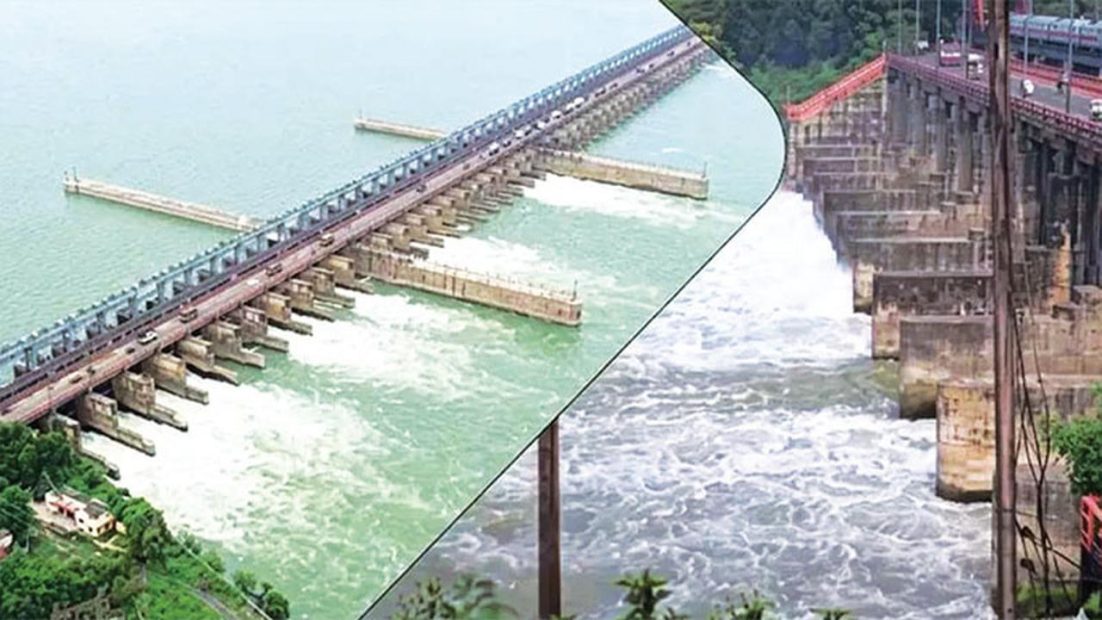
People in southwestern Bangladesh are delighted by reports that work on the long-awaited Padma Barrage is set to begin. The water retained by the barrage could support agriculture, fisheries and river transport. River researchers, however, say dead rivers, canals and beels must also be revived through capital dredging to restore their water-holding capacity.
At present, these water bodies cannot retain the large volume of monsoon and floodwater. Water from the Barind region and the plains flows into the Padma, Mahananda, Jamuna and Meghna before reaching the sea. The barrage could help retain this water. Prime Minister Tarique Rahman’s plan to excavate 20,000 kilometres of canals has further raised public expectations.
The Padma is one of Bangladesh’s most important rivers. Originating from the Gangotri Glacier in the Himalayas, the river is known as the Ganges in India. It enters Bangladesh through Chapainawabganj and flows through Rajshahi, Pabna, Kushtia and Rajbari before meeting the Jamuna at Goalanda and eventually reaching the Chandpur confluence. The stretch from Chapainawabganj to Goalanda is about 250 kilometres long. Its major tributary is the Mahananda, along with more than 60 branch rivers and waterways, most of which have now disappeared.
Once a lifeline of southwestern Bangladesh, the Padma is now a dying river. River experts and local observers blame reduced upstream flow following the construction of the Farakka Barrage in India. Its tributaries are also facing an existential crisis due to water shortages, siltation and encroachment. Nine rivers in Rajshahi — Narad, Barahi, Swaramangla, Daya, Hoja, Mirza Mahmud, Musakhan, Sandhya and Halenja — have disappeared.
Over the past 50 years, the riverbed has become heavily silted, with sandbar levels rising by 18 metres. The Padma and its tributaries, canals and beels have consequently lost much of their water-holding capacity. Sudden upstream flows now frequently overflow the banks, damaging homes and livelihoods.
Although some water remains during the monsoon, many rivers stay nearly dry for the rest of the year. Crops are now cultivated on some riverbeds instead of boats travelling through them. Around 25 other rivers and waterways, including the Baral, Mara Baral, Ichamati, Dhalai, Hurasagar, Chiknai, Gorai, Mathabhanga, Bhairab, Nabaganga, Chitra, Harihar, Kaliganga and Kopotakkho, have also nearly disappeared.
The decline of rivers has affected connected canals and beels. Chalan Beel, once famous for its vast waters, has also been shrinking, while numerous other water bodies are disappearing. The loss of these waterways has damaged the natural environment and eliminated river transport. Although farming on river and beel beds has temporarily increased cultivated land and production, experts warn of serious long-term environmental consequences, including growing desertification.
Experts say the Ganges receives water mainly from glaciers, tributaries and rainfall. They allege that India’s water withdrawal has severely reduced downstream flow. Continued unilateral water diversion from the Kosi to Farakka, they warn, poses serious risks to downstream Bangladesh.
The disappearance of surface water has also contributed to falling groundwater levels. According to experts, groundwater levels in the region have dropped significantly over the past three decades and now stand around 150 feet below the surface in some areas. Arsenic contamination and widespread use of deep tube wells have compounded the crisis. In parts of the Barind region, even deep tube wells are failing to draw sufficient water.
Professor Chowdhury Sarwar Jahan Sajal, a former professor of the University of Rajshahi’s Department of Geology and Mining, said groundwater levels are falling rapidly. He said the level is dropping by about one foot every year and that private initiatives have installed twice as many deep tube wells as the Barind Multipurpose Development Authority (BMDA).
“If this continues, there may be no groundwater left in the region within 25 to 40 years,” he said.
He stressed that groundwater recharge and greater use of surface water are essential. Flood and rainwater should be stored and channelled into the ground, while dependence on groundwater for irrigation should be reduced. Rivers, canals and beels must be dredged to increase their capacity. He also stressed compliance with the Water Act 2013 and proper water management.
Sajal said the Padma Barrage is a good project but should be implemented transparently with the involvement of experts and stakeholders. Dead rivers, canals and beels should be restored to retain water. A higher water level created by the barrage could also help raise groundwater levels in surrounding areas. He cited the benefits of a rubber dam on the Mahananda in Chapainawabganj.
Prominent river researcher Mahbub Siddiqui said India has constructed numerous projects on the Ganges in its upper reaches, reducing the flow reaching Farakka. He said removing such projects is necessary to restore the natural flow of the Ganges-Padma.
He said the existing water-sharing agreement is nearing the end of its term and a new agreement should include a guarantee clause. The 1977 agreement between Bangladesh and India included a guarantee for Bangladesh’s dry-season share and an arbitration clause for disputes. The subsequent 30-year agreement did not include such a guarantee, he said. Bangladesh should also sign the 1997 UN Watercourses Convention, he added.
Regarding the barrage, Siddiqui said the government should ensure proper use of the retained water and give importance to the Barind and GK irrigation projects. Thousands of canals, small waterways and ponds, as well as the beds of dead rivers, should be dredged systematically so they can retain water and recharge groundwater.
Advocate Enamul Haque, president of the River and Environment Protection Movement, said the Padma Barrage could significantly benefit Bangladesh. Retained water could expand irrigation, support vegetation, improve climate resilience and bring changes to agriculture, river transport and biodiversity.










