
Nobel Prize in Chemistry: How Henri Kagan and Kenso Soai Solved a Century-Old Molecular Mystery
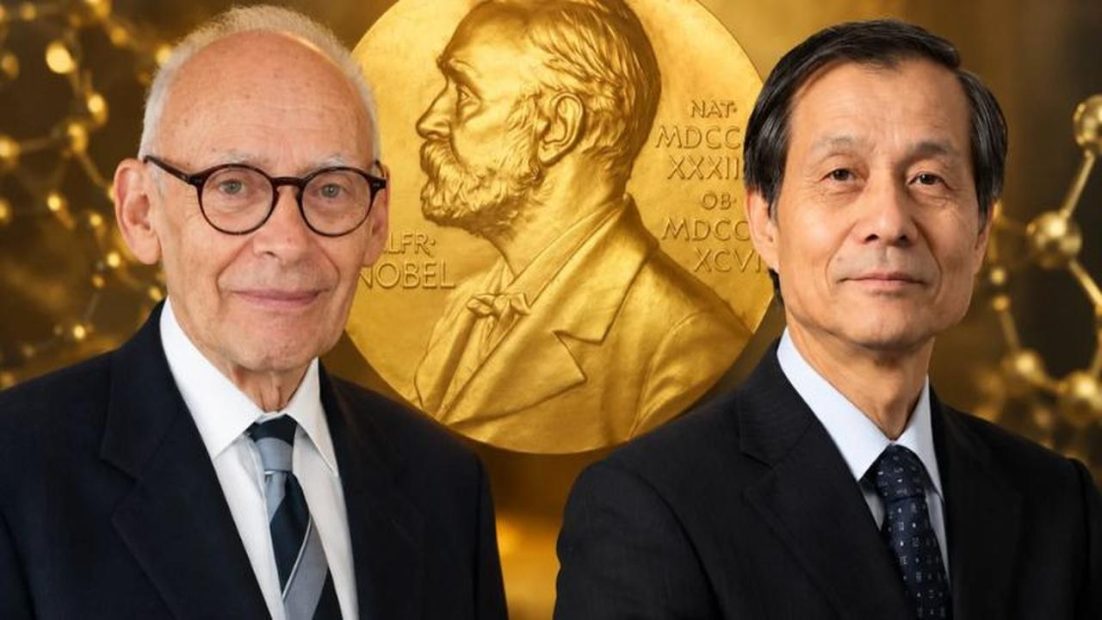
French chemist Henri B. Kagan and Japanese chemist Kenso Soai have won the 2026 Nobel Prize in Chemistry for solving a century-old mystery in chemistry.
They were jointly awarded the prestigious prize for fundamental research into the structure of molecules and their “mirror images.”
The Royal Swedish Academy of Sciences announced the names of the two winners in Stockholm on Wednesday (October 7). The academy said they were awarded the prize for their discoveries concerning “non-linear effects and autocatalysis in asymmetric organic synthesis.”
The ‘Right-Handed and Left-Handed’ Molecules
Scientists have been puzzled for more than a century by why two molecules can have exactly the same components and atomic arrangement but behave differently in nature.
Like our right and left hands, which look similar but cannot be perfectly superimposed, this property of molecules is known as chirality.
Living organisms, including the human body, generally favour one specific form, or enantiomer, of chiral molecules. But how nature selects one form over the other remained unresolved.
Kagan and Soai’s Breakthrough
Henri Kagan, 95: The French scientist, who is associated with Université Paris-Sud, showed that chemical reactions can be controlled in a way that produces much more of one molecular form than the other. He established the mathematical and theoretical basis for how small differences in a chemical reaction can produce major differences.
Kenso Soai, 76: The chemist at Tokyo University of Science took Kagan’s work a step further. He developed the remarkable autocatalytic reaction known as the “Soai reaction.”
In this reaction, a molecule produced during the process acts as a catalyst for the formation of more molecules of the same form. As a result, one molecular form eventually becomes dominant.
Importance for the Pharmaceutical Industry
The two forms of a chiral molecule can produce completely different effects in the human body.
The infamous thalidomide tragedy is a well-known example. One form of the drug had a therapeutic effect, while its mirror image caused severe birth defects.
Kagan and Soai’s discoveries have enabled scientists to produce specific and safer molecules synthetically. The research has brought major advances in the production of modern life-saving medicines, fragrances and advanced chemicals.
Prize Money and Ceremony
The two Nobel laureates will receive 12 million Swedish kronor, or about $1.2 million.
They will receive their Nobel medals and diplomas at a ceremony in Stockholm on December 10, the anniversary of Alfred Nobel’s death.
Source: Reuters










