Pakistan successfully tests Fatah-4 cruise missile capable of striking deep inside India
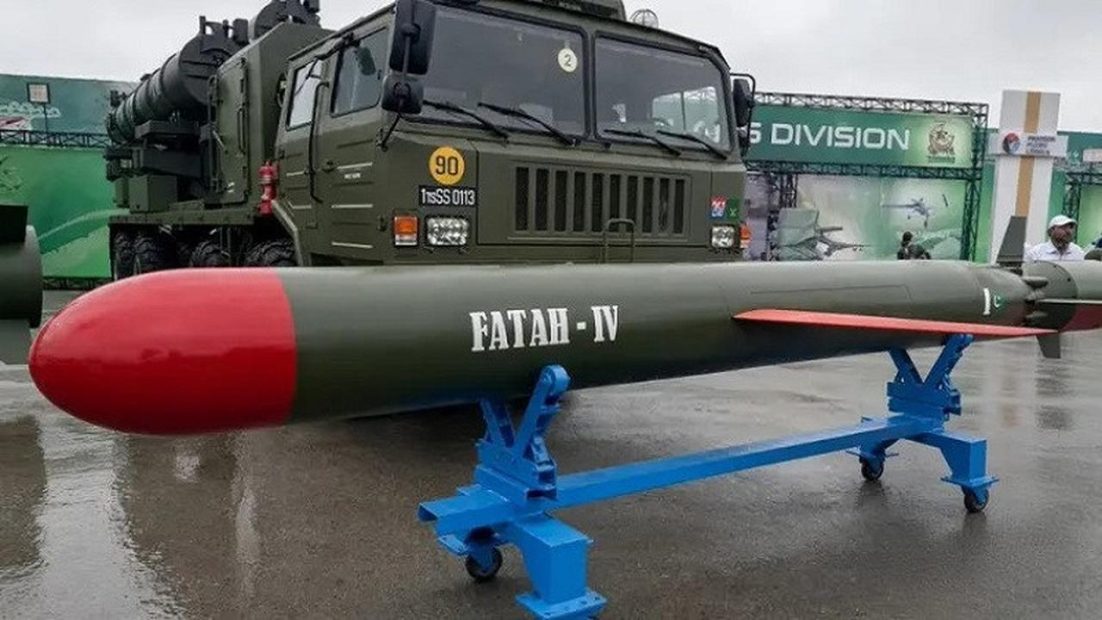
Pakistan has further strengthened its long-range strategic capabilities, adding new tension to the military balance in South Asia. On Tuesday (October 6), the country’s armed forces successfully tested the Fatah-4, an extended-range ground-launched cruise missile.
The test has added a new dimension to Pakistan’s military capabilities. President Asif Ali Zardari, Prime Minister Shehbaz Sharif and Chief of Defence Forces and Army Chief Field Marshal Syed Asim Munir congratulated the engineers on the achievement.
The previous version of the Fatah series had a strike range of up to 750 kilometres. Although Pakistan has not disclosed the exact range of the new extended-range version, military experts estimate that it could reach between 900 and 1,000 kilometres.
The missile’s key feature is not only its ability to strike targets at long distances but also its low-altitude flight capability. It can reportedly fly at a subsonic speed as low as 50 metres above the ground while following the contours of the terrain. This makes it more difficult for enemy radar and air defence systems to detect. As a result, important rear-area infrastructure, including military airbases, command networks and fuel or logistics facilities, could face greater risks.
Pakistan said the Fatah-4 is equipped with advanced avionics, an inertial navigation system (INS) with satellite navigation and digital scene-matching technology. These systems are designed to enable the missile to strike targets with high precision. It can also carry an explosive payload of around 330 kilogrammes.
The Pakistan Army’s Rocket Force Command is strengthening its fleet of high-precision conventional missiles alongside its strategic nuclear weapons. Unlike fast-moving weapons such as the previously used supersonic BrahMos missile, the Fatah-4 places greater emphasis on evading enemy radar.
However, military analysts say a successful test alone does not determine the missile’s battlefield effectiveness. Its actual performance will depend on adequate missile supplies, the ability of mobile launchers to reposition and the missile’s capacity to penetrate defensive systems.
Nevertheless, the extended-range Fatah-4 is expected to prompt Indian defence planners to reassess their strategies and preparations.