
Canal digging in Khulna promises a boost for agriculture
Asafur Rahman Kajol, Khulna
Once, countless small and large canals spread like a net across the wide countryside of Khulna. These canals were linked to the rivers, and they were the lifeblood of farming. They drained the rain water in the monsoon and supplied water for irrigation in the dry season. They also helped protect fish and aquatic life. But over time, silt, illegal grabbing, unplanned buildings, and many human activities took away the natural flow of many of these canals.
In some places, a canal has turned into a narrow drain. In other places, the water no longer moves at all. As a result, waterlogging is hurting daily life and crop land. In the dry season, farmers also suffer because they lack water for irrigation.
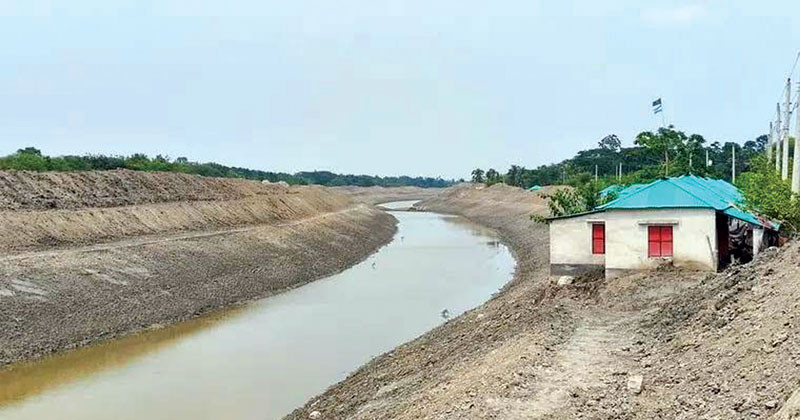
In this situation, the plan to restore the 572 government listed flowing canals of Khulna has come up again. The government has started digging and redigging canals to raise farm output, improve drainage, and protect biodiversity. This year, the government took up the work of digging 32 canals in Khulna. Heavy rain disturbed the digging of some canals. But officials say the digging of most canals is done.
Those involved hope that farming in Khulna will gain new speed when these canals come back to life. They expect irrigation costs to fall, and crop output and farmers’ income to rise. They also see a chance to protect fish resources, water plants, native fish, and other forms of life. They see a chance for new entrepreneurs to appear around farming and for good change in the local economy.
Canals matter a great deal for farming and daily life in Khulna. Many farm lands in this region suffer from too much water in the monsoon. In the dry season, it is hard to keep the land fit for farming because there is not enough irrigation water. When the natural flow returns, the canals will help drain the extra water into the rivers. They will also supply water to farm land when it is needed.
Farmers hope that canal digging will create another source of water for irrigation. This may help reduce the use of underground water. Costs for irrigation pumps, fuel, and collecting water will also fall, so the cost of production will fall too. Those involved believe that when farmers have more money in hand, they will show more interest in growing high value crops, vegetables, and other farm products.
But to get the benefit of canal digging, it is not enough just to cut the soil. It is also important to make sure that water flows naturally, to keep the canals connected, and to maintain them regularly. Otherwise, the canals may fill with silt again or be grabbed again, and return to their old state.
Farming in the coastal and low lying areas of Khulna has faced many water management problems for a long time. In some places, rain water that collects in the monsoon cannot drain on time and destroys crops. In other places, there is a lack of irrigation water when it is needed. This opposite water crisis makes the production plans and income of farmers uncertain.
Local farmers, the agriculture department, and others involved say that bringing back the natural flow of the canals can bring good change in both drainage and irrigation. They also say that chances will grow for fish farming, breeding of native fish, and restoring the water environment around the canals. So new chances may open up for fish resources and rural livelihoods, along with farming.
Mr. Rafiqul Islam, a leader of a farmer organization in the district, said that some matters need special attention to make Khulna’s canal restoration last. First, government canals must be freed from illegal grabbing, and effective steps must be taken to stop new grabbing. Second, the habit of changing the class of rivers and canals and blocking the water flow with unplanned buildings must stop.
He also said there is a need for planned dredging of rivers and canals, a fresh look at how well old polder projects work, and steps to bring back the natural water flow. He said it is also important to manage water in line with the tides, keep canal mouths and joints open, and check the quality of water and silt regularly. He said that, especially in coastal areas, digging plans must consider changes in salinity and the pattern of silt build up.
Mr. Rafiqul Islam added that local farmers, public representatives, offices of agriculture and water development, and environmental workers must all take part together in canal management. He said this will make it easier to find the real need of each canal, set the priority for digging, and run maintenance work later.
Mr. Abdul Karim, the District Relief and Rehabilitation Officer of Khulna, said BRDC, BVM, the Bangladesh Water Development Board, and LGED have dug canals in the district. He said heavy rain made it impossible to dig some of the listed canals.
The work of digging 32 of the 572 government listed canals of Khulna this year has given a new dimension to the talk about water management and farm development in this region. But those involved say this effort must go on without a break to end the long crisis. They say canal restoration should not be seen as a separate project. It should be seen as part of the joint management of rivers, canals, farm land, and the coastal environment.
They say that if the canals are kept flowing, it will be possible to cut farm costs, grow more kinds of crops, reduce losses from waterlogging, and strengthen the rural economy. They also say this effort can play a key role in protecting aquatic life and keeping the balance of nature.
The people of Khulna have suffered for a long time from a lack of natural water flow. They hope that the present canal digging, if carried out in an effective and lasting way, will bring back the lost balance between farming and nature. For them, canal restoration is not just a project of cutting soil. It is an important way to get relief from waterlogging, to be sure of irrigation water, and to wake up the economic chances of a farming community.










