Three-Pronged Security Threat Endangers Saudi Vision 2030
Continuous Houthi Strikes Expose Defense Vulnerabilities and Imperil Economic Ambitions
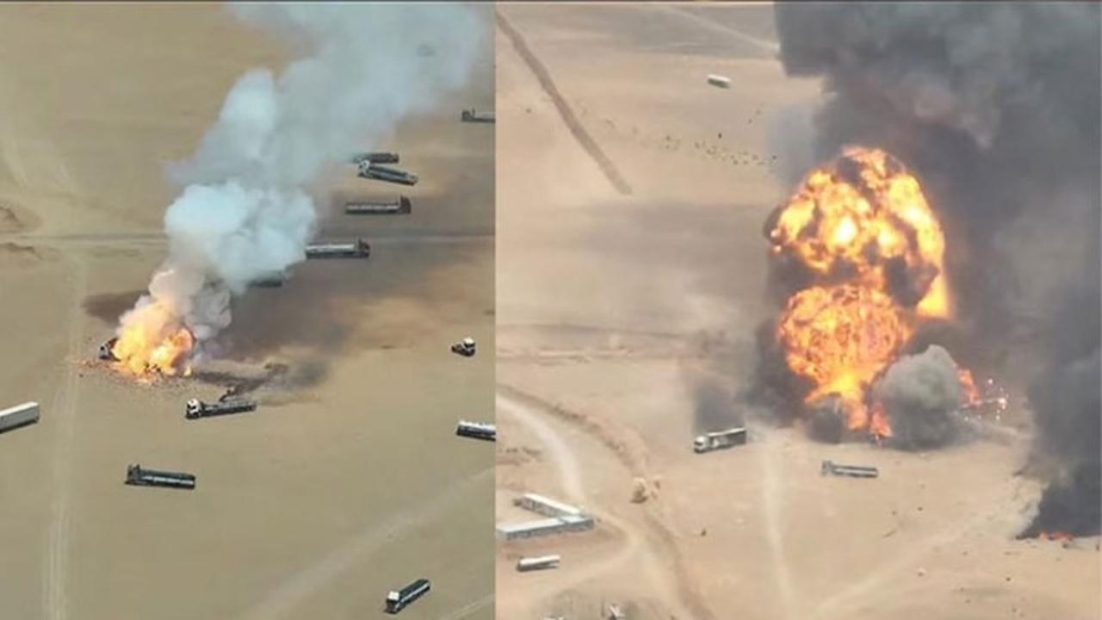
Despite spending billions of dollars on defense and amassing a state-of-the-art military arsenal, Saudi Arabia faces one of the most severe crises in its history. Relentless drone and missile attacks by Yemen’s Houthi rebels have exposed critical gaps in Saudi security, putting Crown Prince Mohammed bin Salman’s ambitious Vision 2030 initiative and economic transformation strategy at grave risk.
A recent lethal attack at Riyadh’s King Khalid International Airport sent shockwaves globally. According to the Stockholm International Peace Research Institute (SIPRI), Saudi Arabia spent $83 billion on defense last year. Yet, despite deploying advanced U.S. and European Patriot and THAAD air defense systems, the Kingdom struggles to protect capital infrastructure and vital oil refineries.
Vision 2030 relies heavily on boosting tourism, technology, and foreign direct investment. However, major global events: such as the Future Investment Initiative in Riyadh and the World Petroleum Council’s Energy Congress have suffered major setbacks. Key global CEOs and investors canceled attendance due to safety concerns. Instability along Red Sea trade routes and disruptions to airports and data centers continue to erode investor confidence.
Houthi forces have employed coordinated saturation attacks using ballistic missiles, cruise missiles, and long-range drones, a tactic reminiscent of Russian maneuvers in Ukraine overwhelming Saudi air defenses. Frequent airport closures and strikes on oil pipelines further threaten economic stability.
Middle East analyst Dr. Yoel Guzansky noted that the ongoing conflict severely complicates Saudi Arabia’s economic diversification. The International Monetary Fund (IMF) projects a notable deceleration in Saudi economic growth this year.
Riyadh continues to project resilience. In a cabinet meeting chaired by the Crown Prince, ministers praised the swift restoration of oil flow through the East-West pipeline, which was targeted by drones launched from Iraq in September. Officials asserted that the rapid recovery demonstrates the high operational agility and emergency response capability of the Kingdom’s energy sector.
Nevertheless, mounting economic challenges threaten Riyadh’s goal of transforming into a global trade and logistics hub. Following the strike on King Khalid International Airport, official efforts to downplay security risks are increasingly losing credibility.
Targeted Strikes Disrupt Key Infrastructure
According to Ynet, the economic fallout is immediate. Disruptions at King Khalid International Airport a primary gateway for international executives and investors—severely impacted commercial aviation. Attacks on other strategic infrastructure continue to weigh heavily on the economy.
The timing is particularly problematic as Saudi Arabia prepares for flagship events like the Future Investment Initiative conference (October 26–29), designed to attract senior global bankers and CEOs. Heightened security concerns have complicated preparations and cast doubt on delegate attendance.
Several high-profile leaders including CEOs from ExxonMobil, Total-Energies, Shell, and BP canceled participation in the World Petroleum Council’s Energy Congress. Furthermore, organizers of the Misk Global Forum, an annual conference tied to the Crown Prince’s non-profit foundation, canceled their primary November event.
CNN highlighted Saudi Arabia’s primary strategic vulnerability: its vast geography exposed to threats from three fronts. To the east, Iran has launched around 1,000 missile and drone strikes toward Saudi targets. To the north, Iranian-backed groups in Iraq target the vital East-West oil pipeline. To the south, Houthis leverage rugged terrain in Yemen to launch mobile missile strikes, continuously challenging Saudi air defenses.
With an estimated 350,000 armed fighters in Yemen, the Houthis remain formidable. Coalition air strikes over the past year have failed to diminish their core leadership or military capability.
Analysts observe that Saudi Arabia faces narrow, difficult choices: escalating military action carries immense risk, while compromising with the Houthis following civilian casualties is politically untenable. Meanwhile, Washington’s reluctance to get drawn directly into regional conflicts leaves Riyadh feeling increasingly isolated.
The regional conflict directly tests Crown Prince Mohammed bin Salman’s core pledge of security and prosperity. To safeguard foreign investment and preserve domestic stability, Saudi leadership must navigate delicate diplomatic and military paths to prevent long-term economic derailment.