After 42 Years, Temple Chariot Enters Dalit Colony Despite Upper Caste Anger
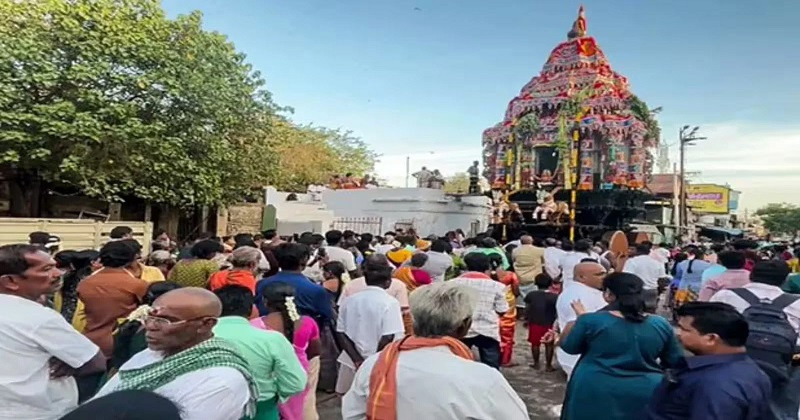
A temple chariot has entered a Dalit colony in Kanchipuram district of Tamil Nadu after 42 years. The district administration ordered a trial run to make this happen. The event took place in Puthagaram village near Walajabad. Local residents had been asking for years to take the chariot of the “Arulmigu Sri Muthu Kolakki Amman” temple through their area.
Some bad actors tried to block the chariot procession, according to the report. Police and district officials took strict action and the event ended in peace. The Madras High Court had given a clear order to take the chariot through the Dalit colony. But a dispute over the route kept the procession on hold for a long time, even with the court order in place.
Dalit residents of Puthagaram village asked again and again for permission to take the temple chariot through their area. Some community groups opposed this demand, which led to a sharp debate over the route. The matter then reached the Madras High Court through a petition filed by a man named Pasarai Selvaraj. After the hearing, the court clearly ordered that the chariot must pass through the Dalit colony.
To carry out the order and keep things calm, the district administration ordered a trial procession last Sunday. Two Tamil Nadu ministers, Mr. Thenarasu and Mr. Ranjit Kumar, started the event by pulling the chariot rope. District Superintendent of Police Mr. Aravindan led a large police force to ensure safety. More than 200 police officers patrolled the village, including 4 Deputy Superintendents of Police (DSP), 2 Additional Superintendents of Police (ASP) and 10 inspectors.
The chariot toured different parts of the village under tight police security. It then returned safely to the temple. Thousands of Dalit people were filled with joy when the chariot entered their area after 42 years. They prayed together and performed the Deeparadhana, a ritual of offering lamps.
Local residents pulled the chariot rope with joy to the beat of traditional instruments like the Chenda Melam and drums. They used this moment to celebrate the end of their long wait.