Two Jhalakathi Municipalities Pollute Sugandha River with Waste Dumping
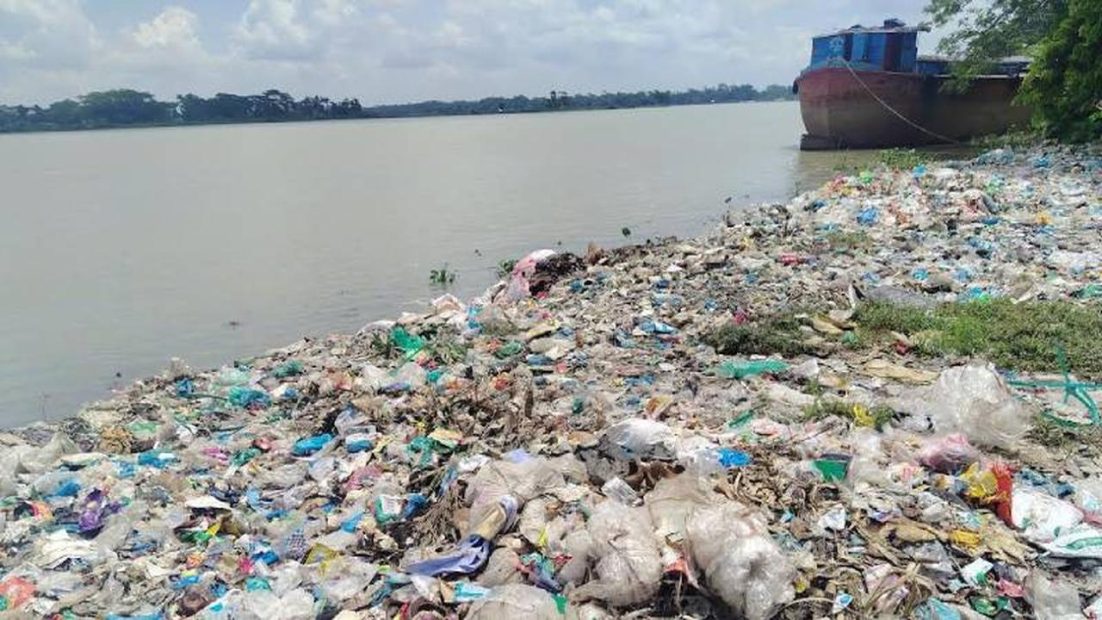
Jhalakathi and Nalchity municipalities have been accused of regularly dumping waste along the banks of the Sugandha River. Local residents fear that the practice is polluting the environment and may contaminate the river water.
Recently, piles of waste were found at several locations along the river, including near the Meghna oil depot in Jhalakathi town and in the Kalbari area of Nalchity municipality. The waste includes household rubbish, polythene, plastic bottles, food scraps and other garbage. Decomposing waste is spreading foul odours in nearby areas.
Local residents said large amounts of waste are collected daily from homes, markets and businesses in the municipal areas. Some of it is being dumped along the riverbank instead of at designated sites. Rainwater and tidal flows then carry some of the waste into the river.
H M Caesar, a resident of Nalchity municipality, said, “All the waste from the municipality is brought and dumped on the banks of the Sugandha River in the Kalbari area. This spreads foul odours and pollutes the environment. The waste also mixes with the river water during high tide. A designated place is needed for waste management.”
Mahbub Hossain Saikat, a resident of Jhalakathi municipal town, said, “There is always a foul smell because waste is dumped beside the river. When it rains, the waste mixes with the water and flows into the river. This practice of dumping waste must be stopped quickly.”
Ismail Musafir, general secretary of SUJAN and the Jhalakathi Tree, Forest and River Protection Movement, said the number of sanitation workers responsible for collecting and disposing of daily waste in Jhalakathi and Nalchity was insufficient in practice, despite the need for adequate staffing.
“Waste from both municipalities is being dumped on the banks of the Sugandha River. The liquid from decomposing waste is seeping into groundwater. During high tides and rainfall, it flows into nearby farmland, rivers and canals. Sometimes the waste is burned, which also pollutes the air. No civilised country dumps waste on riverbanks in this way,” he said.
He added that a significant portion of municipal revenue budgets should be allocated to waste management. Effective measures must be taken to stop waste from being dumped along roadsides and riverbanks under cover of darkness.
He said the construction of modern waste management stations could provide a lasting solution by allowing waste to be safely treated or recycled. The Department of Environment has already granted site clearance and environmental clearance for a modern waste management unit in Kunihari, Jhalakathi. However, land acquisition has not yet been completed. Similar initiatives are also needed in Nalchity municipality.
Several attempts were made to contact Nalchity Municipal Administrator Pratik Kumar Kundu by phone, but he did not answer. Therefore, his comments could not be obtained. Jhalakathi Municipal Administrator Julia Sukayna said, “There was no dumping station before. A dumping facility has now been arranged for the municipality. Necessary measures will be taken to ensure that waste is not dumped on the riverbank.”
Jhalakathi Deputy Commissioner Mohammad Momin Uddin said municipal administrators had already been instructed not to dump waste along riverbanks. “They have been asked to arrange alternative facilities for waste disposal. If waste is still being dumped into the river, the matter will be taken seriously,” he said.