Syndicate Controls Crab and Eel Exports in Bangladesh, Most Traders Allegedly Left Out
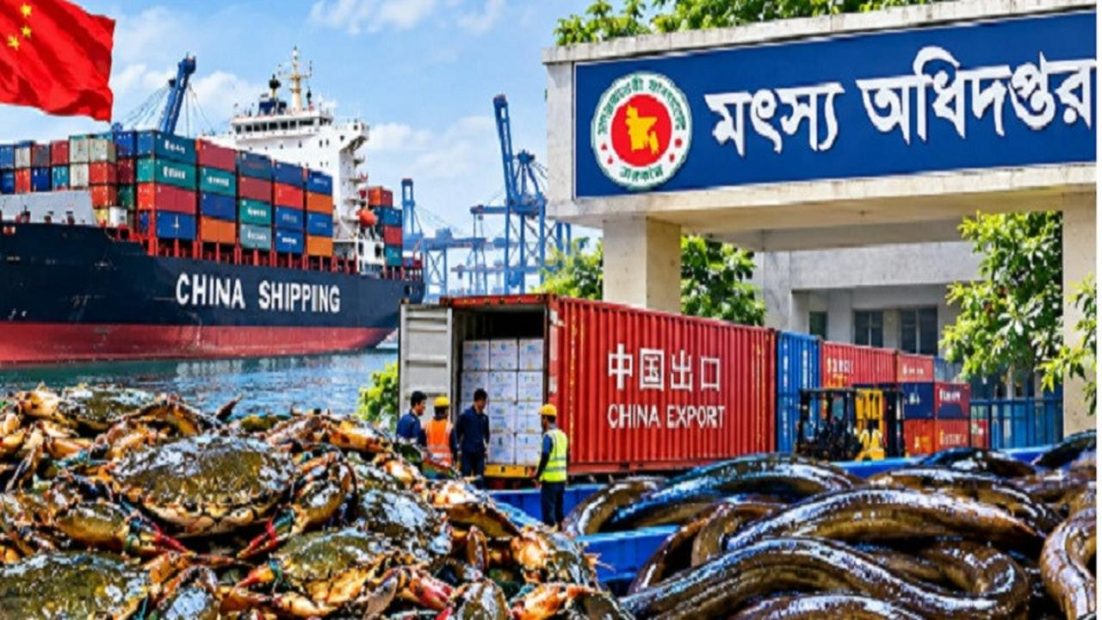
A syndicate of 15 to 16 traders has allegedly gained control over crab and eel exports in Bangladesh. Many traders say they cannot export their products because the Department of Fisheries is not collecting samples or issuing export certificates, despite their having valid licences. The situation has raised concerns about declining export earnings and the livelihoods of traders, workers and people involved in collecting these products.
Traders allege that a group is influencing export operations with the support of some Department of Fisheries officials. They say traders outside the alleged syndicate are not receiving sample testing or certificates despite submitting applications and the required documents. These allegations could not be independently verified.
When contacted for comment, Dr Md Khaled Konok, acting director general of the Department of Fisheries, declined to comment. However, State Minister for Fisheries and Livestock Sultan Salahuddin Tuku said the allegations would be investigated and necessary action would be taken if any irregularities were found.
Mr. Prabir, proprietor of B.C. Food, said he had been exporting crabs and eels through another licensed company until three or four months ago. However, he alleged that the company was no longer allowed to submit samples.
“The entire sector is now under the control of a syndicate. A group is doing business by showing its power, while the rest are being deprived. If you are outside the syndicate, the department does not collect your samples,” Mr. Prabir said.
Mr. Gopal, proprietor of Biswas Trading, said that although he holds his own licence, he has been unable to obtain the samples and certificates required for new exports for the past two to three months. He claimed that officials at the Department of Fisheries told him they could not collect samples at present.
“If there is any complaint, they tell us to contact the minister. We return empty-handed from the Fisheries Building. Some of us have even approached the minister but have found no solution,” Mr. Gopal said. Questioning why traders with valid licences could not export their products, he said many businesses were being prevented from operating because of one group.
A former leader of the Bangladesh Live and Chilled Food Exporters Association, speaking on condition of anonymity, said the association had more than 300 members, around 85 of whom were authorised to export crabs and eels to China. However, only 15 to 16 traders are currently exporting the products, he claimed. He added that many traders had been unable to export for the past six to seven months.
The former association leader alleged that some traders outside the syndicate were being labelled supporters of the previous government and excluded from the business. He said all traders holding export licences should be allowed to ship their products in accordance with the rules.
According to traders, sample approval is the first step in exporting crabs and eels. A Department of Fisheries inspector collects and examines samples and assigns codes. Once the samples are approved and the required certification process is completed, the products can be exported.
Mr. Uttam, proprietor of Riju International, said traders must submit a pay order of Tk 50,000 for each sample. If samples are not collected after all preparations have been completed, exporters face financial losses. Despite holding his own licence, Mr. Uttam said he could no longer export enough products to meet demand. Under normal circumstances, he could ship five tonnes a month. Now, by using another company’s licence, he can export only 200 to 300 kilograms.
“I have my own licence, yet I cannot ship products according to demand. People connected to the big shots are shipping products. We cannot. I am somehow surviving by using someone else’s licence. But for how long?” he said.
Mr. Shaheen, proprietor of SNR Enterprise, said he was also keeping his business afloat by exporting small quantities through another company. He alleged that samples from many traders were not being collected, causing them financial losses.
Traders said they continued to bear warehouse rent, staff salaries, product collection costs and transportation expenses even when exports were suspended. Many who had invested in the sector and built market connections over the years are now struggling to keep their businesses running.
If companies are forced to close, not only exporters but also crab and eel collectors, wholesalers, transport workers and labourers could lose their livelihoods. According to traders, crabs are mainly collected from Khulna, Satkhira and Chakaria in Chittagong. Eels are collected from Rajbari, Netrokona, Sylhet, Chandpur and other areas.
Traders claim that China accounts for around 99 per cent of exports from the sector. Thailand, Taiwan and Singapore are also markets for these products. Although heavy dependence on a single market creates commercial risks, traders believe the sector could earn substantial foreign currency if the government provides support and ensures equal opportunities for exporters.
Several licensed exporters alleged that they had submitted applications and the required documents nearly two months ago but had still not been allowed to provide samples. In contrast, they claimed that around 90 eel samples were collected from a particular packing company on September 27.
They have called for an investigation into the legality of the process and the role of officials and employees at the Fisheries Building. Allegations have also been made against one official and two female inspectors. However, no independently verified documents supporting these allegations were available at the time of reporting, and the accused could not be reached for comment.
Some traders further alleged that certain individuals were using their political connections to pressure businesses and, in some cases, attempting to extort money by putting locks on business premises. They claimed that minority traders were facing greater pressure. The relevant political organisations and the accused could not be reached for comment.
The traders have demanded an investigation into the collection of the 90 eel samples on September 27. They have also called for the cancellation of any certificates found to have been issued through irregularities and for samples from all applicants to be collected and tested according to the rules.
They believe all traders who meet the required qualifications and conditions should receive equal opportunities to obtain export certificates. Government information outlines established procedures for exporting fish and fish products to China, including inspection, sample collection, testing and the issuance of health certificates.
Asked about the allegations, acting Director General of the Department of Fisheries Dr Md Khaled Konok declined to comment. State Minister for Fisheries and Livestock Sultan Salahuddin Tuku, however, said, “If there are any such allegations, we will investigate them and take action. Those facing such obstacles should meet me directly. I will look into complaints from those whose samples are not being collected or who are not receiving certificates and take the necessary action.”
Traders said they were not seeking special privileges but equal opportunities to conduct business under the rules. They warned that unless the allegations are investigated impartially and transparency is ensured in sample collection and certification, exports, investment and employment in this promising sector could suffer.