Khulna Farmers Innovate New Rice Varieties
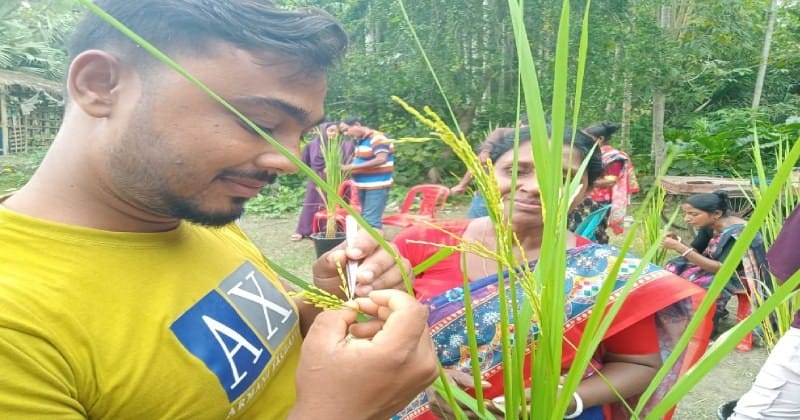
A two-day hands-on rice breeding training program recently concluded in Gangrampur village of Batiaghata upazila, Khulna, focusing on equipping local farmers with the practical skills needed to develop new rice varieties independently. Organized by the non-governmental development organization Lokoj during the current Aman season, the initiative aimed to enhance agricultural capacity, foster collective consensus, and promote innovative, research-oriented farming practices among the rural community.
During the workshop, participants engaged in a rigorous, step-by-step process starting with parent variety selection in pots or buckets five to seven days prior. The first day featured theoretical discussions on hybridization, followed by afternoon practical sessions on emasculation, where farmers carefully removed anthers from selected rice panicles. On the second day, attendees executed pollination techniques hands-on, subsequently protecting the treated panicles with tracing paper caps to prevent unwanted external cross-pollination.
According to training-related personnel, hybrid seeds are projected to be harvested within 28 to 30 days of pollination. These seeds will serve as the foundation for multi-season cultivation, selection, and observation to advance new rice lines. Organizers emphasized that developing localized varieties is a long-term research endeavor that may span approximately ten cultivation seasons to ensure full compatibility with local environmental conditions and farmers’ demands.
Agriculturalist Sirajul Haque successfully facilitated the program, supported by Lokoj Coordinator Palash Dash, Program Officer Milon Kanti Mondal, and Dipankar Kabiraj. Training officials highlighted that this grassroots initiative plays a vital role in building farmers’ capabilities, fostering self-reliance, and securing active, empowered participation in future agricultural research and innovation across the region.