Govt Issues Gazette Setting Speed Limits and Fees for Battery-Operated Rickshaws
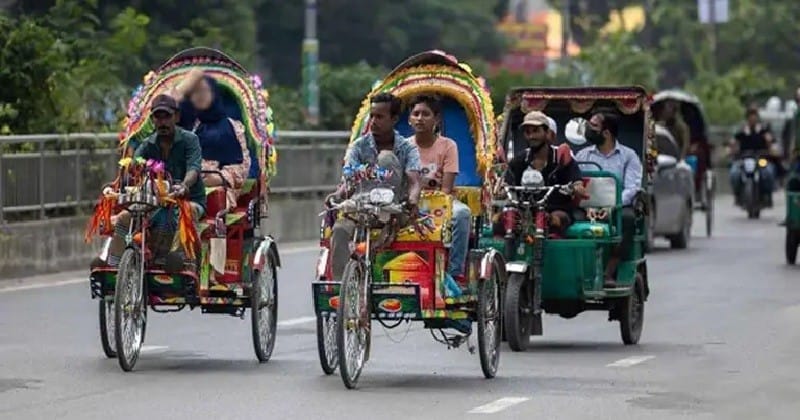
The Bangladesh government has issued new regulations setting a maximum speed limit of 25 kilometers per hour for battery-operated three-wheeler rickshaws operating within city corporation areas. According to a gazette notification issued on Thursday by the Local Government Division under the Ministry of Local Government, Rural Development and Co-operatives, the speed limit must be reduced to a maximum of 15 km/h in front of schools, hospitals, places of worship, and densely populated zones across all city corporations.
Under the new guidelines, low-speed battery-operated rickshaws must obtain mandatory registration valid for five years before plying the streets. The regulations specify that battery-operated rickshaws must strictly travel in the far-left lane of the road and are explicitly banned from operating on national highways, expressways, elevated expressways, and primary bus corridors. Furthermore, passenger capacity is capped at either two or four individuals excluding the driver, depending on vehicle design, and carrying commercial cargo other than hand luggage is strictly forbidden.
To qualify for registration, all battery-operated rickshaws must comply with the technical standards and safety specifications outlined by Bangladesh University of Engineering and Technology (BUET), which include mandatory structural design modifications for existing vehicles. Every vehicle must be equipped with a speedometer or odometer, and horns exceeding 40 decibels are prohibited. The economic lifespan of each registered battery-operated rickshaw has been fixed at 12 years, after which the vehicle’s registration and physical license plate will be permanently revoked.
Applicants for registration must be Bangladeshi citizens aged 18 or above, and a maximum of five battery-operated rickshaws can be registered under a single National Identity Card. Registration fees are set at BDT 8,000 for two-seater vehicles with an annual renewal fee of BDT 4,000, while four-seater vehicles require an initial fee of BDT 10,000 and an annual renewal fee of BDT 5,000. Each vehicle must also obtain a fitness certificate costing BDT 1,000 and display a license plate featuring a unique QR code.
The policy also introduces strict rules regarding charging infrastructure and operational compliance. Battery-operated rickshaw batteries must only be recharged at licensed charging stations or designated garages authorized by the respective city corporation, with directives encouraging these facilities to incorporate renewable energy or solar setups. Additionally, battery-operated rickshaws registered in one city corporation are strictly prohibited from operating commercially in another city corporation area to ensure localized fleet management and smooth urban traffic control.
Driving an unregistered vehicle, exceeding speed limits, carrying extra passengers, modifying motors, and using unauthorized batteries are listed as legally punishable offenses under the new notification. Reckless driving and fleeing the scene of an accident are categorized as severe crimes, making it mandatory for drivers to halt immediately in the event of any collision. Authorities affirmed that no defective, safety-compromised, or illegal battery-operated rickshaws will be allowed on public roads under these unified regulations.