Security Tightened Ahead of Prime Minister’s Visit to Khulna
Abu Hena Mukti
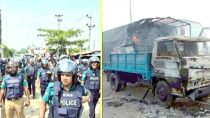
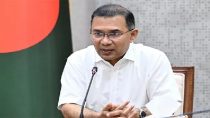
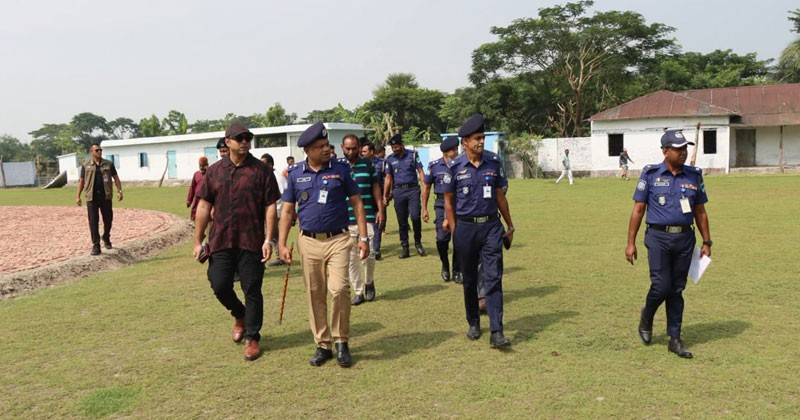
Law and order has worsened sharply in Khulna district and the metropolitan area in recent times, and one killing after another has caused fear among people. Prime Minister Mr. Tarique Rahman will visit Khulna later this week. The administration has built a tight three layer security ring, yet crime and violence in the district do not stop. Sources say that while strict security covers the whole district for the visit, a tragic incident took place.
Police recovered the bodies of two unidentified men with hands and feet tied from a sandbar by the Atharobanki river in Rupsha upazila. The bodies were found yesterday at noon beside a banana garden in Mosabbarpur village of Aichgati union, in the Singher Char area. District administration and law enforcers say security in Khulna and nearby areas is very strict. Checkposts have been set at key points, and intelligence watch and police patrols have increased.
The administration has announced a zero tolerance policy on crime, but criminals continue to act freely. Locals say law enforcers become more active during VIP visits or special days, but ordinary people do not get lasting benefit. When the administration focuses on VIP protocol and security, local crime rings and gangs become active. Murders and bloody clashes over petty matters, old enmity or dominance have risen at an alarming rate in different areas of Khulna in recent days.
In the first 10 months of 2026, 71 killings took place in Khulna city and district, and 69 cases were filed. Police and locals say drug trade, control of extortion, snatching and clashes between terror groups cause these killings. The prime minister made an earlier visit to the region a few days ago. On that very day, two separate brutal killings took place in Khulna within 15 hours. Attackers used guns and sharp weapons openly in Rupsha and other parts of the city.
The day before yesterday, a Tantidal leader named Mr. Humayun Kabir was hacked to death at his own shop in the Aronghata police station area. In the Labanchara area, another young man named Mr. Shahidul Islam Colin was stabbed to death. Intelligence sources say about nine active criminal gangs are involved in repeated crimes. Their clashes over control of drugs, extortion and other illegal businesses are the main cause of the violence. Law enforcers have recovered some weapons, but about 300 illegal firearms are believed to remain with criminals in Khulna city.
Reports say these illegal weapons enter the country through border routes. During a special drive in Rupsha, Terokhada, Dighalia and Batiaghata, a police inspector was badly injured when snatchers stabbed him. After this, district police told officers not to travel alone at night. Mr. Rafiqul Islam, a resident of Boyra in Khulna, told Inqilab that people are worried about law and order after recent killings, shootings, attacks, extortion and clashes. He said the recovery of two bodies from one place has raised talk about how well law enforcers control crime and keep watch.
Mr. Kamruzzaman Tuku (Sad), a leader of Khulna Nagorik Andolon, told Inqilab that large security measures for the prime minister’s visit have not stopped the decline in law and order. He said it has deeply worried locals and others concerned. A public killing took place on the day of the earlier visit, which raises a big question about the high security ring and the safety of ordinary people’s lives and property. He said the real need now is to close the source of illegal weapons and run a long term, strict drive against active gangs, instead of short and partial security during visits of top persons.
Mr. Sajjadur Rahman, commissioner of Khulna Metropolitan Police (KMP), said district police and KMP are running special and joint drives. These aim to restore normal law and order, recover illegal weapons, fight drugs and arrest criminals. Those concerned say security raised only for important visits cannot improve the overall law and order. They say it is essential to identify crime prone areas and hold regular patrols. They also say police must keep intelligence watch, identify and prosecute criminals, and ensure fair investigation of every killing.