Rabindranath Tagore Perceived Durga Puja as a Universal Festival for Bengalis: Is This Truly the Case?
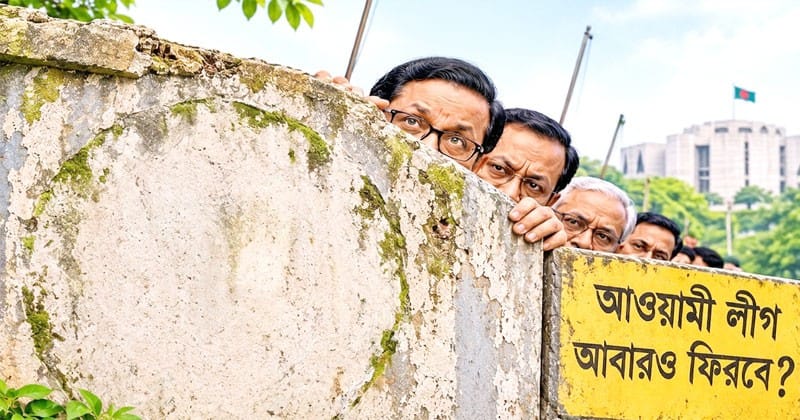
A political commentary published in a leading Bangladeshi daily has highlighted growing concerns over the potential political resurgence of the ousted Awami League. The piece draws attention to two prominent front-page reports featured in the daily Inqilab and Amar Desh. Inqilab titled its report ‘Desperate to Return Riding the Wave of Discontent: How Prepared is the BNP?’ while Amar Desh ran with ‘Awami Soft Power Actively Vibrant on the Field.’ Both reports underscore the underlying premise that the Awami League is actively maneuvering for a comeback following the July Revolution.
The commentary outlines how political and cultural strategies have historically intersected in Bangladesh to influence state power. It recalls that after the establishment of Pakistan, early rulers became entangled in palace intrigues to maintain control. During this period, cultural dynamics in East Bengal began to shift through language-based regional narratives. The author argues that leftist activists and the Awami League gradually adopted Rabindranath Tagore’s cultural works to counter the central Pakistani state ideology. The then-regime’s response was criticized as a major misstep that ultimately deepened the regional cultural rift leading up to 1971.
Examining post-revolution dynamics, the article expresses deep alarm over the perceived resurgence of Awami League influence in Bangladesh’s media and public discourse. The author notes that following the July uprising, party loyalists fled to India or went underground, but are now attempting a gradual re-emergence. Concerns were raised regarding specific corporate media outlets where a shift in editorial tone is allegedly taking place. The piece critiques recently published features for framing traditional Hindu festivals like Durga Puja as universal Bengali cultural events, arguing that such framing blurs distinct socio-religious boundaries within the country’s majority population.
The piece highlights several incidents indicating a renewed boldness among Awami League supporters across the country. It cites a recent public incident in Naogaon where announcements were reportedly made via loudspeakers claiming an imminent return of former PM Sheikh Hasina. The author questions how such open political messaging could occur in public spaces while the party’s leadership faces severe legal consequences and bans. This growing visibility, the author cautions, reflects an expanding operational footprint that the current authorities have failed to contain adequately.
The analysis heavily references the findings of the National Independent Investigation Commission’s November 2025 investigative report on the 2009 BDR massacre. The 190-page report, led by General Fazlur Rahman’s commission, explicitly documented key political figures from the Awami League involved in the tragedy. It detailed allegations regarding non-Bengali perpetrators entering from India and the murder of 57 elite military officers. The commentary questions why the current administration has not taken swift legal action based on the concrete findings provided in this comprehensive investigation.
Further accountability concerns were raised regarding the Enforced Disappearances Commission’s 346-page report titled ‘Unfolding the Truth: 16 Years of Enforced Disappearances.’ The document detailed state-sponsored atrocities, extrajudicial actions, and illegal detentions inside secret facilities over the past sixteen years. The author points out that despite the publication of such harrowing evidence, visible progress on prosecuting those responsible remains slow. This apparent delay in justice is cited as a key factor emboldening ousted elements to reassert themselves.
Economic crimes and financial flight form another critical focus of the commentary’s critique of the interim setup. It refers to estimates indicating that approximately Tk 28 lakh crore was illegally siphoned abroad during the previous regime’s tenure. The public, the article asserts, has a fundamental right to know what concrete measures are being undertaken to trace and repatriate these massive assets. The lack of visible recovery efforts creates growing public frustration while allowing fugitive networks to maintain financial liquidity.
Addressing security issues, the commentary emphasizes reports regarding cross-border funding aimed at destabilizing the current transition. The author cites statements acknowledging that funds are actively flowing across the border into local hands based on specific intelligence data. The piece demands to know what decisive steps have been taken against the key figures receiving and distributing these illicit funds. Without prompt interventions, these financial channels will continue to fuel organized agitation on the ground.
The author contrasts the high precision of state intelligence in minor matters with its handling of political agitators. The piece notes how quickly authorities identified the exact window and officer involved in filming Sheikh Hasina’s departure aboard a military aircraft. However, the author argues that the same technical efficiency has not been demonstrated in apprehending banned political operatives currently disrupting public order. This gap in law enforcement execution is presented as a major vulnerability for the present government.
In conclusion, the article delivers a direct warning to the current administration regarding its stance on security and justice. The author urges the government to adopt a resolute, uncompromising posture against destabilizing elements before their operational footprint expands further. Failing to take firm legal and operational measures will allow the Awami League to regain its footing entirely. The commentary ends with an appeal for immediate, decisive state action to safeguard the gains of the July Revolution.
Email:journalist15@gmail.com