Italian Employers to Bear Training Costs for Bangladeshi Workers: Ambassador
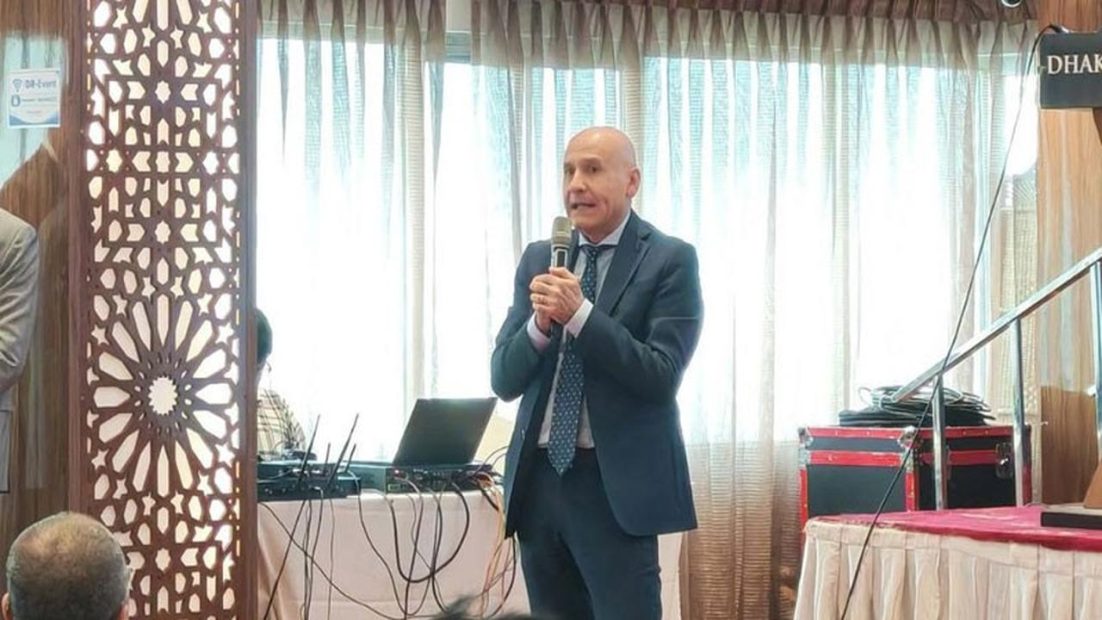
Employers in Italy will bear all costs of special training programmes for recruiting workers from Bangladesh. Trainees will not have to pay any fees under these programmes.
There will also be no role for intermediaries or agencies in the recruitment process. Anyone found to have paid money to an intermediary will not be granted a visa, Italian Ambassador to Bangladesh Antonio Alessandro has said.
He made the remarks on Tuesday at an event titled ‘Language, Civic and Professional Training for Skilled Migration to Italy’, held at a hotel in Dhaka.
The ambassador said the projects were being undertaken under Article 23 of Italy’s immigration law and were primarily based on employers’ requirements.
Italian companies that need workers will first determine their recruitment needs. Training programmes will then be designed accordingly, followed by the selection of trainees and arrangements for their training.
The training will cover the Italian language, the country’s culture and civic life, as well as technical skills relevant to the respective sectors.
After proper scrutiny, each project may receive approval from an inter-ministerial committee led by Italy’s Ministry of Labour and Social Policies.
Antonio Alessandro said the programmes would be fully funded by Italian employers or companies. No money would be collected from trainees. However, trainees coming from outside Dhaka might have to bear some incidental expenses, including accommodation costs.
He made it clear that Article 23 does not allow recruitment through intermediaries. Recruiting agencies have no role in the process and were not invited to the event. If information emerges that any trainee has paid money to an intermediary, that person will not be granted a visa, he warned.
The ambassador said around 250,000 Bangladeshis and Italian citizens of Bangladeshi origin live in Italy. Many of them hold dual citizenship.
In 2025, Italy sent $1.7 billion in remittances to Bangladesh. Expatriate Bangladeshis are playing an important role as a bridge in strengthening relations between the two countries, he added.
However, the ambassador said opportunities to recruit workers under Article 23 projects would be limited. A few hundred or a few thousand workers might be able to go to Italy through this process, but the number was unlikely to exceed that range.
He explained that Italy had specific restrictions on recruiting foreign workers, including limits on the number of workers recruited from any single country.
Antonio Alessandro advised those who were not selected not to spend money trying to reach Italy through other channels.
He urged people to remain cautious about false promises and fake job offers. Those who did not get an opportunity could wait for future recruitment programmes or focus on building their future in Bangladesh, he said.
He warned that attempting to migrate through illegal channels could put both money and lives at risk.