A New Dawn on the Horizon
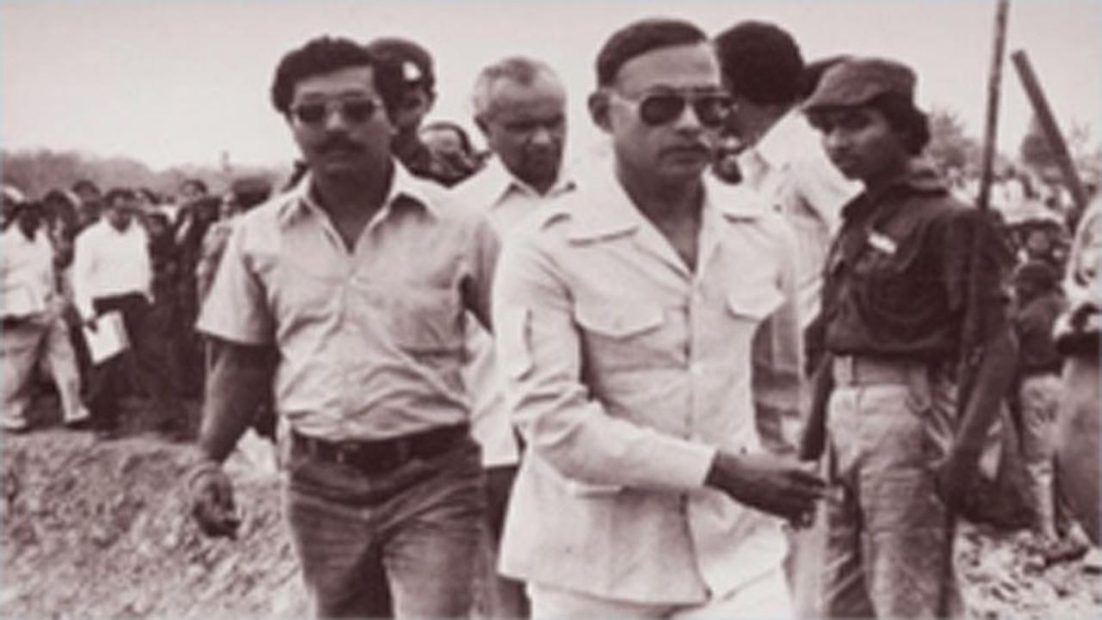
On the night of March 25, 1971, one of the most brutal genocides in human history was carried out against unarmed, sleeping and innocent people. As the entire country plunged into uncertainty and silence, a powerful voice emerged at a moment of extreme crisis. From the Kalurghat Radio Station in Chittagong, then-young Major Ziaur Rahman risked his life to make the historic declaration of independence. His reassuring message and powerful call inspired a disoriented nation with renewed courage.
He did more than make the declaration. As a sector commander, he led from the front and united freedom-loving people on the battlefield. After nine months of bloody struggle, the sacrifices of countless women and the extraordinary bravery of freedom fighters, an independent and sovereign Bangladesh emerged on the world map under the red and green flag.
However, the hopes and aspirations of the dawn of independence soon began to fade. Immediately after independence, the newly established state fell into an unexpected political, social and economic crisis. From 1972 to the first half of 1975, the lives of ordinary people did not improve. Instead, the imposition of the one-party BAKSAL system severely suppressed opposing political views. The removal of fundamental freedom of expression and the killing and disappearance of thousands of opposition leaders and activists undermined the very foundations of democracy.
At the same time, policies described in the article as externally imposed socialism and widespread nationalisation led to state asset mismanagement and economic disorder. A lack of competent leadership and widespread corruption contributed to the devastating famine of 1974. The suffering of starving people and the deaths of thousands from hunger on the streets pushed the newly independent country towards a severe existential crisis.
It was against this backdrop of deep frustration, political instability, widespread disorder and threats to national sovereignty that November 7, 1975, emerged as a historic day. The uprising of soldiers and civilians marked a new beginning for the nation. At a time when the country was being held hostage by political power struggles, the spontaneous mobilisation of ordinary soldiers and patriotic citizens brought an end to the political crisis. Ziaur Rahman, the declaration of independence and a valiant freedom fighter, emerged as a key figure in the country’s efforts to overcome that dark period. His firm assumption of responsibility raised hopes for a new beginning.
After independence, the Constitution adopted a narrow concept of ‘Bengali nationalism’. According to the writer, this was primarily a geographically and linguistically centred idea that effectively pushed ethnic communities in the hills and plains, as well as other religious and cultural groups, towards a sense of exclusion. Ziaur Rahman recognised this deep sense of alienation and sought to correct what the author describes as a historical mistake by introducing the philosophy of ‘Bangladeshi nationalism’.
Bangladeshi nationalism is not merely a political slogan. It is a distinct, inclusive and human-centred philosophy of the state based on a shared territory and a diverse national identity. Its central principle is clear: all citizens living within Bangladesh’s geographical boundaries, regardless of their language, religion, ethnicity, culture or way of life, are equally Bangladeshi and entitled to equal dignity, equality, social justice and civil rights.
From the Marma and Chakma communities living in the river valleys of the Chittagong Hill Tracts to the Santal communities of the Barind region, and the people living across the fertile plains of the Padma, Meghna and Jamuna, this philosophy offers everyone a sense of belonging and recognition as equal citizens. Rather than creating divisions or promoting narrow identities, it seeks to unite the entire nation through a shared attachment to the land.
One of Ziaur Rahman’s major contributions after taking charge of the state was the restoration of democracy from the ruins of the previous political system. He ended the country’s one-party political arrangement and restored an environment for multiparty democracy. Political parties that had been banned were allowed to resume their activities and exercise their political rights. He also lifted restrictions on newspapers that had been closed during the BAKSAL period, restoring press freedom and the right to express dissenting views. Through the establishment of an independent Election Commission, he sought to restore free, fair and universal voting rights and promote public participation in state governance.
After independence, state inefficiency, waste and widespread corruption had taken hold under policies of socialism and extensive nationalisation. Ziaur Rahman sought to change this situation. He believed that a nation could not become self-reliant by restricting individual initiative. He therefore opened the door to a market-oriented economy and made private enterprise and the private sector important drivers of economic growth.
The article credits Ziaur Rahman’s forward-looking policies with laying much of the foundation for Bangladesh’s modern economy. It also identifies him as a key figure in establishing the country’s ready-made garment industry. By introducing local entrepreneurs to global trade and creating access to European and American markets through duty-free and quota-free arrangements, he helped open up major employment opportunities. Millions of women later benefited from the expansion of this sector.
He also recognised the potential of Bangladesh’s large workforce. His government’s diplomatic initiatives helped begin the process of exporting skilled and semi-skilled workers to international markets, particularly in the Middle East. This process has since become one of the main pillars of Bangladesh’s remittance-based economy.
Ziaur Rahman also maintained a strong connection with the country’s agricultural sector and rural population. To improve farmers’ livelihoods and protect the country from food shortages, he personally took part in digging canals and launched the canal excavation programme. His Green Revolution initiative helped restore irrigation to dry agricultural land, improve access to fertiliser and quality seeds, and bring Bangladesh closer to food self-sufficiency.
With the vision of building a self-respecting nation, Ziaur Rahman formulated his historic 19-point programme. It was more than a political manifesto; it served as a national framework for making independent Bangladesh economically and socially self-reliant. Its key objectives included protecting the country’s independence and territorial integrity, uniting the nation under the banner of Bangladeshi nationalism and improving the lives of rural people by strengthening the rural economy.
The programme also sought to move away from widespread nationalisation and encourage entrepreneurship. It aimed to bring young people and women, two major forces in the country’s population, to the forefront of national development. It also expressed a firm commitment to establishing morality and justice in society.
At a time when Bangladesh’s international relations were heavily dependent on a particular geopolitical bloc, President Ziaur Rahman introduced a more balanced foreign policy based on the principle: “Friendship to all, malice towards none.” He strengthened Bangladesh’s standing in the Organisation of Islamic Cooperation (OIC) and built closer ties with Arab and Muslim countries.
With a long-term vision of promoting peaceful coexistence, regional trade and cooperation among South Asian countries, he also took the initiative to develop the idea of establishing the South Asian Association for Regional Cooperation (SAARC). By maintaining an independent position in the Non-Aligned Movement and the United Nations, rather than aligning the country with any major power, he helped establish Bangladesh as a state with dignity and an independent voice on the international stage.
Bangladesh’s society has traditionally been shaped by strong religious values, mutual respect and tolerance of different beliefs. Recognising the spiritual and cultural values of the majority population, Ziaur Rahman sought to ensure constitutional guarantees of equal rights, dignity and security for followers of all religions. The article argues that this helped create a more balanced and harmonious social environment.
The Bangladesh Nationalist Party (BNP), founded by Ziaur Rahman, therefore represents more than a political organisation focused on gaining power. According to the author, it stands for a continuing struggle to protect the country’s land, people, sovereignty and the fundamental rights of working people.
The author is a political analyst.