30 Factories Set to Begin Production, Another 35 Under Development
Industrialisation Gains Momentum Along the Coast: Tk 15,000 Crore Investment to Generate Hundreds of Thousands of Jobs
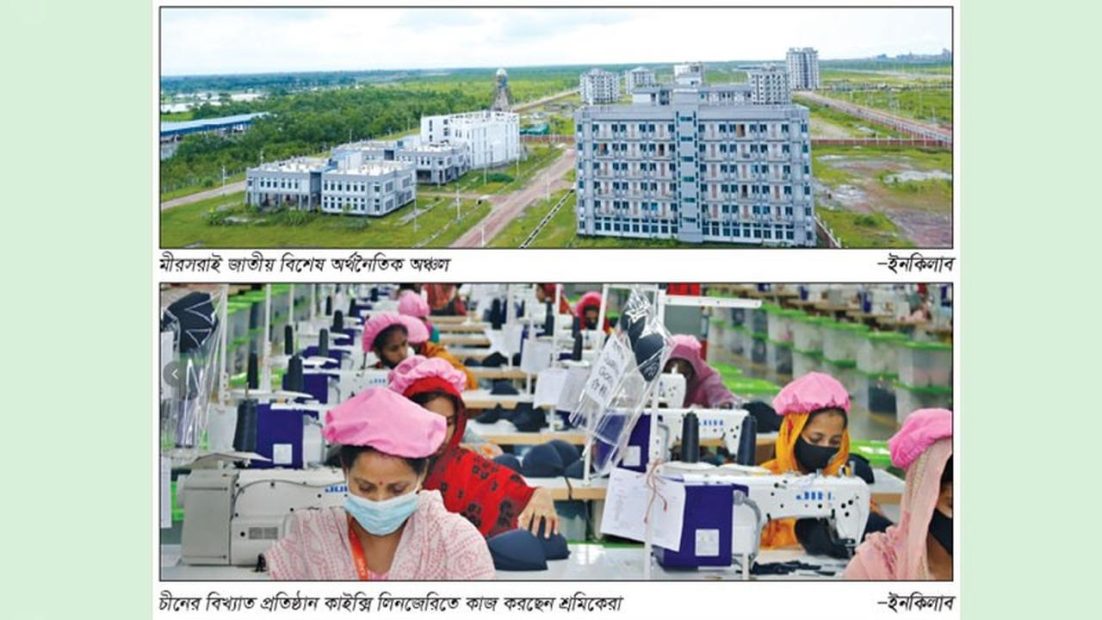
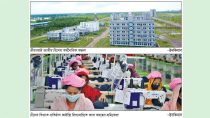
A new chapter in Bangladesh’s industrialisation is unfolding around the National Special Economic Zone (NSEZ) in Mirsarai, Chittagong, the country’s largest industrial zone. Located on several islands along the Bay of Bengal, the economic zone is now witnessing the steady growth of industrial production. Domestic and foreign investors are setting up factories one after another.
So far, 30 industrial establishments have started production with investments worth several thousand crore taka. These factories have created employment for hundreds of thousands of people, both directly and indirectly. Another 35 factories are preparing to begin production.
Once these factories become operational, they are expected to create direct employment for another 40,000 to 45,000 people. Around 50 garment factories are also under development. They will begin production as soon as they receive gas connections, creating employment opportunities for hundreds of thousands more.
More than 200 domestic and foreign companies have already registered with the Bangladesh Economic Zones Authority (BEZA) to establish factories in the area. Once the entire project is completed, it is expected to generate employment for 1.8 million people. Domestic and foreign companies have already invested around Tk 15,000 crore in the zone.
The economic zone is spread across Sadhur Char, Shil Char, Mosharraf Char and Pirer Char in Ichakhali Union of Mirsarai Upazila in Chittagong, as well as Muhurir Char in Sonagazi, Feni. It is located 60 kilometres from Chittagong city, 70 kilometres from Shah Amanat International Airport and 200 kilometres from Dhaka.
According to BEZA, the economic zone is being developed over an area of approximately 137 square kilometres along the coastal area of the Bay of Bengal, beside the Sandwip Channel. Under BEZA’s master plan, the industrial city covers 33,805 acres across Sitakunda and Mirsarai upazilas in Chittagong and Sonagazi Upazila in Feni. Around 41 per cent, or 14,000 acres, of the land is earmarked for industrial facilities. The remaining 59 per cent will include open spaces, forests, port facilities, residential areas, healthcare facilities, training centres and recreational facilities.
The industrial zone was inaugurated in 2016 as the Mirsarai Economic Zone. BEZA began accepting applications for land allocation in April 2017. The National Special Economic Zone is divided into 12 separate zones, including the BEPZA Economic Zone, the BGMEA Garment Industrial Park and the SBG Economic Zone, developed by Shikder, Bashundhara and Gasmen groups.
An initiative to establish an Indian Economic Zone on around 850 acres of land was later cancelled. The area has now been included in BEZA’s master plan as a military economic zone. BEZA expects the entire economic zone to generate employment for 1.8 million people within the next 15 years. It also projects annual export earnings of $15 billion from the zone.
The National Special Economic Zone covers an area nearly half the size of Dhaka. The areas under Dhaka’s two city corporations cover 305 square kilometres, while the economic zone is being developed across 133.55 square kilometres.
According to BEZA, interest among domestic and foreign investors in the Mirsarai economic zone is growing steadily. Of the 30 companies that have started production, six to seven are foreign-owned. The operating factories represent a wide range of industries, including garments, steel, medical equipment, pharmaceuticals, power and energy, glass, electrical cables and chemicals.
Land has already been allocated for more than 50 garment factories. Several foreign companies have established factories in the zone, while others are preparing to begin operations. Chinese investors account for the largest number of companies that have signed investment agreements. Investors also come from South Korea, Sri Lanka, the United States, the United Kingdom, Canada, Singapore, India, the United Arab Emirates, the Netherlands, Malaysia, Ireland and Bangladesh.
According to BEPZA, investors from 38 countries have invested in the country’s export processing zones (EPZs), with total investment amounting to $7.428 billion. Chinese companies account for the largest share, with investments of $1.7825 billion. Chinese companies also make up the largest group of foreign investors in the Mirsarai zone.
Several leading Bangladeshi companies have also invested there. These include MEP Group, RANCON Group, BSRM, PHP, Asian Paints, Berger Paints, McDonald Steel and Nippon Steel. A visit to the area shows that numerous large and small factories are being established across the vast industrial zone, with several already in operation. Factory premises are bustling with workers. Located far from residential areas, the zone has little traffic noise and pollution, allowing workers to operate in a relatively rural environment.
Infrastructure development is also progressing inside the zone. Roads and drainage systems have been built in several areas. The area, which was once a collection of islands and chars, has undergone a major transformation. Factory buildings have been constructed while preserving natural features such as canals and trees. Port and jetty facilities are also being developed along the coast.
BEZA Assistant Director Md Iftakhar Mahmud said the Mirsarai National Special Economic Zone was becoming increasingly active. “Thirty factories have already started production. These factories have created employment for around one lakh people, both directly and indirectly. Another 35 factories are preparing to begin production. These factories will also create employment for hundreds of thousands of people. More than 200 companies have registered to establish factories,” he said.
He acknowledged that gas shortages remained a challenge. However, he said the zone would receive gas on a priority basis once supplies increased through a new LNG terminal and the drilling of domestic gas wells. Infrastructure facilities had been developed with this goal in mind. He also said BEZA had taken initiatives to develop a residential zone to ensure housing facilities for factory workers and officials.
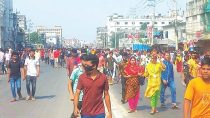
Visits to several factories found workers engaged in production, although some factories were operating only partially. One factory of Kaixi Lingerie Bangladesh Limited, a subsidiary of China’s renowned garment manufacturer Kaixi Group, employs 3,000 workers. Factory officials said it was operating partially. Once it reaches full capacity, the workforce is expected to exceed 10,000.
The company has signed investment agreements worth more than $100 million, to be implemented in phases.
The industrial zone has also triggered extensive development in surrounding areas. Residential facilities are expanding rapidly outside the zone, while small and large factories are also being established. Local residents said the economic zone was bringing major changes to their socioeconomic conditions. Land prices have increased several times, and new employment opportunities have reduced local unemployment. Many people are also investing in transport, tourism and other sectors.
Meanwhile, the BEPZA Economic Zone in Mirsarai is also playing an important role in attracting investment and increasing exports. According to data published in August, land lease agreements had been signed with 65 companies in the zone. Their proposed investments total around $1.62 billion.
Several new investment agreements have been signed recently. On August 28, Ecolate Private Limited signed an agreement to invest $15.91 million in a factory to manufacture LED lights. On October 14, Chinese company KPST New Material BD signed an agreement to invest $7.01 million in establishing its second factory. Chinese company SBS Zipper Bangladesh Limited began commercial production on October 20.
BEZA has recently handed over land possession to five newly allocated industrial companies. They are RANCON Lubricants Limited, Hamko Corporation Limited, Optimaplast Limited, Savoy Food and Agro Industries Limited, and Golden Food and Agro Industries Limited. Domestic and foreign investors are visiting the zone regularly to explore investment opportunities and express their interest in setting up factories.
Despite its considerable investment potential, gas shortages remain a major obstacle to industrial development in Mirsarai. Industry insiders said many investors were unable to make final decisions on setting up factories because a reliable gas supply had not been guaranteed. Some existing industrial establishments are also unable to operate at full capacity because they do not receive the fuel they need.
Industry representatives believe that ensuring uninterrupted gas and electricity supplies, improving transport connectivity and developing the necessary infrastructure would attract further domestic and foreign investment. This would bring major changes to economic activities in the Chittagong region and help increase the country’s export earnings and employment opportunities. The Mirsarai industrial zone could therefore play a significant role in Bangladesh’s economic development.