The Political Legacy of the Historic November 7 Lives On Through the July Mass Uprising
Tarique Rahman: The Reflection of His Legendary Father
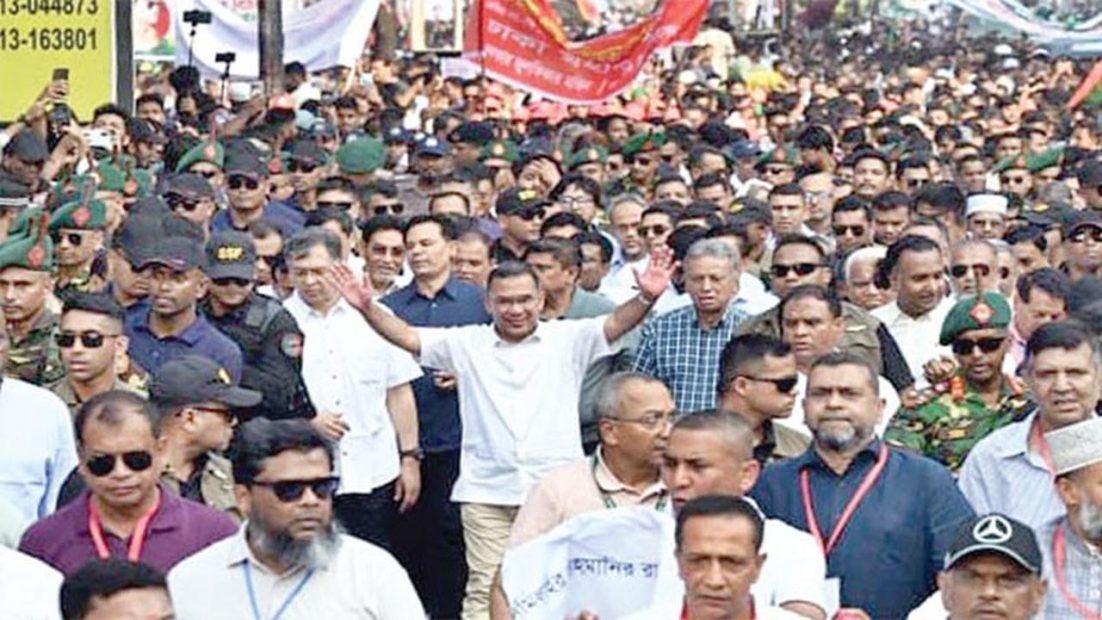
It was as if he was following in his father’s footsteps. On National Revolution and Solidarity Day, Prime Minister Tarique Rahman spent the whole day taking part in different programmes. Sometimes he attended state events, sometimes he stood among the people, and sometimes he led marches attended by hundreds of thousands of people.
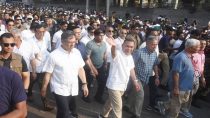
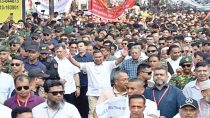
He led the march from the front, walking from Nayapaltan to Manik Mia Avenue. Breaking away from the usual rules and formalities of his high office, Prime Minister Tarique Rahman walked nearly six kilometres alongside thousands of people on the streets. No other prime minister had been seen doing this before. However, Shaheed President Ziaur Rahman, his father, used to dig canals with his own hands and stand among ordinary people.
After nearly 20 years, National Revolution and Solidarity Day was celebrated officially by the state. As a result, people joined the celebrations spontaneously.
The historic National Revolution and Solidarity Day was celebrated in Dhaka through various programmes throughout the day. People also celebrated the day in divisional cities, district towns and upazilas across the country.
People seemed to celebrate the day with great joy, as it holds a special place in their hearts. February 21, Martyrs’ Day, March 26, Independence Day, December 16, Victory Day, and November 7, National Revolution and Solidarity Day, are important days of national identity and self-respect. These days are closely linked to the people’s existence.
Although people and political parties may have different views, leaders, activists and ordinary people celebrate these national days as part of their history.
However, there were attempts to erase November 7 from history under the influence of India’s Chanakya policy. After coming to power in 1996, Sheikh Hasina, described by the writer as a puppet of Delhi, stopped the official celebration of National Revolution and Solidarity Day. The move was seen as an attempt to remove the day from the country’s history.
The BNP returned to power in 2001 and started celebrating the day again. But in 2007, Fakhruddin and Moeen U Ahmed took state power through the one-eleven political change, which the writer links to US and Indian plans. On November 28 that year, the official celebration was stopped again. The writer claims that the move was intended to keep the historic November 7 event out of public view.
However, people continued to remember and celebrate the day in their own way.
After the July Mass Uprising, the interim government took office. The elected government came to power on February 17 and declared November 7 a national holiday under category ‘A’. The day was again recognised as National Revolution and Solidarity Day. The day was observed last Saturday.
After nearly 20 years, the state officially celebrated National Revolution and Solidarity Day, which the writer describes as a day of national identity.
On this day in 1975, the Soldiers-People Revolution took place. The writer says it ended India’s influence over Bangladesh.
The political legacy of the historic November 7 event is linked to the July Mass Uprising of 2024. According to the writer, the political forces behind the Soldiers-People Revolution under Ziaur Rahman and those behind the July Mass Uprising came from the same source, despite being separated by several generations.
At that time, soldiers and ordinary people came together in celebration. The same scene was seen again after the July Uprising.
Many leaders around the world have become respected for protecting their countries. But Ziaur Rahman was different. He played a role in gaining independence for the country and later protecting its sovereignty from India’s influence.
On the dark night of March 25, 1971, Sheikh Mujibur Rahman was arrested by Pakistani forces. The writer claims that Awami League leaders and MPs fled to India to save their lives, leaving 70 million people without direction.
At that difficult time, Major Ziaur Rahman, who was serving in the Pakistan Army, rebelled against the army and declared independence. His declaration gave direction to a confused nation, and people joined the Liberation War.
Again, on November 3, 1975, President Khondaker Mostaq Ahmad was removed from power. Army Chief Ziaur Rahman was arrested by a group of army officers led by Khaled Mosharraf, who then took the position of army chief himself. The aim was to establish Indian influence over Bangladesh.
India followed its Chanakya policy and used Lhendup Dorji to take control of Sikkim in May 1975. Sikkim was later made an Indian state. Delhi used Khaled Mosharraf to turn Bangladesh into another Indian state as revenge for the killing of Sheikh Mujibur Rahman.
Ziaur Rahman was kept under arrest at the cantonment.
After taking power on November 3, Khaled Mosharraf’s mother, Begum Hamida Rahman, and his brother, Rashed Mosharraf, led a march to Sheikh Mujibur Rahman’s house at Dhanmondi 32 on November 4. They paid tribute to his portrait. This march exposed India’s alleged role in the political change. It made ordinary people and army members believe that India was behind the move.
The incident created strong anger among ordinary soldiers and the public. As a result, the Soldiers-People Revolution took place on November 7 and freed Ziaur Rahman from detention.
Later, Ziaur Rahman moved away from the path taken by Colonel (Retd.) Taher and took the leadership in protecting the country. On November 7, Ziaur Rahman helped bring Bangladesh-focused politics into the country and gave people a greater role in politics.
After independence in 1971, the political space for people who supported Bangladesh’s own interests became smaller. Sheikh Mujibur Rahman, who returned from a Pakistani prison through London and Delhi, for this situation. The Awami League government was too dependent on neighbouring India. It seemed as if Bangladesh had gained only a piece of land after nine months of war and the deaths of three million people, while its sovereignty remained under India’s control.
People from different sections of society felt that the country’s independence was not fully protected.
The dreams of the Liberation War were ignored. Democracy disappeared from politics, and the Awami League formed BAKSAL to keep power under one party.
BAKSAL was formed to remove all opposing views and create a permanent one-party political system. The Rakkhi Bahini was also established. Ordinary soldiers faced a difficult situation because of Mr. Mujib’s plan to weaken the patriotic army and hand over the country’s sovereignty to India.
As a result, ordinary soldiers and people came together. On November 7, this unity became a political force. This force gathered around Ziaur Rahman, the person who had declared independence.
For a long time, political parties that believed in nationalism and Islamic values governed the country. But after the political change in 2007, the writer says, another dark period began for people who wanted to protect the country’s independence.
The results of the ninth parliamentary election were planned to bring Sheikh Hasina to power and make her dependent on Delhi. This began a process of handing over the country’s sovereignty.
For 18 years, foreign policy and trade policy were fully guided by India’s policies. Delhi became the main decision-maker in the country’s policy matters.
At the same time, the Awami League government took foreign loans in the name of major projects and used them for corruption and looting. The country faced a serious crisis, including the effects of widespread corruption and indirect famine.
Leaders and activists of nationalist and Islamic-value-based parties faced disappearances, killings and torture because they wanted to protect the country’s sovereignty.
State forces were used against political opponents and ordinary people.
A mafia-style system also developed under state support. It controlled business, trade and almost every sector of the country.
Comparing Sheikh Hasina’s rule from 2009 to 2024 with Sheikh Mujibur Rahman’s rule from 1972 to 1975, the latter period was even more cruel. Major decisions about Bangladesh were made at South Block in Delhi.
As a result it became necessary to restore Bangladesh-focused politics to protect the country’s sovereignty from India’s influence. This led to the July Mass Uprising, in which 1,400 people lost their lives.
In 1975, after Ziaur Rahman was freed, soldiers and ordinary people came together in a march. They stood together with a shared hope.
People danced while standing on army tanks. Local and foreign media widely published photographs of the event.
Nearly 50 years later, in 2024, students and ordinary people rose up under the banner of the Anti-Discrimination Student Movement.
The army refused to follow the unfair orders of what he calls the fascist Hasina government and stood with the people. As a result, Sheikh Hasina had to flee the country.
Tarique Rahman Follows His Father’s Path
The BNP came to power through the 13th parliamentary election, and Tarique Rahman became prime minister. He is an active leader like his father, Ziaur Rahman, the country’s independence announcer.
On National Revolution and Solidarity Day yesterday, Tarique Rahman first visited the graves of his father, Shaheed President Ziaur Rahman, and his mother, Begum Khaleda Zia.
He then visited colourful displays by different groups, including the Bangladesh National Cadet Corps (BNCC) and Bangladesh Scouts, at the Army Stadium.
He attended a grand gathering of village police at the National Parade Ground as the chief guest and delivered a speech.
Later, he led a colourful procession organised by the BNP and its affiliated organisations.
The procession started from Nayapaltan and passed through Kakrail intersection, the road beside the Chief Justice’s residence, Ramna Park Road, Hotel InterContinental intersection, Banglamotor, Farmgate and Indira Road. It then reached Manik Mia Avenue.
Thousands of people gathered on both sides of the roads to get a glimpse of Prime Minister Tarique Rahman during the procession.
Men, women and children also waved at him from the windows and rooftops of nearby tall buildings.
With a smiling face, Prime Minister Tarique Rahman waved back at them.
According to political analysts, after the political change on November 7, 1975, the country’s independence and sovereignty became stronger under Ziaur Rahman’s leadership. They also believe that democracy was freed from restrictions and began to move forward. The journey of multiparty democracy started from that day.
Now, after the July Uprising, the BNP won the February 12 election, and Ziaur Rahman’s son Tarique Rahman became prime minister.
Under his leadership, the political force behind the July Mass Uprising seems to have brought back the people’s power that first appeared through the Soldiers-People Revolution of November 7, 50 years ago.
Tarique Rahman was a worthy son of his patriotic father, the man who declared Bangladesh’s independence.
Celebrations Across the Country
Bogura Bureau reports: Bogura celebrated National Revolution and Solidarity Day through different programmes organised by the district administration. A discussion meeting and prize-giving ceremony for an art competition were held at Shaheed Titu Auditorium in the town.
Bogura Deputy Commissioner Md. Toufiqul Rahman chaired the programme. Bogura-6 MP and district BNP President Rezaul Karim Badsha attended as the chief guest.
Bogura-4 (Kahaloo-Nandigram) MP and district BNP General Secretary Alhaj Mosharraf Hossain, Bogura City Corporation Administrator M R Islam Swadhin and Superintendent of Police Mirza Sayem Mahmud attended as special guests.
National Citizen Party (NCP) Bogura district convener Engineer S M Mahmud and Abdul Kader, a freedom fighter and convener of the Bogura district command of the Bangladesh Muktijoddha Sangsad, also spoke.
On the same day, Bogura Press Club and Bogura Journalists’ Union jointly organised another discussion meeting.
Bogura Press Club President Rezaul Hasan Ranu chaired the meeting, while Bogura Journalists’ Union General Secretary S M Abu Sayeed conducted it. Bogura-6 MP Rezaul Karim Badsha attended as the chief guest.
Mymensingh Bureau reports: Bangladesh Agricultural University (BAU) Vice-Chancellor Professor Dr Md. Rafiqul Islam Sardar said Shaheed President Ziaur Rahman took charge of the country during a difficult time and helped Bangladesh move forward.
He said Ziaur Rahman, the man who declared independence, came as a blessing for Bangladesh. He was a true patriot.
He made these remarks as the chief guest at a discussion meeting held at BAU yesterday to mark National Revolution and Solidarity Day.
Professor Dr Md. Abdul Alim, convener of the National Day Celebration Committee, chaired the programme.
University Registrar Agriculturist Dr Md. Helal Uddin, Dean of the Faculty of Agriculture Professor Dr Masum Ahmad, Dean of the Faculty of Fisheries Professor Dr Ali Reza Faruk and Sonali Dal President Professor Dr Md. Hammadur Rahman attended as special guests.
Khulna Bureau reports: National Revolution and Solidarity Day was observed at Khulna University of Engineering and Technology (KUET).
The university arranged an essay competition, a discussion meeting and a prize-giving ceremony.
On Saturday, national flags were raised at the university’s administrative building, the Vice-Chancellor’s residence and the halls at sunrise.
At 9:00am, students took part in an essay competition on the importance of the day.
At 10:00am, Vice-Chancellor Professor Dr Muhammad Masud raised the national flag in front of the administrative building as the national anthem was played.
At 10:30am, a discussion meeting was held at the university auditorium. The speakers discussed the historical importance of the day and its role in national life.
Speaking as the chief guest, Vice-Chancellor Professor Dr Muhammad Masud said National Revolution and Solidarity Day reminds people of national unity, patriotism and shared responsibility.
He said everyone must work together for the welfare and progress of the country.
Dean of the Faculty of Civil Engineering Professor Dr Khandaker Mahbub Hasan, Dean of the Faculty of Electrical and Electronic Engineering Professor Dr Kazi Md. Rakibul Alam, Dean of the Faculty of Mechanical Engineering Professor Dr Mohammad Sultan Mahmud and Dean of the Faculty of Science and Humanities Professor Dr Mohammad Abu Yusuf spoke as special guests.
Professor Dr Md. Hasan Ali, Director of Student Welfare, chaired the programme.
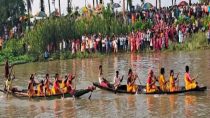
Special Correspondent reports: Kushtia observed the day through different programmes organised by the district administration and the BNP. The programmes included discussion meetings, colourful processions, rallies and traditional rural stick-fighting events.
Kushtia Deputy Commissioner and District Magistrate Mohammad Touhid Bin-Hasan chaired a programme. Superintendent of Police Md. Aminul Islam attended as a special guest.
Government officials, freedom fighters, political leaders and people from different professions attended the event.
Meanwhile, Kushtia district BNP also organised several political programmes.
At a rally chaired by district BNP Convener Kutub Uddin Ahmed and conducted by Member Secretary Engineer Zakir Hossain Sarkar, speeches were delivered by BNP National Executive Committee member and MP Farida Yasmin, Local Government Affairs Secretary and freedom fighter Principal Sohrab Uddin, and Executive Committee member Barrister Ragib Rauf Chowdhury.
Staff Reporter from Gaibandha reports: Different programmes were organised in Gaibandha to mark National Revolution and Solidarity Day.
Religion Affairs State Minister Shamim Kaiser Lincoln attended a discussion meeting at the local stadium auditorium as the chief guest.
District BNP President and Gaibandha District Council Administrator Professor Dr Mainul Hasan Sadik, MP Momtaz Alo and district BNP General Secretary Mahmudunnabi Titul also spoke.
Staff Reporter from Gafargaon, Mymensingh, reports: MP Mohammad Akhtaruzzaman Bacchu of Mymensingh-10 (Gafargaon-South Gafargaon) attended a programme marking National Revolution and Solidarity Day as the chief guest.
Gafargaon Upazila Nirbahi Officer Mohammad Yusuf chaired the programme.
Upazila Assistant Commissioner (Land) Md. Mahfuzur Rahman and officials from different government offices also spoke.
Staff Reporter from Sherpur reports: A discussion meeting was held at the District Shilpakala Academy auditorium to mark National Revolution and Solidarity Day.
Sherpur Deputy Commissioner and District Magistrate Farida Yasmin chaired the meeting.
Superintendent of Police A K M Zahirul Islam, District Bar Association President and BNP leader Advocate Sirajul Islam, and freedom fighter Abdul Wadud also spoke.
Natore District Correspondent reports: National Parliament Whip and Natore-2 MP Advocate M Ruhul Quddus Talukder Dulu said the foundation of the Bangladeshi nationalism that people follow today was laid on historic November 7.
He said President Ziaur Rahman had laid the foundation of Bangladeshi nationalism.
Dulu made these remarks as the chief guest at a discussion meeting held at Natore District Council and Sadar Upazila Council auditoriums. Freedom fighter families, injured freedom fighters and other freedom fighters attended the programme.
Natore Deputy Commissioner Mosammat Sumoni Akter chaired the meeting. Civil Surgeon Dr Muhammad Mashiur Rahman also spoke.
Gazipur District Correspondent reports: Gazipur district administration organised a discussion meeting and a cultural programme to mark National Revolution and Solidarity Day.
Deputy Commissioner Md. Nurul Karim Bhuiyan attended the meeting as the chief guest. It was held at Nat Mandir in the Deputy Commissioner’s office.
Additional District Magistrate Md. Sohel Rana chaired the programme.
Gazipur Superintendent of Police Md. Jasim Uddin, Civil Surgeon Dr Mamunur Rashid and Regional Executive Officer of Gazipur City Corporation Salma Akter also spoke.
Kishoreganj District Correspondent reports: Different programmes were held under the management of the National Revolution and Solidarity Day Celebration Committee. The committee was formed under the leadership of Kishoreganj University Pro-Vice-Chancellor Professor Dr G M Shafiur Rahman.
Sirajganj District Correspondent reports: A discussion meeting marking National Revolution and Solidarity Day 2026 was held at the Sirajganj District Shilpakala Academy auditorium.
Sirajganj Deputy Commissioner Md. Aminul Islam chaired the meeting. Power, Energy and Mineral Resources Minister Iqbal Hasan Mahmud Tuku attended as the chief guest.
Speaking at the meeting, the minister said Ziaur Rahman had established multiparty democracy. For this reason, he said, both the Awami League and Jamaat-e-Islami loved him.
However, the minister also said that Jamaat-e-Islami did not believe in independence.
District Council Administrator Md. Saiful Islam, Sirajganj Superintendent of Police Md. Saiful Islam Santu and district BNP General Secretary Saidur Rahman Bacchu also spoke.
Patuakhali District Correspondent reports: The district BNP, its affiliated organisations, the administration and different government and private institutions organised various programmes in Patuakhali.
Yesterday, district BNP President Snehangshu Sarkar Kutti, General Secretary Mujibur Rahman Toton and other leaders started the day’s programmes by raising the national and party flags at the party office.
A group of BNP leaders and activists, supported by MP Air Vice Marshal Altaf Hossain Chowdhury of Patuakhali-1, started a procession from Jhaoutala in the town.
The procession was led by Maksud Ahmed Bayezid Panna Mia. It passed through different roads and reached the area in front of Suraiya Villa on Sher-e-Bangla Road, where the participants held a rally.
Bhola District Correspondent reports: The district BNP organised a procession and a discussion meeting in Bhola to mark the day.
District BNP Convener Golam Nabi Alamgir and Member Secretary Raisul Alam led the programme.
District BNP leaders Bacchu Molla, Harun Or Rashid Truman, Kayed, Bashir Uddin and Bhola Sadar Upazila BNP Convener Asif Altaf, among others, attended.
Nilphamari District Correspondent reports: The Nilphamari district BNP organised different programmes to mark National Revolution and Solidarity Day.
Former Senior Joint Convener of the district BNP Sohel Parvez chaired a meeting.
BNP Executive Committee Assistant Organising Secretary for Rangpur Division Professor Aminul Islam attended as the chief guest.
Former district BNP member Advocate Abu Mohammad Soyem, Prabir Guha Rintu and former Sadar Upazila BNP General Secretary Advocate Kazi Akhtaruzzaman Jewel, among others, were present.
Keshabpur (Jashore) Upazila Correspondent reports: Keshabpur Upazila Administration observed the day through different programmes.
Upazila Nirbahi Officer Anwar Hossain chaired a discussion meeting. MP Mukhtar Ali attended as the chief guest.
Central BNP Executive Committee member and Thana BNP President Abul Hossain Azad, Municipal BNP President Abdus Samad Biswas and Thana BNP General Secretary Abdur Razzaq attended as special guests.
Kalapara (Patuakhali) Upazila Correspondent reports: Kalapara Upazila Administration organised a discussion meeting at the Upazila Administration meeting room.
Upazila Nirbahi Officer Mohammad Arifuzzaman chaired the programme.
Haji Humayun Sikder, President of Kalapara Upazila BNP, attended as the chief guest.
Puthia (Rajshahi) Upazila Correspondent reports: Puthia Upazila Administration organised a discussion meeting and a prize-giving ceremony at the Upazila Parishad auditorium.
MP Professor Nazrul Islam Mondal of Rajshahi-5 (Puthia-Durgapur) attended as the chief guest.
Puthia Upazila Nirbahi Officer Liaquat Salman chaired the programme.
Former MP Abdus Sattar Mondal, Assistant Commissioner (Land) Prosenjit Saha, former Upazila Chairman Anwarul Islam Jumma, Puthia Police Station Officer-in-Charge Faridul Islam and former Municipal Chairman Asadul Haque Asad, among others, attended.
Ullapara (Sirajganj) Upazila Correspondent reports: Ullapara Upazila Administration organised a discussion meeting at the Upazila Parishad auditorium.
Upazila Nirbahi Officer Raihanul Islam chaired the meeting.
BNP National Executive Committee member and former MP M Akbar Ali and Upazila Assistant Commissioner (Land) Faisal Mahmud were present.
Raninagar (Naogaon) Upazila Correspondent reports: Raninagar Upazila Administration organised a discussion meeting at the Upazila Parishad auditorium. Families of martyred freedom fighters, injured freedom fighters and other freedom fighters attended the programme.
Upazila Nirbahi Officer Md. Rakibul Hasan chaired the meeting. Upazila Assistant Commissioner (Land) Nabila Yasmin conducted it.
MP Sheikh Md. Rezaul Islam Rezu of Naogaon-6 (Raninagar-Atrai) attended as the chief guest.
Parbatipur (Dinajpur) Upazila Correspondent reports: Parbatipur Upazila Administration observed National Revolution and Solidarity Day through a discussion meeting, a prize-giving ceremony and patriotic songs.
Upazila Nirbahi Officer Arafat Aman Aziz, Upazila Agriculture Officer Rajib Hossain, and Mahabur Rashid Sangram, Joint Convener of Upazila BNP and Member Secretary of Jubo Dal, attended the programme.
Noakhali Science and Technology University Correspondent reports: Noakhali Science and Technology University (NSTU) Vice-Chancellor Professor Dr Golam Rabbani said one of the main messages of November 7 was to build a mindset of working together for national interests despite political differences.
The programme was chaired by Dr Md. Shiblu Rahman, Director of the university’s Student Advice and Guidance Department.
Muktagachha (Mymensingh) Upazila Correspondent reports: Muktagachha Upazila Administration organised a cleanliness drive, a discussion meeting, an art competition and a friendly football match between the Upazila Administration and the municipal administration.
Later, a discussion meeting was held at the Upazila Parishad auditorium. Upazila ICT Officer Manjurul Ahmed conducted the meeting, while Upazila Nirbahi Officer Krishna Chandra chaired it.
Mohammad Zakir Hossain Bablu, Convener of Mymensingh South District BNP and MP from Muktagachha, attended as the chief guest.
Morelganj (Bagerhat) Upazila Correspondent reports: Morelganj Upazila Administration organised a discussion meeting to mark the day.
Upazila Nirbahi Officer (UNO) Habibullah chaired the programme.
Manoharganj (Cumilla) Upazila Correspondent reports: Manoharganj Upazila Administration organised a discussion meeting at the Upazila Auditorium to mark the day.
Upazila Nirbahi Officer Rifat Jahan chaired the meeting.
Akhaura (Brahmanbaria) Upazila Correspondent reports: Different political leaders and activists, representatives of freedom fighter families and government officials took part in the programmes organised by Akhaura Upazila Administration.
Upazila Nirbahi Officer Tapasi Rabeya chaired the meeting.
Abul Mansur Mission, Organising Secretary of Brahmanbaria District BNP, spoke at the programme.
Chandraganj (Lakshmipur) Upazila Correspondent reports: A discussion meeting and an essay competition were held at Kafil Uddin University College in Lakshmipur.
The college’s Acting Principal Priyabrata Chowdhury chaired the programme.
Sports Teacher Altaf Hossain conducted it. Teachers and students of the college were also present.
Chirirbandar (Dinajpur) Upazila Correspondent reports: National Parliament Whip Md. Akhtaruzzaman Mia MP said people must remember the importance of Revolution and Solidarity Day. He said history must not be erased.
He also said there had been attempts in the past to erase history and remove the importance of the day.
He made these remarks as the chief guest at a programme organised by the Upazila Administration at the Upazila Parishad auditorium yesterday.
Chittagong University Correspondent reports: A discussion meeting was held at Chittagong University (CU) on the history of National Revolution and Solidarity Day, its importance and its role in Bangladesh’s political history.
At the meeting, Vice-Chancellor Professor Dr Mohammad Al-Forkan assured the participants that the university would consider establishing a hall named after Shaheed President Ziaur Rahman.
Professor Dr Mohammad Al-Forkan chaired the meeting and led the main discussion.
Daulatkhan (Bhola) Upazila Correspondent reports: BNP National Executive Committee member and Bhola-2 MP Alhaj Hafiz Ibrahim said Shaheed President Ziaur Rahman united the nation through the National Revolution.
He also said Ziaur Rahman freed the nation from the misrule of 1975 and protected its independence.
Fakirhat (Bagerhat) Upazila Correspondent reports: Fakirhat Upazila Administration organised a discussion meeting, an art competition prize-giving ceremony, a cultural programme and a friendly football match to mark the day.
Upazila Nirbahi Officer Md. Rokunuj Zaman chaired the programme.