Nearly 50,000 People in 17 Villages Suffer in Dakop as Road Development Work Remains Incomplete After 7 Years
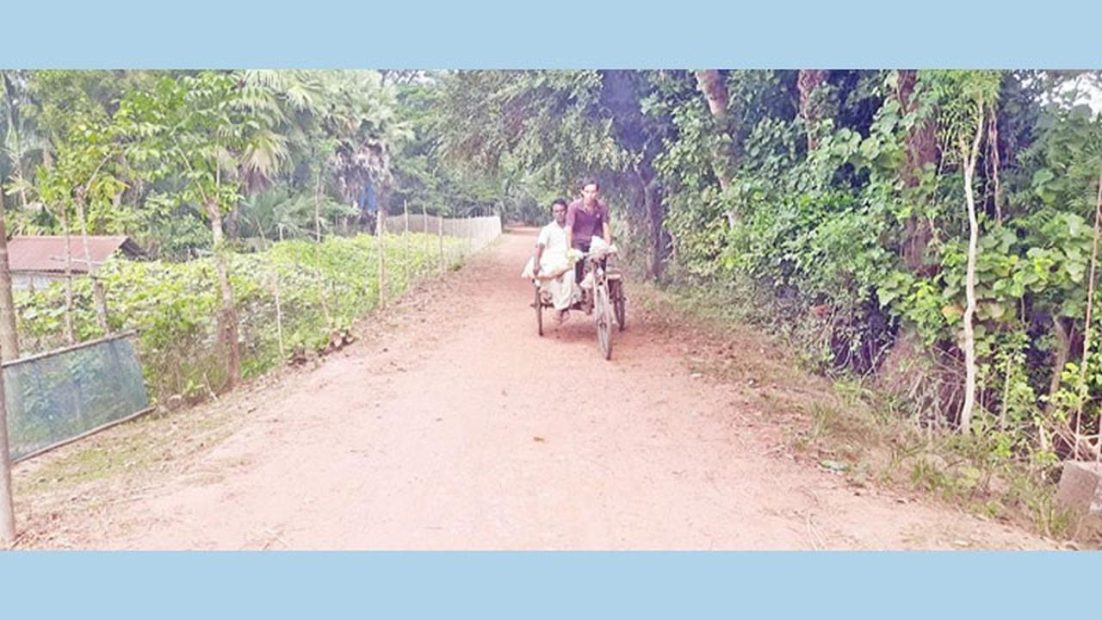
The road development project from Dakop Bridge area to the Bajua Union Parishad office in Dakop, Khulna, has remained incomplete even after seven years. Although the work was supposed to be completed within 11 months, the paving and widening of the road have remained stalled for years.
Due to the contractor’s negligence and slow progress, nearly 50,000 people from 17 villages across three unions are suffering. Vehicles moving along the road, which is covered with broken bricks and sand, create huge clouds of dust. The dust covers homes, shops, trees and agricultural land, leaving local residents frustrated with their prolonged suffering.
According to the Local Government Engineering Department (LGED) office in Dakop, the road from Dakop Bridge area to the Bajua Union Parishad office is 8.123 kilometres long. Of this, M/s Jamela Traders was awarded the contract to pave and widen a 3.123-kilometre section.
The project was funded with Tk 2,44,32,473 under the Khulna Division Rural Infrastructure Development Project. Work began in November 2019 and was scheduled for completion by October 2020. However, the deadline was extended several times as the contractor failed to finish the work on time. Despite the extensions, the project remains incomplete.
Local sources said the road was previously paved with brick soling. The bricks were removed to prepare the road for asphalt paving, but the road remained in that condition for several months. Later, sand was spread and brick chips were laid before work was suspended again.
As the road remained unpaved for a long time, the friction of vehicle tyres gradually crushed the brick chips and sand into dust. Even a slight breeze or the movement of vehicles now fills the area with red dust. During a recent visit, this correspondent found that vehicles travelling along the road created thick clouds of dust, reducing visibility.
A layer of reddish dust had covered homes, shops, schools, trees, bushes and farmland on both sides of the road. Dust had particularly accumulated on vegetable crops and leaves in nearby fields. The colour of walls, fences and tin roofs of many houses has also changed due to the dust. Some residents are spraying water on their homes and the road using pipes to reduce the dust.
Agricultural produce and other goods are transported along the road every day. However, drivers and passengers face severe difficulties because of its broken and dusty condition. Schoolchildren, pedestrians and sick people are particularly affected.
Moksed Hawlader, a resident of West Bajua, said, “When the road had brick soling, we could travel on it. In the name of development, the road has been left in a terrible condition. The red dust from crushed bricks is damaging vegetables on both sides of the road. It is even difficult to walk along the road. Travelling by vehicle is also extremely uncomfortable because of the jolts.”
Russel Ahmed, a resident of Bajua village, lives beside the road. Dust has turned the fence and tin roof of his house red. Recently, he was seen cleaning his house and spraying water on the road to reduce the dust. Russel Ahmed said, “It has become difficult to even stay inside the house because of the red dust from crushed bricks. Dust settles on food, clothes, furniture and everything else in the house. The suffering becomes worse during winter. Everyone in my family suffers from colds and coughs regularly.”
Regarding the delay, Md Saidur Rahman, owner of the contracting firm M/s Jamela Traders, said there were financial and administrative complications during the Covid-19 pandemic. Later, the rising prices of construction materials, compared with the rates fixed under the contract, created a financial shortfall. This delayed the asphalt paving work.
He added that a final decision would be taken soon after a meeting with the project engineer. Dakop Upazila Engineer Emran Ahmed Khan said the contractor was being regularly pressured to complete the work. Several written notices had been issued, and the authorities had also contacted the contractor verbally.
He said the contractor had assured them that the work would be completed within this month. Otherwise, the contract would be cancelled. He added that a final decision on the matter would be taken this month.