Proper education must be achieved along with the pass rate
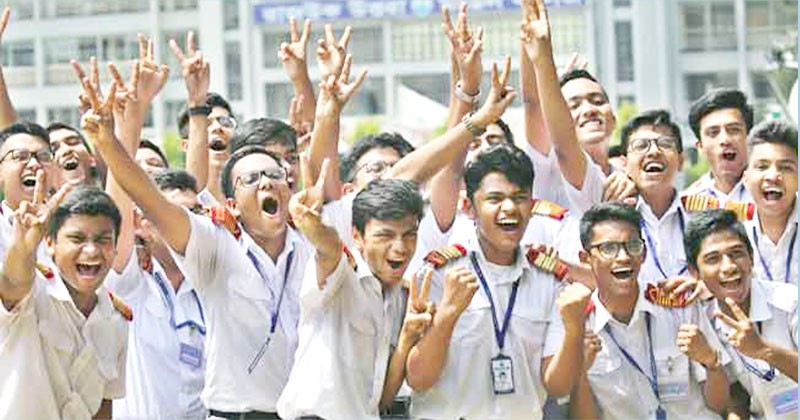
Every year, when results of public exams such as secondary and higher secondary come out, a festive mood spreads across our country. From tea stalls in neighbourhoods to talk shows on national media, people pick the results apart. They ask how much the pass rate rose or fell from last year. They ask how many students got GPA 5, which education board did well and which fell behind.
Educationists, parents, teachers, public representatives and people from all walks of life share their views. But in the crowd of talk and analysis, one basic question often stays hidden. How educated are our students in real terms? As pass rates and the number of GPA 5 holders rise, do their knowledge, skills, creativity and ability to solve real life problems also rise?
In Bangladesh, the new letter grading system began at the secondary level in 2001 and at the higher secondary level in 2003. I was an SSC and HSC examinee in those years myself. I saw the first results under the new grading system. At that time, getting GPA 5 was truly a matter of great pride. Only a handful of students in each education board got the top grade. In some boards, the number of GPA 5 students was zero. Yet within a few years, the number grew from a few thousand to several lakhs.
Good results for students are surely a joy. More chances to study, student effort, parents’ awareness and better institutions can all bring a positive change in results. But we also need to ask, fairly, how much of this fast rise in top grades comes from real gains in knowledge and skills. And how much comes from changes in the way we assess students and set grades?
Once, people saw GPA 5 as a sign of great talent and hard work. Today, so many students get GPA 5 that in many cases even a top grade holder struggles to prove their worth in the race for higher education. Sometimes we see a GPA 5 student who struggles with simple English translation. Some cannot read a paragraph and explain it, or solve a basic maths problem.
Of course, we cannot judge all students by a few cases. But if such cases are common, it is natural to question how well our assessment system works. A student who scores top marks in an exam paper may still lack the ability to use that knowledge in real life. We cannot assume otherwise.
Another worrying side of our education system is this. Many students with good secondary and higher secondary results fail to do as well as expected in university admission tests. Every year, after universities publish admission results, we see that a notable number of candidates cannot get even the minimum pass mark. In some cases, a large share of GPA 5 holders fail the admission test. Sometimes universities cannot even find enough qualified candidates for their set seats.
When so many top scorers at the secondary and higher secondary levels fall so far short of the minimum university entry level, a question arises. Do our current exam results truly show the real preparation and skills of students?
Around the world, several systems exist to check the quality of education. One of the most notable is PISA (Programme for International Student Assessment), run by the OECD. It usually tests the maths, science and reading skills of 15 year old students. It does not value copying facts from textbooks. It looks at how well students can use their knowledge to solve real life problems. Many countries took part in PISA 2022, but Bangladesh did not.
Another key measure from the World Bank and UNESCO is Learning Poverty. It checks whether a child by age 10 can read a simple, age suitable text and understand it. Various reports on the learning outcomes of children in Bangladesh point to gaps in reading comprehension and basic skills. A 2025 UNICEF report says about 51 percent of children aged 7 to 14 in Bangladesh cannot read and understand a simple paragraph.
These figures matter a great deal to us. If a large share of students do not build basic reading skills at the primary level, how can good exam results alone ensure real quality at the secondary and higher secondary levels?
Our education system has another basic weakness of great weight. Are we teaching students, or only preparing them to score well in exams? Today, the study of many students centres on exams. They ask which chapter the questions may come from, which answers to memorise for good marks, how to write answers for more marks, and which teacher’s coaching or private tuition gives better scores. Their whole school life turns around these things.
In our country, along with school and college teaching, reliance on coaching and private tuition is also widespread. Yet the classroom should be the main place where a student builds basic knowledge, thinking, analysis and creativity. If institutions cannot ensure proper teaching and students must rely on extra coaching, it is natural to question how well our system works.
The same reality shows in science education. True science learning does not stop at memorising definitions, formulas or reactions from a book. Science knowledge becomes complete through observation, experiments, analysis and solving real problems. Yet many institutions lack enough laboratories, needed equipment, trained teachers and a setting for practical learning.
So even when students score well in exams, they do not get the chance or the ability to use scientific knowledge in practice. We cannot judge the quality of science education in a country only by how many students study science or how many get top grades. We must also ask how many students are becoming science minded, taking an interest in research and gaining the ability to invent something new.
The aim of education is not only good results or a certificate. One main goal of real education is to shape a person into a conscientious, rational, responsible and humane citizen. But look around us. Even among highly educated people, we often see intolerance, dishonesty, immorality and a lack of social responsibility.
Respecting the rights of others, accepting different views with patience, protecting public property, obeying the law and keeping social order are also key parts of real education. The number of degrees a person holds may show their educational qualification. But how humane, fair and responsible they are shows their real education. So we can never ignore the link between education and ethics, social values and civic duty.
We also need to change our social attitude toward students who fail exams. In our society, failing an exam is often seen as the worst failure in life. A student hears many negative remarks from family, relatives and neighbours. In many cases, the student loses confidence and breaks down mentally. Yet failing one exam does not end all of a student’s chances in life.
Every student has different talent, interests and ability to learn. Some are good with language, some like maths or science, and some are better at technical or practical work. The job of the education system is to find each student’s ability and guide them on the right path. For those falling behind, we must ensure extra learning support, re assessment, a chance to sit exams again, and technical and vocational education.
We should not only chase a higher pass rate. Efforts to bring failed students back to mainstream education deserve equal weight.
We must remember that improving education quality is a joint process. Students, teachers, parents, institutions and the state all share a duty. We must ensure regular teacher training, quality teaching, enough learning materials, practical learning, modern assessment methods and accountability of institutions. We must also reduce the gap in facilities between urban and rural institutions to ensure quality education for all.
Students need more than textbook knowledge. They need the chance to build language skills, maths ability, technology knowledge, analytical skills and problem solving skills. To compare our system with international standards, we must join international assessment programmes. We must also strengthen regular national learning assessments.
Every year, after results come out, we talk a lot about whether the pass rate rose or fell. We talk much less about how far those results reflect the real skills of students. The success of a country’s education system does not depend only on how many students pass or how many get GPA 5. A main measure of success should be how skilled, creative, self reliant and responsible citizens those students become in the future.
We surely want every student in our country to do well. We want the pass rate to rise, GPA 5 numbers to rise and Bangladeshi students to prove their worth on the world stage. But these gains must not stay only on pages of statistics. A student should be able to solve real problems with their knowledge. They should be able to give reasoned views, take an interest in inventing something new and play a responsible role for the country and society.
Our goal should not be to raise the number of certificate holders. It should be to build human resources with real knowledge and skills. The future of a nation does not rest only on how many students pass an exam. It rests on how capable, skilled, humane and responsible people those students become for the country and the nation.
Author: Researcher and columnist.
ajoymondal325@yahoo.com