US Trade Policy Raises Questions Over Bangladesh’s Sovereignty

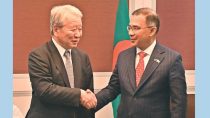
Global politics now extends beyond trade and economic ties. Geopolitical influence, security interests and technological control increasingly shape international relations. US Special Envoy for South and Central Asia Mr. Sergio Gore recently visited Dhaka and met Prime Minister Tarique Rahman. Gore said political stability had returned to Bangladesh and that Washington trusted the new government. The US also revised its travel advisory, giving investors a more positive view of Bangladesh.
Washington has offered Bangladesh cooperation in artificial intelligence, semiconductor supply chains and critical minerals under its “Pax Silica” initiative. The US has also proposed agricultural infrastructure, IT investment and the resumption of suspended US Food and Drug Administration activities. However, Bangladesh must examine these offers alongside Washington’s wider strategic interests. It questions whether agreements reached with the previous interim government could affect Bangladesh’s economic and military sovereignty.
The proposed defence cooperation has raised further concerns. The framework could encourage Bangladesh to purchase US-made aircraft, weapons and military technology while allowing American companies to assemble defence equipment locally. US military technology company L3 Harris has received initial approval in principle to assemble equipment in Bangladesh. Critics argue that local workers would mainly assemble US-made components rather than gain access to core military technology. They also question whether such projects would create genuine technological independence.
Closer military ties with Washington could also strain Bangladesh’s long-standing relations with China and India. China remains a major supplier of Bangladesh’s defence equipment, while India remains an important regional partner. US President Donald Trump’s tariff policies are critisized. It argues that Washington has used trade deficits and forced-labor concerns to justify punitive tariffs while making concessions to China because Beijing controls key minerals and semiconductor materials.
Bangladesh now faces a difficult balancing act. The government must pursue economic growth while protecting its geopolitical interests. The article urges Dhaka to assess US trade and defence proposals carefully rather than accept them without scrutiny. Bangladesh should pursue foreign investment and technology on transparent and equal terms. The government should also review any agreement that threatens national interests and seek parliamentary action when necessary.
Writer: Journalist and columnist.
rintuanowar.com